COROT started its science mission


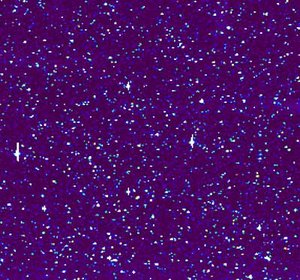
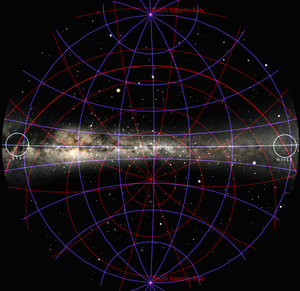
Star field observed by COROT
 
Star field observed by COROT
 
 
9 February 2007
 
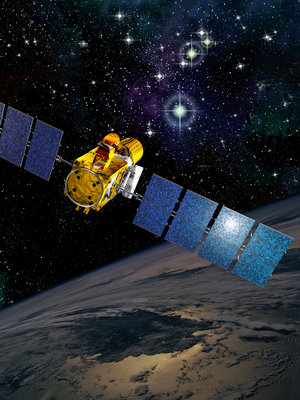
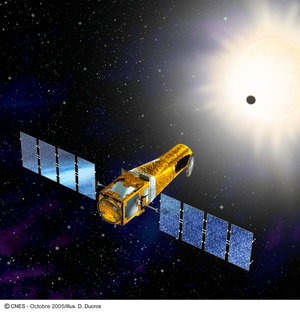
COROT, the satellite to probe into the interiors of stars and to look for extra-solar planets, has completed its in-orbit verification and started its science observations on 3 February this year.
 
The science operations started after the COROT team verified the excellent performance of the fine-pointing mode (that uses the satellite telescope as a 'super' star sensor to precisely target stars), and the performance of the optical channel responsible for the asteroseismology observations and of the so-called 'exo-channel', responsible for the search of exoplanets.
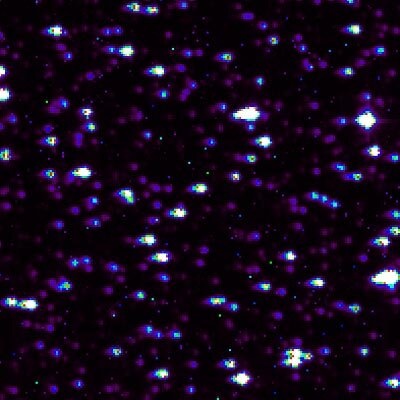
 
 
Stars observed by COROT
   
Stars observed by COROT
 
"The performance of the instruments and of the spacecraft is simply excellent. It is actually exceeding our expectations, with pointing capabilities truly remarkable and the performance of the ESA-built telescope baffle about 60 percent better than foreseen," said Malcolm Fridlund, ESA Project Scientist for COROT. "Such success has allowed the satellite verification to last only 5 weeks from launch, and the science mission to start some time in advance."

The first phase of the COROT observations will last until 2 April, when the spacecraft will have to be rotated by 180° due to the Sun illumination conditions, and target a different area of the sky. The first star fields to be observed by COROT represent a first-choice target for stellar seismology and present an ideal star density for the exoplanets hunting.
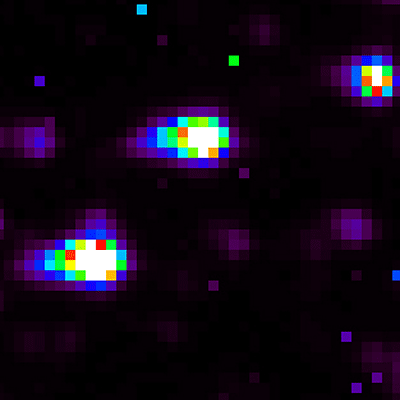
 
 
Zoom-in of previous image
 
Zoom-in of previous image
 
 
The main objective of this first observation phase is to fine-tune the processing chain for the light-curves to be obtained from stars in the stellar fields surveyed by COROT.

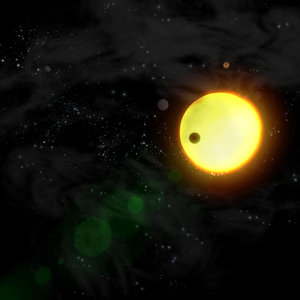
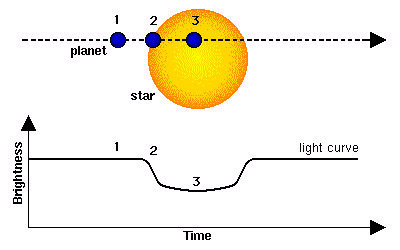
The retrieval of light curves is at the very core of the COROT mission, as it allows to determine the entity of the oscillations of the surface of stars (asteroseismology) as well as to detect the presence of planets orbiting them (exoplanets search).
 
 
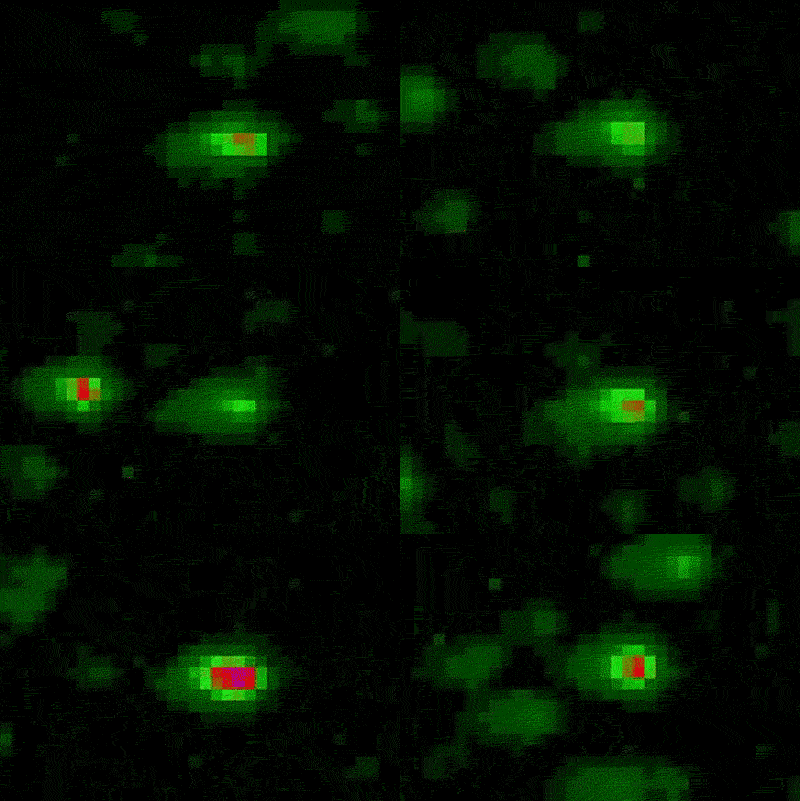
Star images from COROT's 'exo-channel'
   
Star images from COROT's 'exo-channel'
 
Note for editors
 
COROT is a CNES-led mission with ESA participation. The other international partners are: Austria, Belgium, Brazil, Germany and Spain.
 
 
For more information
 
Malcolm Fridlund, ESA COROT Project Scientist
Email: malcolm.fridlund @ esa.int


 •  Searching for exoplanets (http://www.esa.int/SPECIALS/COROT/index.html)

Related ESApod

 •  COROT (vodcast) (http://www.esa.int/SPECIALS/ESApod/SEMBEKQJNVE_0.html)
 •  COROT (podcast) (http://www.esa.int/SPECIALS/ESApod/SEM45CQJNVE_0.html)

More about...

 •  COROT overview (http://www.esa.int/esaSC/120372_index_0_m.html)
 •  COROT factsheet (http://www.esa.int/esaSC/SEMO6C1A6BD_index_0.html)

Related articles

 •  COROT enters fine-pointing mode (http://www.esa.int/SPECIALS/COROT/SEMWZB4ENXE_0.html)
 •  COROT sees first light! (http://www.esa.int/SPECIALS/COROT/SEMH7ASMTWE_0.html)
 •  COROT on its way (http://www.esa.int/SPECIALS/COROT/SEMYOPQJNVE_0.html)
 •  Europe looks forward to COROT launch (http://www.esa.int/SPECIALS/COROT/SEM4IKQJNVE_0.html)
 •  The European dimension of COROT: An interview with Fabio Favata (http://www.esa.int/SPECIALS/COROT/SEMQUEZTIVE_0.html)
 •  COROT launch postponed (http://www.esa.int/SPECIALS/COROT/SEMHWD9L6VE_0.html)
 •  COROT fuels up (http://www.esa.int/SPECIALS/COROT/SEMMFV8L6VE_0.html)
 •  COROT started its launch campaign in Baikonur (http://www.esa.int/SPECIALS/COROT/SEMXRVC4VUE_0.html)
 •  COROT and the new chapter of planetary searches (http://www.esa.int/SPECIALS/COROT/SEMCBN0CYTE_0.html)
 •  Europe goes searching for rocky planets (http://www.esa.int/SPECIALS/COROT/SEMN45PFHTE_0.html)
 •  How many planets are outside our Solar System? (http://www.esa.int/esaSC/SEMZVI5V9ED_index_0.html)
 •  How to find an extrasolar planet (http://www.esa.int/esaSC/SEMYZF9YFDD_index_0.html)
 •  ESA ESTEC expertise and facilities assist COROT project (http://www.esa.int/techresources/ESTEC-Article-fullArticle_par-28_1122386985547.html)
 •  Planet discoverer: An interview with Didier Queloz (http://www.esa.int/esaSC/SEMK13T1VED_index_0_iv.html)

Related links

 •  COROT at CNES (http://www.cnes-tv.com/corot_en/)
 •  Extrasolar Planets Encyclopedia (http://www.exoplanet.eu)
 •  Starsem (http://www.starsem.com/)