ESACryoSatObserving the EarthLiving Planet
   
CryoSat at a glance
An Earth ExplorerCryoSat: an icy missionEarth’s changing ice
Facts and figures
About the satellite
About the launch
Meet the team
Multimedia
Image GalleryAnimationsVideosOnline documents
Services
Bookmark and Share


printer friendly page
Facts and figures


Full name: CryoSat

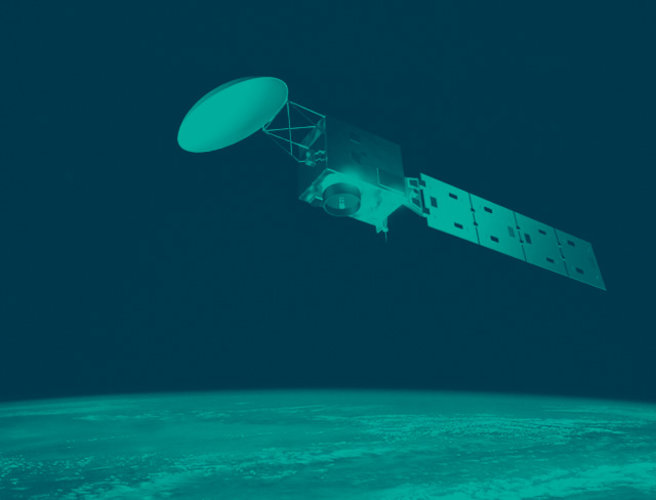
Instrument: SAR Interferometric Radar Altimeter (SIRAL), supported by Doppler Orbit and Radio Positioning Integration by Satellite (DORIS) and Laser Retro-Reflector (LRR) for precision orbit determination

Mass: 720 kg at launch, including 37 kg of fuel

Power: 2 × GaAs body-mounted solar arrays, each delivering 850 W; 78 Ah Li-ion battery

Launch: Early 2010

Launch site: Baikonur Cosmodrome, Kazakhstan

Launcher: Russian/Ukrainian Dnepr based on SS-18 intercontinental ballistic missile

Launch provider: International Space Company Kosmotras

Orbit: Mean altitude of 717 km and inclination of 92°; low Earth, polar, non-Sun-synchronous

Mission control: ESA’s European Satellite Operations Centre (ESOC) in Darmstadt, Germany

Ground station: Science data downloaded to ESA’s ground station in Kiruna, Sweden

Data processing: Data distributed directly to users from the ground station in Kiruna, Sweden; distribution and mission planning managed via ESA’s Centre for Earth Observation (ESRIN) in Frascati, Italy; long-term archive at a dedicated facility at the Centre National d’Etudes Spatiales (CNES) in Toulouse, France

Nominal life: three years (including a six-month commissioning phase) with a possible two-year extension

Satellite Prime Contractor: EADS Astrium  


ESRINESRIN website
Spacecraft Operations
Kiruna station
Related links
Baikonur CosmodromeKosmotrasEADS AstriumCNESDORISSIRAL
Downloads
Fact sheetFact sheet (German)


   Copyright 2000 - 2010 © European Space Agency. All rights reserved.