ESAESApod
   
ESApod
How to get ESApod
Multimedia
ESA Multimedia galleryESA Television RSS feeds
Services
HelpPortal terms of useCommentsSubscribe


Bookmark and Share


News
 
printer friendly page
Science with Integral – five years on
 
17 October 2007
With eyes that peer into the most energetic phenomena in the universe, ESA’s Integral has been setting records, discovering the unexpected and helping understanding the unknown over its first five years.

Vodcast

Play now | Download
 
Integral’s gamma-ray mission was originally to last just two years. Given its achievements so far, it is not a surprise that the mission has been extended to 2010.

Looking beyond our galaxy, science teams have located more than a hundred super-massive black holes, a million times the mass of the Sun, and which are now believed to be present in space on a much wider scale.

Another recently identified source, a quasar, is the farthest object detected by Integral so far, a gamma-ray lighthouse shining from the very edge of the universe. In our galaxy, Integral has also detected, by chance, a rare kind of transient gamma-ray source and discovered a new class of celestial objects emitting X-rays, unidentified in previous observations, called ‘superfast X-ray transients’ which are probably widespread throughout the Galaxy.

Also, in the galactic centre, Integral has made a key discovery that shows that a lot of particles of matter are getting annihilated by coming into contact with their antimatter counterparts.  


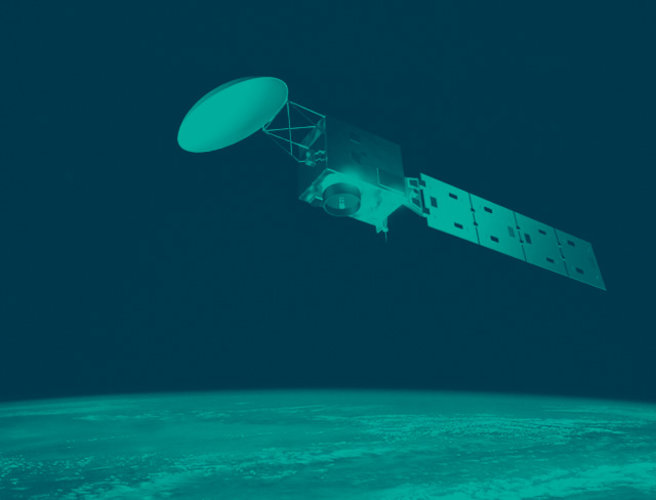
ESA's gamma-ray astronomy missionArtist's view of Integral
iTunesPodcastYahoo! PodcastsRSS Podcast ESApodLearnoutloudPodcastnetPodnova PodcastESApod
Required software
 Windows Media Player QuickTime


   Copyright 2000 - 2011 © European Space Agency. All rights reserved.