|  |  |  |  |
| |  | |  | |
 |
Integral in brief Integral overviewIntegral factsheet A truly international missionAbout Integral The spacecraftThe launcherThe launch site - BaikonurThe journey Integral's mission Multimedia Image galleryPre-launch images, Sept 2002Pre-launch images, October 2002Video gallery3D Flash 'model'Make a model
|  |  |  |  | | | Integral factsheet
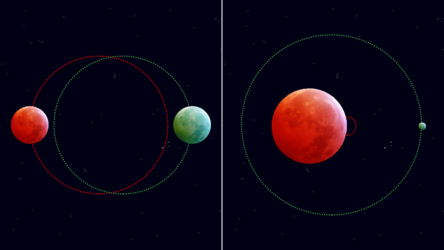
Tracking extreme radiation across the Universe Name Integral stands for the International Gamma-Ray Astrophysics Laboratory. Description Integral is the first space observatory that can simultaneously observe objects in gamma rays, X-rays, and visible light. Its principal targets are violent explosions known as gamma-ray bursts, powerful phenomena such as supernova explosions, and regions in the Universe thought to contain black holes. Launch 17 October 2002 (Proton launcher from Baikonur, Kazakhstan). Status: In operation. Journey Integral circles the Earth in a highly elliptical orbit once every three days. It spends most of its time at an altitude higher than 60 000 kilometres - well outside the Earth's radiation belts. It does this to avoid the background radiation effects which would interfere with the measurement of gamma rays. Notes Integral is the most sensitive, accurate, and advanced gamma-ray observatory ever launched.
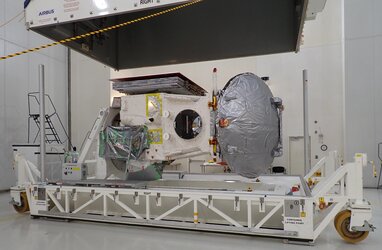
Integral's payload module weighs 2 tonnes, making this payload the heaviest ever placed in orbit by ESA.
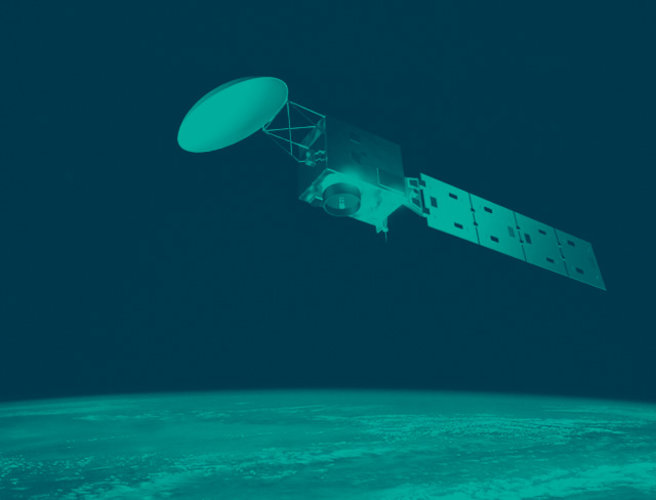
The service module of the Integral spacecraft is a rebuild of that developed for the XMM-Newton project. The two missions had some similar requirements making this a useful cost-saving measure.
Integral is a truly international mission with the participation of all member states of ESA and United States, Russia, the Czech Republic, and Poland.
Last update: 10 September 2004 | |
|  | More about... Integral overviewOther missions looking at gamma-rays Cos-B factsheetOther missions looking at x-rays Exosat factsheetXEUS factsheetXMM-Newton factsheetOther missions in Earth orbit Cluster factsheetCOROT factsheetCos-B factsheetDouble Star factsheetExosat factsheetHipparcos factsheetHubble factsheetHyper factsheetISO factsheetIUE factsheetXEUS factsheetXMM-Newton factsheet
|