ESAESA ScienceMars Express
   
Europe goes to Mars
About Mars Express
About Mars
Meet the team
Multimedia
VideoTalkMars Express imagesMars Express videosHRSC videosAnimation in 11 languagesDownload wallpapersDownload screensavers3D Flash 'model'Make a model
Services
Comments


News
 
printer friendly page
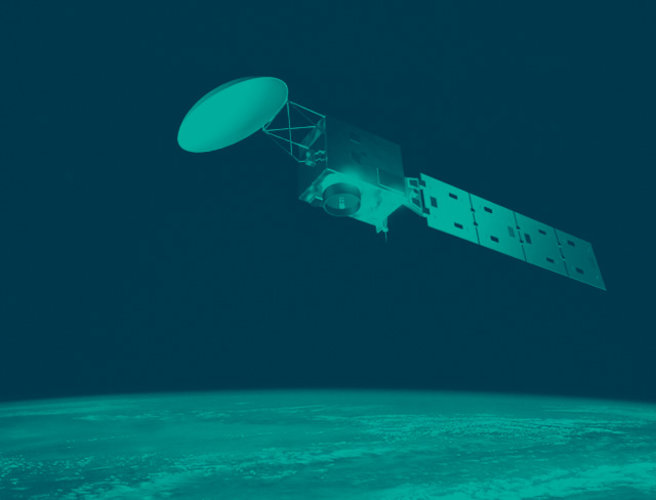
Mars Express with MARSIS antenna unfurled
Mars Express in orbit around Mars with the MARSIS antenna unfurled
Mars Express radar to be deployed in May
 
29 April 2005
Following green light for the deployment of ESA’s Mars Express radar, given in February this year, the radar booms are now planned to be deployed in the first half of May.
 
Once the deployment is successful, the Mars Express MARSIS radar will enable the first European spacecraft to orbit Mars to complement its study of the planet’s atmosphere and surface.

MARSIS (Mars Advanced Radar for Subsurface and Ionosphere Sounding instrument) is the first antenna of its kind which was also designed to actually look below the surface of Mars at the different layers of material, most notably for water.

The deployment of the three MARSIS radar booms is an operation which will take place in three phases, in a window spanning from 2 to 12 May 2005. These operations will be initiated and monitored from ESA’s European Space Operations Centre (ESOC) in Darmstadt, Germany.

Each boom will be deployed separately, with the two 20-metre ‘dipole’ booms to be unfurled first and the 7-metre ‘monopole’ boom to follow a few days later.  
 
MARSIS antenna
MARSIS main antenna
Before each deployment, the spacecraft will be placed in a ‘robust’ attitude control mode, which will allow it to tumble freely while the boom extends before regaining standard pointing to the Sun and Earth.

After each deployment, the control team will conduct a full assessment of the spacecraft status before a decision is taken to proceed with the next phase.

The result of each deployment can be assessed only after a series of tests, each taking few days. After the deployment of the three booms, ESA engineers will start the analysis of the complete behaviour of the satellite to be able to confirm the overall success of the operation.

The current schedule is subject to changes, because the timing of the complex series of operations cannot be all fixed beforehand. A status report will follow in due course.

Once the deployment is complete, MARSIS will undergo three weeks of commissioning before the start of actual science investigations, ready for when one of the prime regions of interest for radar observations comes into the right position through the natural evolution of the spacecraft’s orbit.

The MARSIS instrument was developed by the University of Rome 'La Sapienza', Italy, in partnership with NASA’s Jet Propulsion Laboratory (JPL) in Pasadena, California, USA.
 
 
For more information please contact:
 
Fred Jansen, ESA Mars Express Mission Manager
E-mail: fjansen @ rssd.esa.int


Looking at Mars
More about...
Mars Express factsheetMars Express instruments
Animation
See stages of MARSIS deployment
Related articles
Mars Express radar collects first surface dataSmooth deployment for second MARSIS antenna boomGreen light for the deployment of the second MARSIS boomDeployment of second MARSIS boom delayedMars Express latest findings give hints about water loss in the Martian atmosphereChances of life are linked to waterWater on early Mars?


   Copyright 2000 - 2009 © European Space Agency. All rights reserved.