GOCE operations
Editor's note: This page is no longer being updated, but will be preserved as a record. Click here for the latest information on GOCE.
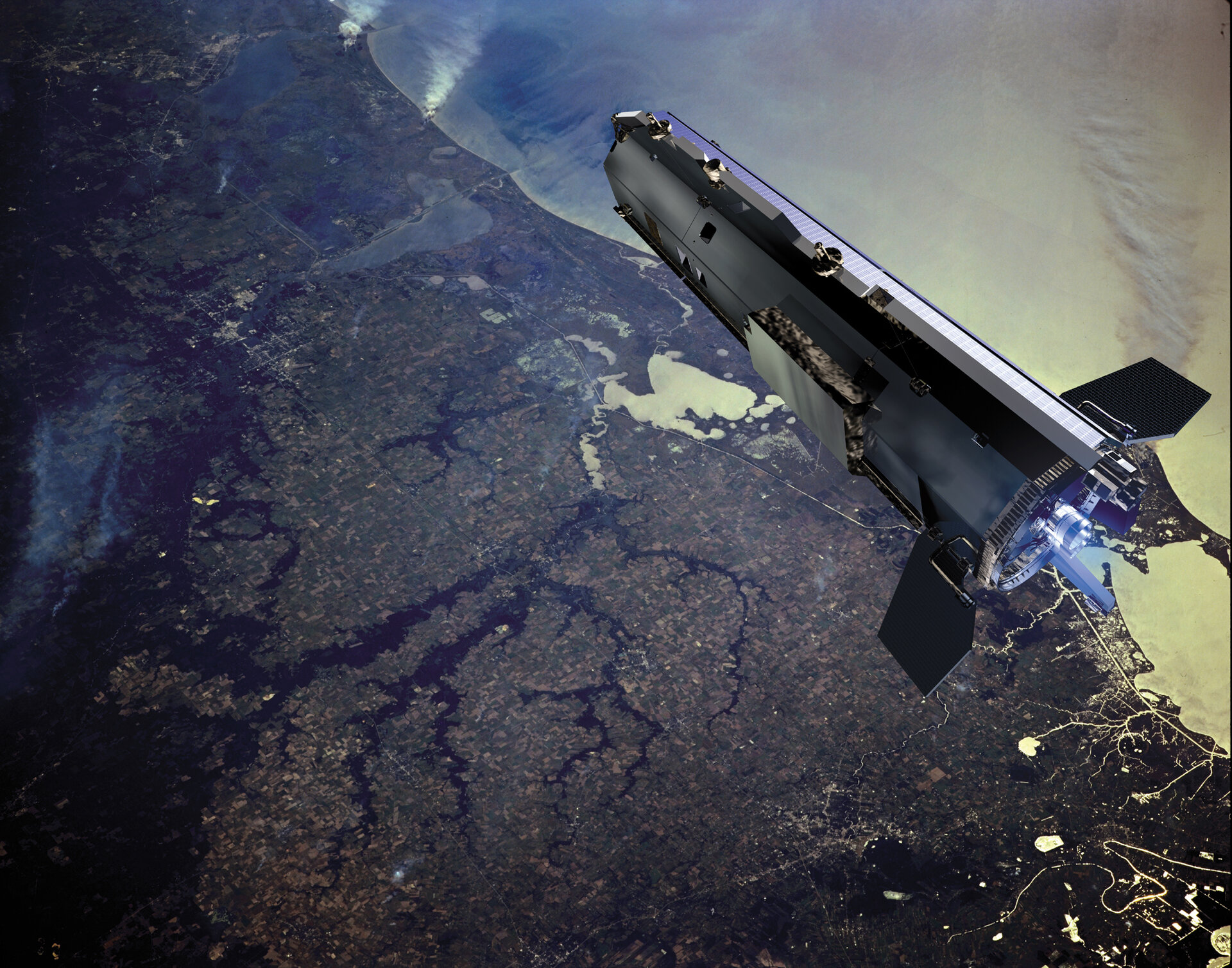
The Gravity Field and Steady-State Ocean Circulation Explorer (GOCE; pronounced ‘go-chay’) is measuring Earth's gravity field and model the geoid with extremely high accuracy. It was launched on 17 March 2009. Owing to its sleek shape, GOCE is often cited as one of ESA's most elegant space probes. The mission ended on 11 November 2013 after a planned destructive re-entry into the atmosphere.
The geoid, defined by Earth's gravity field, is a surface of equal gravitational potential. It follows a hypothetical ocean surface at rest (in the absence of tides and currents). A precise model of Earth's geoid is crucial for deriving accurate measurements of ocean circulation, sea-level change and terrestrial ice dynamics, all of which are affected by climate change.
The mission
The geoid is also used as a reference surface from which to map all topographical features on the planet. An improved knowledge of gravity anomalies will contribute to a better understanding of Earth's interior, such as the physics and dynamics associated with volcanism and earthquakes and also further our knowledge of land uplift due to post-glacial rebound.
The scientific objectives of the mission require GOCE to be operated in an extremely low orbit at altitudes down to 224 km, lower than any other Earth observation mission.
The GOCE Flight Operations Segment (FOS) is located at ESOC, Darmstadt, Germany.
| ROLE | Earth observation (EO) |
| LAUNCH DATE | 17 March 2009 |
| LAUNCHER/LOCATION | Rockot/Plesetsk Cosmodrome |
| LAUNCH MASS | ~1000 kg |
| ORBIT | Sun-synchronous, dawn-dusk, ~224 km |
| NOMINAL MISSION | 20 months | Extended to end-2013 | Complete 11 Nov 2013 |
| + Will model Earth's geoid with extremely high accuracy & spatial resolution + | |
Flight Control Team

The GOCE Flight Control Team (FCT) works from a combined Earth Observation Dedicated Control Room at ESOC.
Spacecraft Operations Manager Christoph Steiger, from Switzerland, manages an FCT of satellite operations engineers and controllers. Most team members are shared with other Earth observation missions, thus increasing cost effectiveness. The FCT is responsible for all satellite operations, interfacing with other ground segment teams, including Flight Dynamics, Ground Facilities and Software Support.
Christoph Steiger joined the GOCE FCT in 2006 after having worked on ESA's Rosetta and Venus Express missions. He assumed SOM responsibilities in 2009.
Mission operations overview
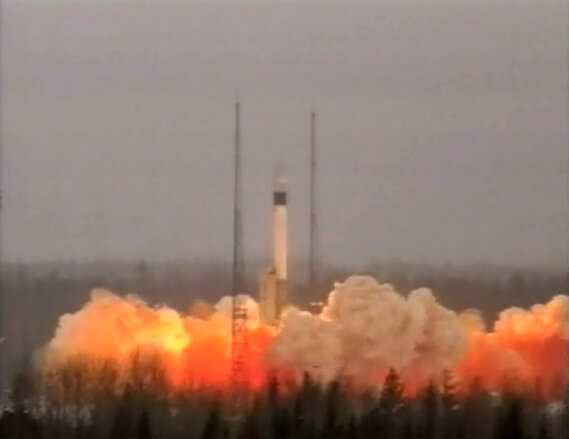
GOCE was launched on 17 March 2009 on a modified Russian intercontinental ballistic missile that had been decommissioned as part of the Strategic Arms Reduction Treaty.
The adaptation of the SS-19, called 'Rockot', uses the original two lower liquid-propellant stages of the missile, which has an excellent record of successful flights, in conjunction with a new third stage for commercial payloads. Rockot is marketed and operated by Eurockot, a German–Russian joint venture. Launch was from the Plesetsk Cosmodrome in northern Russia.
The launch went flawlessly. The rocket lifted off at 14:21 GMT and flew northwards over the Arctic. About 90 minutes later, after one orbital revolution and two Breeze-KM upper-stage burns, the 1052 kg satellite was released into a circular polar orbit at 283 km altitude with a 96.7º inclination to the Equator.
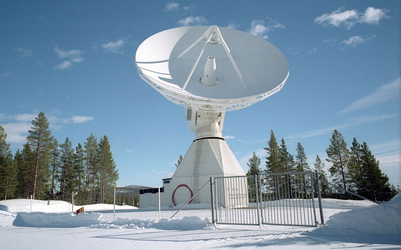
Contact with GOCE was established via ESA’s tracking station in Kiruna, Sweden, shortly after separation.
During the three days of LEOP, GOCE was operated around the clock from ESOC's Main Control Room with additional support by experts from the satelliter manufacturer on site. The main operations in LEOP consisted of bringing the satellite to a stable configuration suitable for the full checkout of the spacecraft and ground segment in the commissioning phase.

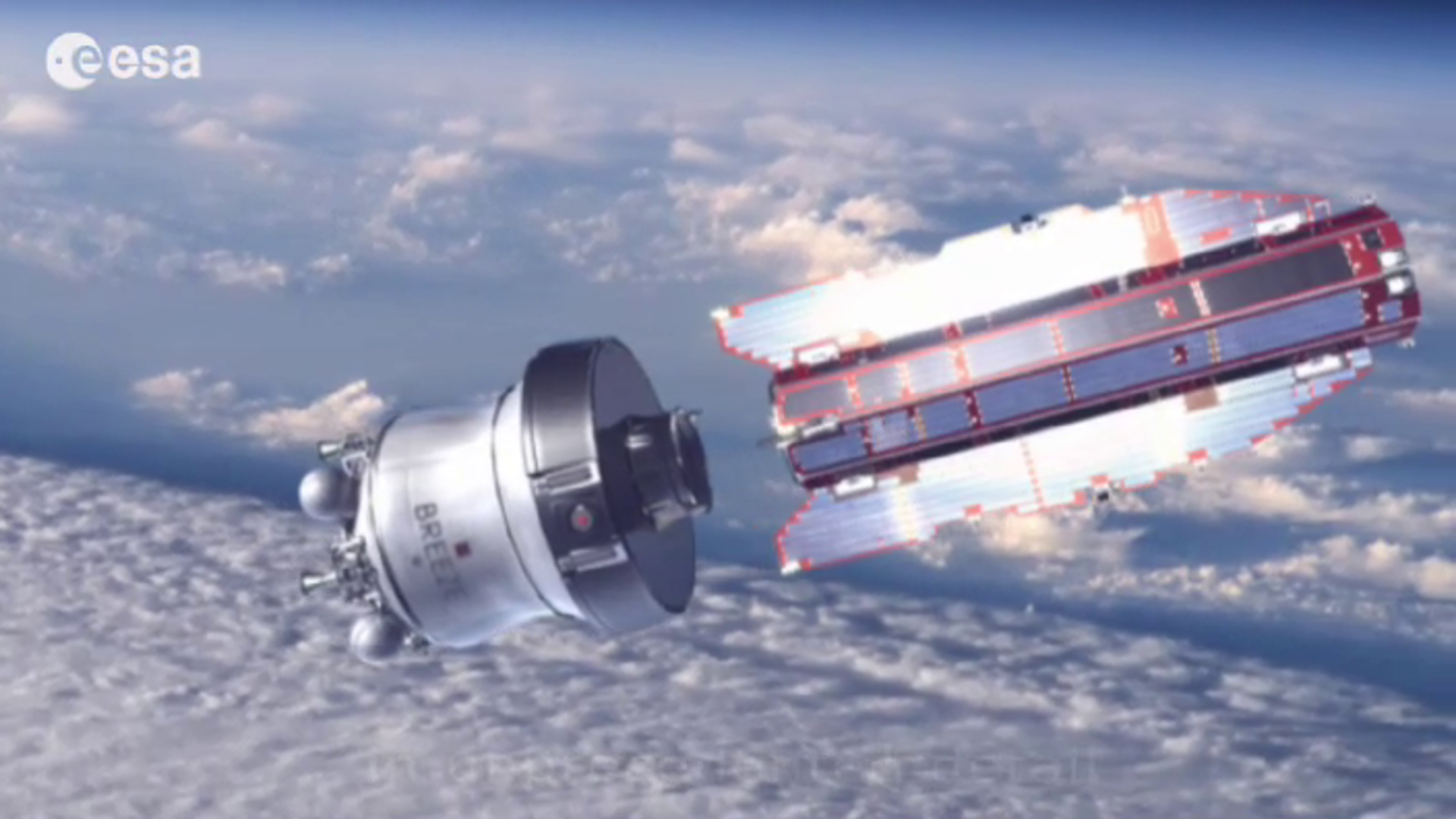
Access the video
Following completion of LEOP, operations were moved to the Earth observation Dedicated Control Room at ESOC, with team activities reduced to normal working hours.
Commissioning lasted until October 2009 and was dedicated to a full checkout of GOCE and ground segment. In particular, the ion propulsion system required to counteract the air drag at GOCE's low altitude had to be commissioned, as well as GOCE's highly sensitive main payload, the Gradiometer.
As GOCE had been injected into its orbit with some additional altitude so as to perform the complex commissioning activities, the orbit was left to decay naturally due to atmospheric drag from the initial altitude of 278 km to the desired altitude for science operations of 254 km.
Following completion of the orbit decay in September 2009, drag-free mode was resumed to stabilise the orbit. Routine science operations were started following a calibration of instruments.
Routine operations (2009-12)
From September 2009 to July 2012, GOCE was operated in drag-free mode at an altitude of 254 km, thereby acquiring data on Earth's gravity field. An occasional calibration of the Gradiometer was needed; however, GOCE science operations do not require complex observation campaigns. Routine operations consist of a weekly planning and uplink of the operations timeline covering all activities to be carried out, with the science data downlinked during regular ground station passes.
Occasionally, the drag-free mode is interrupted due to an anomaly on the satellite, which then has to be investigated and resolved by the FCT. In 2010, some major problems on the main platform computer required extensive recovery operations, with the nominal mission eventually resumed.
The mission was originally planned to end in April 2011. Owing to the excellent scientific results, the good status of the satellite, and the large margin in the fuel budget for the ion propulsion system, a significant extension of the mission lifetime was possible.
Low orbit operations campaign and end of mission (2012-13)
To maximise the scientific return of the mission prior to its end of life, in summer 2012 ESA started a campaign to gradually lower the orbit of GOCE even further, which is expected to bring tremendous improvements in the quality of the gravity measurements. The orbit was lowered in several steps starting in August 2012, with the final altitude of 224 km reached at the end of May 2013.
With the altitude 30 km lower than for the previous routine mission, the time available to recover the satellite in case of drag-free mode interruption can be as little as two days. Major changes in the setup of the FOS had to be implemented to guarantee satellite safety, including reinforcing the FCT.
Routine science operations at 224 km will continue until all the xenon fuel for the ion propulsion system is depleted. The exact date for this to happen depends on the highly variable level of solar activity and the accuracy of the fuel bookkeeping. Fuel depletion is estimated to occur towards the end of October 2013. Following exhaustion of the xenon, the orbit will start decaying rapidly owing to atmospheric drag, eventually resulting in the satellite reentering the atmosphere about 2–3 weeks later.
During this phase of orbital decay, the FOS will continue to operate the satellite, including tracking of the spacecraft, orbit determination and prediction, execution of routine ground station passes, and routine satellite monitoring and operations activities. Once this becomes infeasible owing to extremely high drag at very low altitudes, the satellite will be ‘passivated’. After this, GOCE will be monitored up to reentry by the ESOC Space Debris Office and members of the Inter-Agency Space Debris Coordination Committee using dedicated radar tracking stations.
The ground station - Kiruna
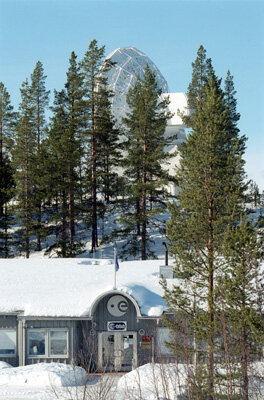
For routine operations, mission controllers use ESA's Estrack Kiruna antenna in Sweden as the prime station for command, control and tracking of GOCE.
Owing to the very low altitude of around 224 km at which GOCE is orbiting Earth, the ground station contacts, or passes, are extremely short, with an average duration of five minutes (as compared to 15 min for a mission in a more common Earth orbit of around 800 km). GOCE's low orbit is also the reason why the satellite is only visible at Kiruna during six out GOCE's 16 daily orbits, despite the high latitude of the station.
To complement the six daily Kiruna passes, three passes per day are routinely scheduled on KSAT's Svalbard ground station. In case of contingencies, KSAT's Toll station in Antarctica is used for providing additional visibility.
A unique aspect of GOCE is that the orbit starts decaying rapidly due to the atmospheric drag whenever there is any interruption in drag-free operations. This may lead to problems when trying to acquire the satellite at the next ground station pass. Special measures are taken to allow for an efficient search for the satellite with the available antennas in such a case.
Ground segment & mission control system

The GOCE flight operations segment at ESOC uses the SCOS-2000 mission control system. With satellite command and control as its prime purpose, the mission control system also comprises facilities for mission planning and for onboard software maintenance.
Other main components of the GOCE flight operations segment at ESOC are the flight dynamics system for orbit determination and prediction, a facility for remote control of the ground stations and the GOCE satellite simulator. This simulator is mainly used for validation of operational procedures and training of the FCT.
The preparation of the plan for GOCE's scientific operations is performed by the payload data ground segment at ESA/ESRIN in Frascati, Italy. The scientific data downlinked from GOCE by ESOC are transferred to ESA/ESRIN for initial processing and distribution to scientists.
The platform and payload
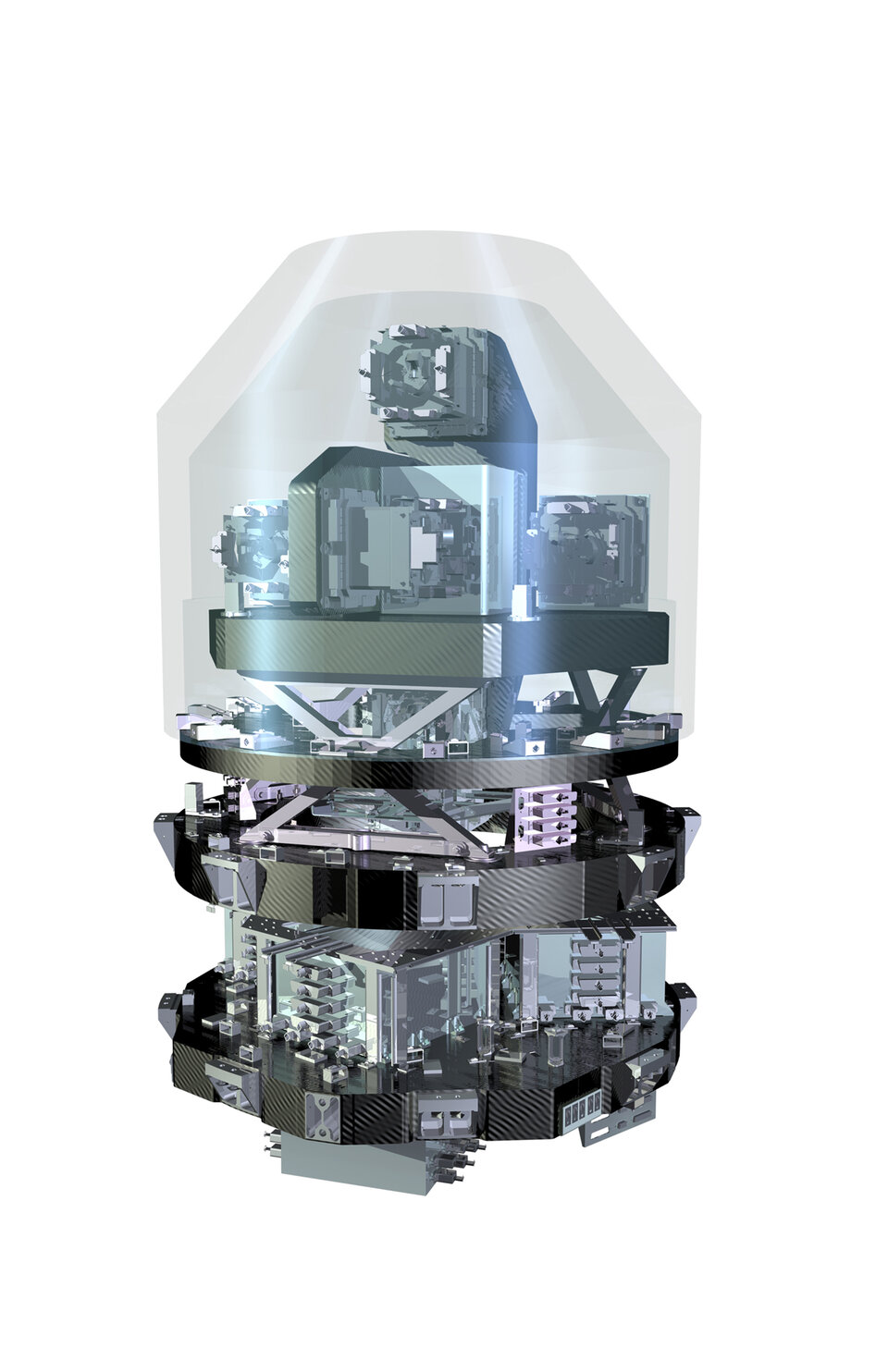
GOCE has a unique design driven by the specifics of the mission. To minimise aerodynamic drag forces and torques at GOCE's low altitude, the spacecraft structure has a slim octagonal design (5 m long, cross section of 1.1 sq m, launch mass 1050 kg), is fully symmetric and is provided with winglets for additional aerodynamic stability.
GOCE employs a drag-free attitude and orbit control system using an ion propulsion engine for continuous, closed-loop counteraction of the drag caused by Earth's atmosphere. To minimise internal disturbances, the satellite does not include any moving parts.
GOCE is the first satellite employing the concept of gradiometry, i.e. the measurement of acceleration differences over short baselines between proof masses of a set of accelerometers of an Electrostatic Gravity Gradiometer (EGG). The accelerations measurable are as small as one part in 10 million million of the gravity experienced on Earth, making EGG about 100 times more sensitive than any accelerometers previously flown. EGG is used to measure high-resolution features of Earth's gravity field, while large-scale phenomena in the gravity field are obtained though analysis of GOCE's orbit as measured with a Global Navigation Satellite System receiver on the satellite (the Satellite-to-Satellite Tracking Instrument: SSTI).
Unlike most other missions, GOCE has no clear separation between the 'platform' and the 'payload', with both the EGG and the SSTI measurements being used by the satellite to keep the drag-free control working.