Planck Project Scientist: An interview with Jan Tauber
What is it that you personally most await from this mission?
Personally I hope that with Planck we find features that we cannot readily explain with current theories of the formation and evolution of our Universe. That would be vastly more stimulating than a simple, more definite confirmation that all our current ideas are still valid!
And what, according to you, does the scientific community most await?
The community of cosmologists is hoping that Planck will be able to detect the signature of primordial gravitational waves, which would give important support to the idea of inflation. But Planck offers great science not only to cosmologists but to a wide variety of astronomers. So there is a range of different expectations in different fields.
What do you think the greatest scientific challenges will be, once the mission is in place and starts collecting data?
The greatest challenge will be to demonstrate that any significant signature we find is real, and not just some spurious non-cosmological signal. It will require painstaking detective work and the will not to succumb to the temptation to get our results out there, quickly.
Would you share with us what fascinates you most about this particular field?
What I find most fascinating is the fact that out of such a simple object as the Cosmic Microwave Background we can derive so much information about the origin and evolution of our very complex Universe.
Is the spacecraft and the mission, now that it is ready, vastly different from what you imagined when it was first proposed more than 15 years ago?
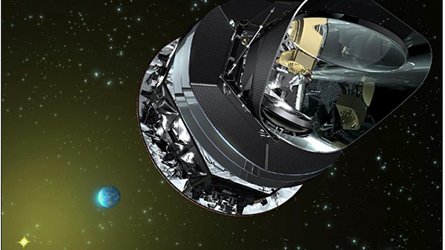
The overall design is not very different. But at that time it wasn’t much more than a concept. All the engineering work carried out since in order to implement the concept has changed it quite a bit at a detailed level. And it is way more powerful now than we thought we could make it 15 years ago!
You, as other scientists here at ESA, are an inspiration to young kids out there wanting to study science and about space. Did you ever dream about this? What would you tell all of those aspiring scientists out there?
Scientists are responsible for repeatedly changing the world view. For me, it is for me the most intellectually stimulating enterprise of all. If you are curious and enjoy using your mind, get into science!
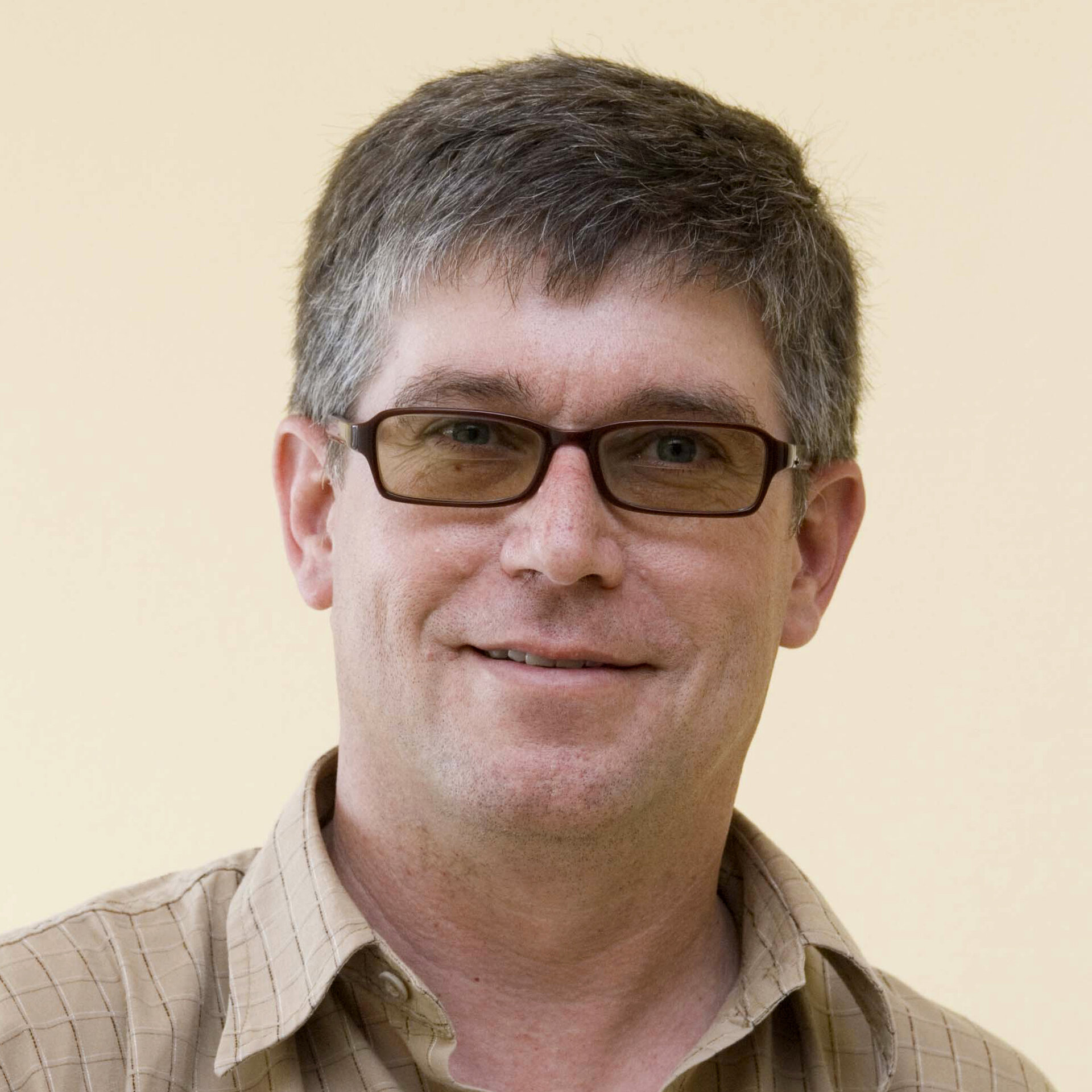
| Jan Tauber ESA Planck Project Scientist Born: 1 June 1960, in Djakarta, Indonesia Jan studied for a BSc. in Physics and a BSc. in Electrical Engineering in Bogota, Colombia. He worked for industry in Scotland (UK), and Quito (Ecuador), before starting a PhD in radio astronomy at the University of Massachusetts, which he completed in 1990. Until 1992, Jan worked as a Postdoctoral Research Fellow at the University of California at Berkeley (USA), where he worked in astronomical millimetre-wave interferometry. He joined ESA as a scientist in October 1992 initially working with balloon-borne experiments, and was assigned Study Scientist for Planck in 1993 (the mission was called COBRAS/SAMBA back then). Jan has been the Project Scientist for Planck since its selection in 1996.
|