ESASpace Engineering
   
What we do
Directorate of Technical and Quality Management (TEC)
Electrical
Electrical engineeringControl SystemsData Systems
Radio Frequency Payload Systems
Electromagnetics and Space EnvironmentPower and Energy Conversion
Mechanical
Mechanical engineeringThermal ControlStructures and MechanismsMechatronics and Optics, incl. robotics and life supportPropulsion and Aerothermodynamics
Systems
Systems and software engineeringSoftware SystemsSystems Engineering, incl. cost engineeringTechnology programmes
Product Assurance
Product AssuranceFlight SafetyDependabilityQuality Management and AssuranceMaterials and ProcessesElectronic ComponentsSoftware Product Assurance
Standards
Requirements and standardsEuropean Cooperation for Space Standardization (ECSS)European Space Components Coordination (ESCC)
Services
ESA calendar of eventsSubscribe


Bookmark and Share


printer friendly page
Radio Frequency Payload Systems
 
Investigating atmospheric and surface properties
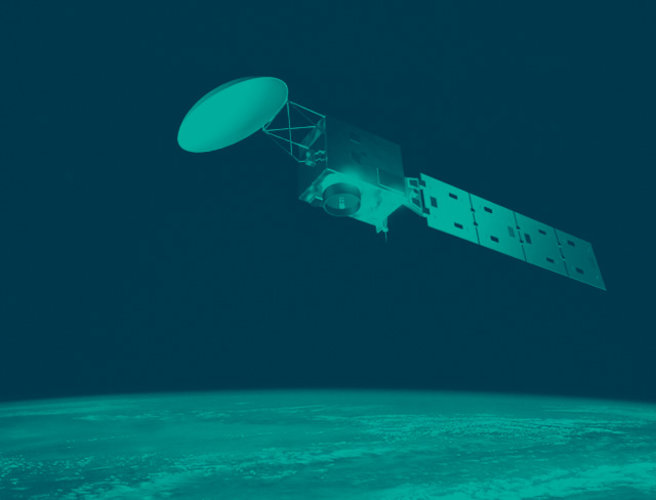
Artist's view of Venus Radio Science experiment
 
'Payload' was originally a seafaring term for revenue-producing cargo on a ship. In space terms it refers to those elements of the spacecraft specifically dedicated to producing mission data and then relaying that data back to Earth.


What is the Radio Frequency Payload Systems domain?
 
Microwave radio signals serve as the backbone of communication between space systems and the ground. Telecom satellites are representing the largest commercial satellite application to now and they require continuous performance development and technological improvement to cope with the very aggressive worldwide commercial competition.

Whether on an active or passive basis, radio signals also function as a remote sensing tool for scientific observation and environmental monitoring on space science and Earth observation missions. And space-based radio navigation signals returned back to Earth form the basis of increasingly indispensable sat-nav systems. The Radio Frequency prefix is related to the fact that the payload and terminal interface towards and from ground is taking place at radio frequency. But nowadays RF payload and terminals are including advanced functionalities which often involve digital signal processing and in some cases also optical technologies.

RF Payload Systems deals with not only the specific radio technologies, equipments (low and high power amplifiers, filters, frequency converters) and systems aboard a spacecraft tasked with delivering mission objectives, but also the supporting ground equipment and telecommunication systems through which spacecraft payloads are controlled and results communicated to mission control.

On the spacecraft side this incorporates the definition and design of scientific and remote sensing instruments operating on the radio spectrum up to microwave or millimetre-wave frequencies as well as dedicated communication payloads, such as those flown on telecommunication satellites.

It also includes devices capable of transmitting, receiving or utilising radio signals from current and future navigation systems – the current GPS and GLONASS satellite constellations, Europe's land-based EGNOS overlay signal and the forthcoming Galileo satellite navigation system. The accurate Galileo Signal In Space (SIS) generation require very high on-board equipment accuracy as well as ultra-stable atomic clocks. Also on-ground Galileo reference stations have to make very accurate and stable measurements of the Galileo SIS to deliver the overall system accuracy.

In terms of the Earth-based 'ground segment', Payload Systems covers all aspects of telemetry, tracking and telecommand (TT&C), including signal coding and modulation and radio frequency equipment and subsystems and associated standardization aspects.


Last update: 22 April 2010


More information
Why is RF Payload Systems important?What innovations does RF Payload Systems involve?What applications and missions does RF Payload Systems enable?
Laboratory
RF Payload Systems Laboratories
Learn more about...
RF Payload Systems


   Copyright 2000 - 2011 © European Space Agency. All rights reserved.