ESAVenus ExpressESA Science
   
Europe goes to Venus
About Venus Express
About Venus
Meet the team
Multimedia
Venus Express imagesVenus Express videosVideoTalk3D Flash 'model'Build a model (pdf)AnimationsWallpapersScreensavers
Services
Comments


Article Images
Hot stuff on Venus! Venus Express sees right down to the hell-hot surface
 
14 December 2006

Temperature maps of Venus’ surface
Download:
 HI-RES JPEG (Size: 556 kb)
The temperature maps of the Venusian surface shown in this image were built thanks to direct measurements obtained by Venus Express’ VIRTIS instruments (left), compared with surface temperature predictions based on the Magellan topographic data obtained in the early 1990s (right).

VIRTIS, the Visible and Infrared Thermal Imaging Spectrometer on board ESA’s Venus Express, gathered the data combined into this mosaic on 10 August 2006, during a single orbit (orbit 112). The spacecraft was flying over the Themis and Phoebe Regiones in the southern hemisphere of Venus. Themis Regio is a highland plateau located on the 270º East meridian and at about 37º South latitude. In the future, combining data from many orbits will significantly improve the quality and the spatial resolution of the surface images.

This is a region that has experienced strong volcanic activity in the past, and possibly still does today. A series of interconnecting large coronae is running through the highland. Coronae are circular to elongate features, which are surrounded by multiple concentric ridges. These features are thought to be forming by hot spots in the Venusian crust. The coronae in Themis Regio are building a chain of volcanoes and faults called Parga Chasma, which runs from northwest to southeast, and eventually connect Parga with Atla Regio (not covered in the inage). The Phoebe Regio is a highland region of Venus (such regions are called 'tesserae'), where most of the Soviet Venera probes landed.

Large highland regions are clearly visible, as well as single volcanic structures such the Mielikki Mons, in the centre of the mosaic. On the south-eastern part of the mosaic VIRTIS covered a region for which Magellan maps are not available.

The surface-temperature measurements were performed using the atmospheric windows located in the near infrared at 1.02, 1.10, and 1.18 microns, respectively. The radiation coming from the surface is affected by the thick cloud layer, so a ‘de-clouding’ algorithm had to be applied.

The non-labelled version of this image is available by clicking here .

Credits: ESA/VIRTIS-VenusX Team


Venus Express
Download:
 HI-RES JPEG (Size: 225 kb)
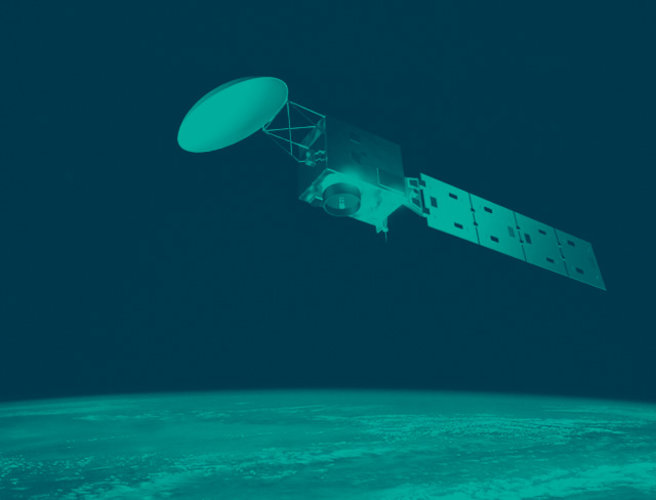
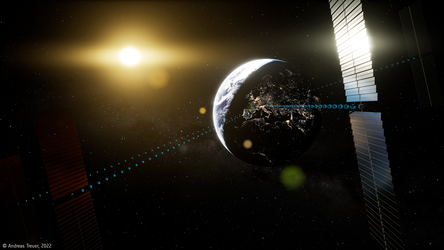
Venus Express is studying largely unknown phenomena in the Venusian atmosphere like never before. Its suite of instruments is also digging into the interaction between the solar wind and the planetary environment. In addition, the mission is gathering glimpses of the planet's surface, which is strictly coupled with its dense atmosphere.

Credits: ESA (Image by AOES Medialab)
 
 
Surface areas mapped by VIRTIS
Download:
 HI-RES JPEG (Size: 2387 kb)
On this radar-map of Venus, built with data that NASA’s Magellan gathered in the early 1990s, the areas that were over-flown by Venus Express on 10 August 2006 are indicated by the named features. The VIRTIS instrument on board retrieved unprecedented information about the surface temperature, and so provided the first ever large-scale temperature map of the Southern hemisphere of Venus.

The non-labelled version of this image is available by clicking here .

Credits: NASA/Magellan


Feature
 ESA astronaut C. Nicollier on voyaging to Venus ESApod: Venus Express
Looking at VenusArtist's impression of Venus Express orbiting Venus
ESA’s Venus Express to reach final destination
Related articles
Happy birthday, Venus Express!Complex meteorology at VenusFlying over the cloudy world – science updates from Venus ExpressDouble vortex at Venus South Pole unveiled!Venus Express has reached final orbitUnexpected detail in first-ever Venus south pole imagesVenus within ESA probe reachAnd now… straight to Venus!Successful Venus Express main engine testFirst light for the Venus Monitoring CameraVenus Express performs flawlessly, LEOP completeVenus Express mission operations updateVenus Express en route to probe the planet's hidden mysteriesSaturn joins Venus in the vortex club
Related links
Venus Express operationsNASA sees into the eye of a monster storm on SaturnWebcam from ESOC


   Copyright 2000 - 2009 © European Space Agency. All rights reserved.