ESAVenus ExpressESA Science
   
Contents
Where the sulphuric acid forms
Europe goes to Venus
About Venus Express
About Venus
Meet the team
Multimedia
Venus Express imagesVenus Express videosVideoTalk3D Flash 'model'Build a model (pdf)AnimationsWallpapersScreensavers
Services
Comments Bookmark and Share


printer friendly page
Mariner 10 image of Venus cloud tops
Acid clouds and lightning
 
At around 60 kilometres altitude is a very thick cloud layer – a 20 kilometre-deep blanket surrounding the planet. It marks the limit between Venus’s lower and middle atmospheric layers. It is this yellowish layer that prevented for a long time Earth-based observatories and previous orbiter missions to see through.

It is known today that the upper part of this layer is mostly composed of tiny droplets of sulphuric acid, but what is happening chemically in the lower clouds is still unknown. For instance, what is the origin of the large solid particles floating in the lower clouds observed by Pioneer-Venus?

The Venus Express remote-sensing instruments will be able to see how the clouds are shaped and structured, how they form and evolve in time, how their opacity varies and what molecules they are made of. Local and global weather will be no secret for Venus Express.

During previous ground and satellite observations, visible flashes in the atmosphere have been observed, and localised emissions of radio waves have also been reported. Are they due to lightning?

The sulphuric acid droplets can be highly electrically charged, and so they offer the potential for lightning. This is very important, not only to learn whether it is possible that lightning has an influence on Venus atmospheric chemistry, but also to globally understand how the atmosphere of all terrestrial planets become electrified and then discharge.  
 
Where the sulphuric acid forms
 
The higher layers of the atmosphere, between 60 and 200 kilometres altitude, are also still relatively unknown. We know that in the middle atmosphere (60-110 kilometres), above the cloud tops, carbon monoxide is in great abundance among the minor species. This is formed by dissociation of carbon dioxide by ultraviolet radiation coming from the Sun.

Photo-dissociation of sulphur dioxide leads to the formation of sulphuric acid molecules that eventually form the cloud aerosols. Also limited amounts of oxygen and water vapour are present in the middle atmosphere. Studying the chemical cycles of these elements is important to understand the formation of the clouds below.

Higher in the atmosphere, above 110 kilometres, the mysteries continue. In the higher atmosphere of a planet as close to the Sun as Venus, why do we measure temperatures as low as 30 °C on the day side, and even –160 °C on the night side?

And why do such differences between day and night sides not cause the strong winds we would expect? This behaviour is unique in the Solar System.


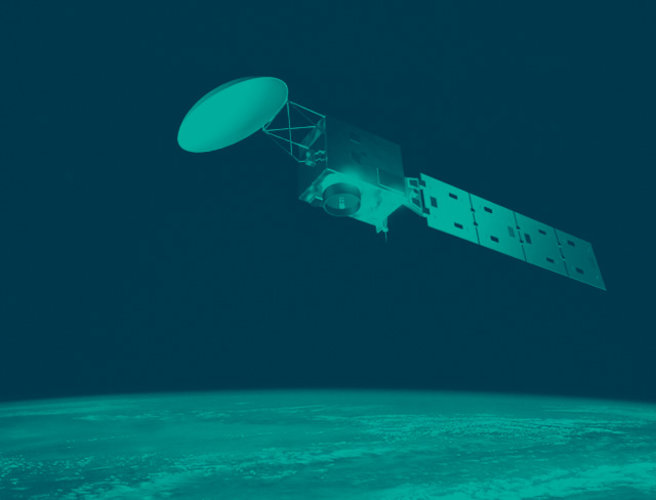
Looking at VenusArtist's impression of Venus Express orbiting Venus
Launch replay
Venus Express launch
Related articles
Venus Express performs flawlessly, LEOP completeVenus Express mission operations update"Venus Express, give me a GO/NO GO for launch..."Venus Express: ready for lift-offGreen light for Venus Express launcher fuellingVenus Express countdown activities startedVenus Express moved back to launch padVenus Express set for transport to launcher assembly buildingVenus Express mated with upper-stage
More about...
Status reportsLaunch in detailVenus Express factsheet
Related links
Starsem - the SoyuzVenus Express operationsCebreros station webcam


   Copyright 2000 - 2010 © European Space Agency. All rights reserved.