|  |  |  |  |
| |  | |  | |
 |
| Europe goes to Venus About Venus Express About Venus Meet the team Multimedia Venus Express imagesVenus Express videosVideoTalk3D Flash 'model'Build a model (pdf)AnimationsWallpapersScreensaversServices Comments
|  |  |  |  | | | | Article Images |  | ESA finds that Venus has an ozone layer too 6 October 2011
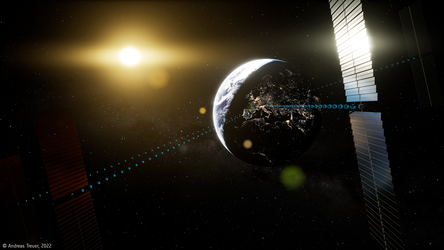
 | This is an animation of Venus Express performing stellar occultation at Venus.
Venus Express is the first mission ever to apply the technique of stellar occultation at Venus. The technique consists of looking at a star through the atmospheric limb. By analysing the way the starlight is absorbed by the atmosphere, one can deduce the characteristics of the atmosphere itself.
Credits: ESA (Animation by AOES Medialab) |  |  |  |  |
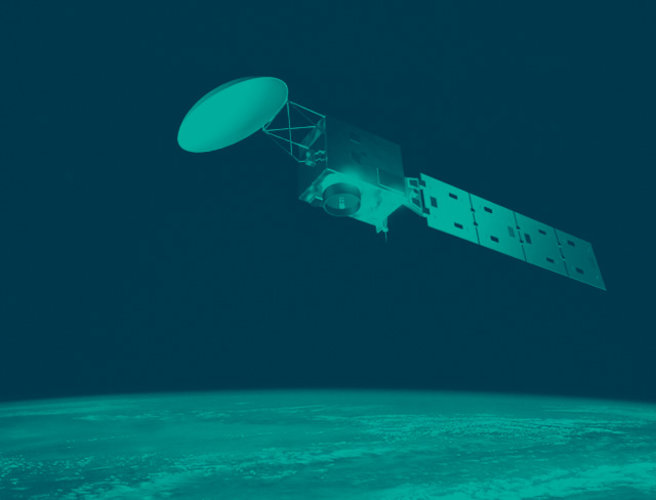
| | | |  | | Venus Express has two solar cell panels per wing comprising alternating rows of standard triple junction solar cells as well as highly reflective mirrors to reduce the operating temperatures. There is twice as much sunlight in Venus's orbit as there is in Earth's orbit, plus additional thermal input from the Venusian surface and atmosphere – 75% of sunlight being reflected up from it. In certain cases, this results in Venus Express receiving an equivalent of the thermal input from 3.5 Suns. |  |  |  |  |
| | | |  | This animation shows Venus, a planet very similar to Earth in mass and size, but in reality an entirely different, exotic and inhospitable world. It is hidden below blankets of dense clouds of noxious gases, such as carbon dioxide and sulphuric acid, and presents the most dramatic greenhouse effect taking place in the Solar System. Venus Express is helping to find out how a planet apparently so similar to Earth evolved in a way so radically different.
Credits: ESA - C. Carreau |  |  |  |  |
| |
|  | Looking at Venus ESApod: Venus Express Related articles Venus holds warning for EarthVenus Express finds planetary atmospheres such a dragWas Venus once a habitable planet?Venus is alive – geologically speakingNew map hints at Venus' wet, volcanic pastWatching Venus glow in the darkESA extends missions studying Mars, Venus and Earth’s magnetosphereWhere did Venus’s water go?Venus comes to life at wavelengths invisible to human eyesVenus Express searching for life – on EarthHow windy is it on Venus? Venus Express answersClosing in on VenusNew details on venusian clouds revealedKey molecule discovered in Venus’s atmosphereIn depth This story in depth
|