ESAHuman Spaceflight and ExplorationNode-3 & CupolaColumbusISSAstronauts
   
General info
Node-3, the most modern module of the ISSCupola, ISS Observation ModuleNode-3 systems and internal racksSTS-130 flight timeline
Technical info
Node-3CupolaWater Recovery System RacksOxygen Generation System RackAir Revitalization SystemWaste and Hygiene CompartmentT2 Colbert Treadmill
advanced Resistive Exercise Device
Europe and ISS
ISS and Europe’s Major ContributionsTaking the ISS to the next level: ISS exploitation and ELIPS
Downloads
Information Kit (pdf)STS-130 Daily Activities (pdf)
Multimedia
Image galleryVideo gallery
Services
Bookmark and Share


printer friendly page
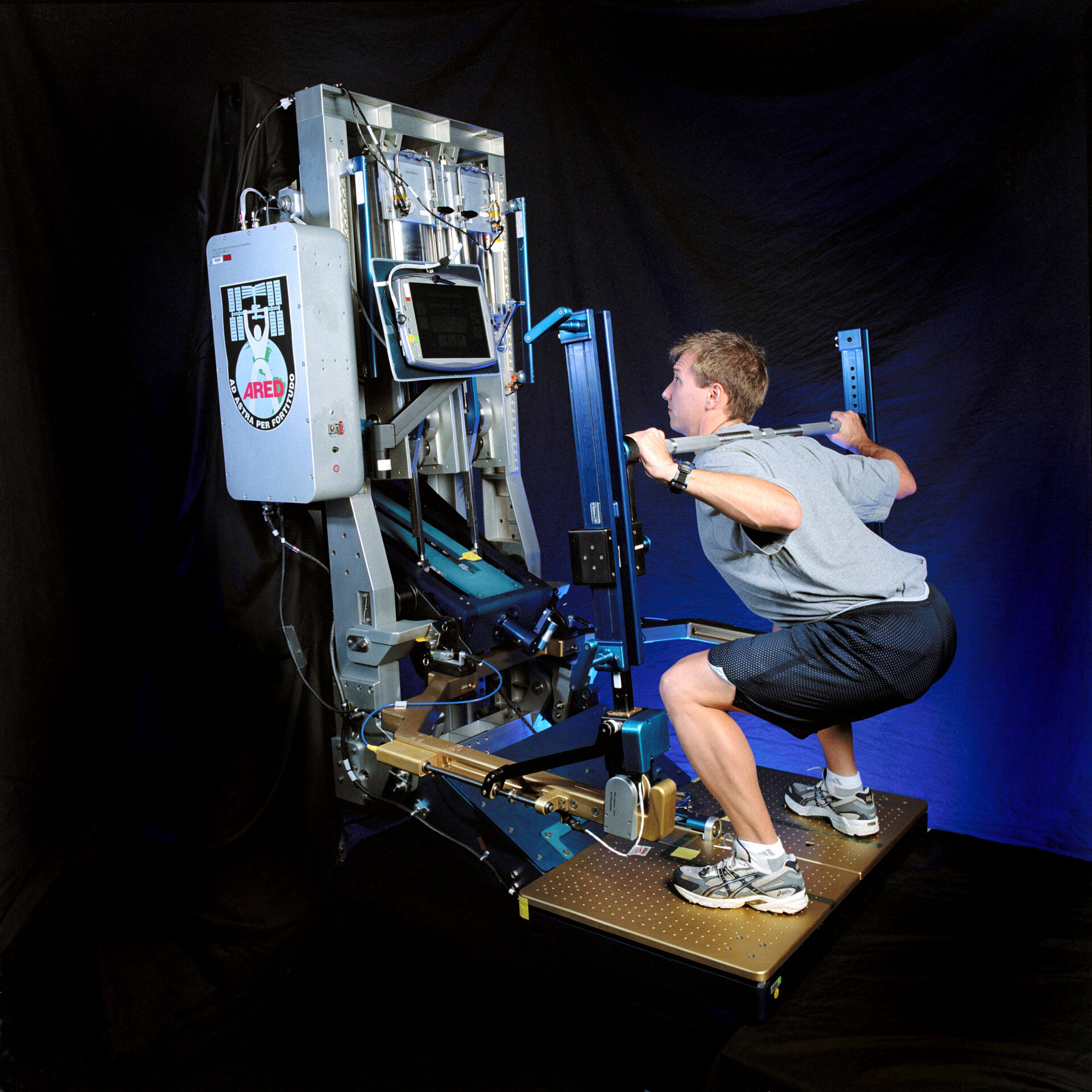
advanced Resistive Exercise Device (aRED)
NASA's advanced Resistive Exercise Device (aRED) for the ISS
advanced Resistive Exercise Device
 
The advanced Resistive Exercise Device (aRED) will not take up a rack location in Node-3 but will still be located in the new module. It was developed to improve existing ISS exercise capabilities. It mimics the characteristics of traditional resistive exercises (weighted bars or dumbbells) by providing a more constant force throughout the range of motion. It offers traditional upper and lower-body exercises, such as squats, dead lift, heel raises, bicep curls and bench press.
 
The aRED uses vacuum cylinders to provide concentric workloads up to 270 kg, with an eccentric load up to 90% of the concentric force. It also provides feedback to the astronaut during use and data to the NASA exercise physiologists. Flight surgeons, trainers and physiologists expect that the greater loads provided by aRED will result in more efficient and effective exercise, thereby preventing the muscle and bone loss that astronauts sometimes experience during long missions.  
 
Last update: 3 February 2010


Node-3 & Cupola
Node-3 and Cupola interviewsA room with a view for the International Space Station: Completion of the Cupola observation module
Also visit
Thales Alenia Space Building the ISS
See the ISS


   Copyright 2000 - 2010 © European Space Agency. All rights reserved.