![]() |
Thermal protection systems Reusable Thermal Protection Systems and Hot Structures Development of reusable European Thermal Protection Systems (TPS) and Hot Structures (HS) started back in the early 1990s during the days of the Hermes space-glider. After the cancellation of Hermes, considerable development on TPS&HS technologies continued through several ESA-programmes, particularly the Manned Space Transportation Program (MSTP) and the Future European Space Transportation Investigation Programme (FESTIP).
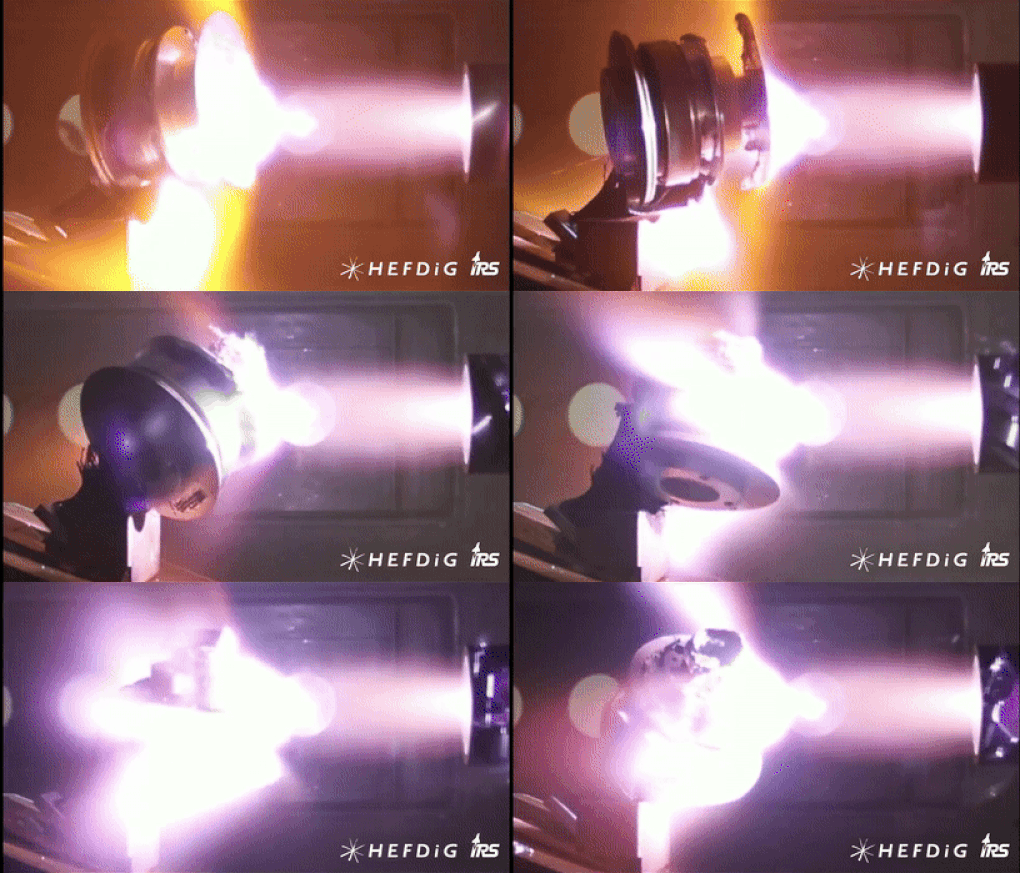
While reusable TPS technologies are mainly focussed towards vehicles for multiple earth-entries (reusable launch vehicles or transfer vehicles to ISS), atmospheric entry probes for exploration mission mostly depend on ablative thermal protection systems. An impressive recent example is the Huygens probe which entered into Titan's atmosphere in January 2005. Future sample return mission (from e.g. Mars or comets) will involve a direct high-speed Earth entry leading to peak heat fluxes in the range of 10-20MW/m2, and will therefore require a highly robust TPS for the re-entry into the Earth atmosphere. Potential missions to explore the atmospheres of the large gas planets will be confronted with heat flux ranges which are still at the limits of today’s thermal protection systems.
Though no such mission is currently confirmed, there is a strong scientific interest and several feasibility studies were performed in recent years. In 2005 ESA has initiated a European Ablation Working Group with the aim to improve visibility and dialogue in between the different institutes, industries and agencies working on the subject. An immediate particular objective of the working group is the improvement of existing numerical simulation codes and the establishment of common material databases.
Further technology development is planned for the next years in the field of ablative systems in order to prepare for the interesting and demanding missions currently under consideration. Last update: 7 May 2007 |