


Coming to a cinema near you - courtesy of ESA
We've got digital television. Next comes digital cinema. Thanks to ESA, cinema-goers in five European countries will be able to get an early taste of the new technology later this summer.
As part of an ESA-funded project, ten cinemas in Austria, Germany, Italy, Spain and the UK will be screening movies transmitted and played digitally rather than by the conventional analogue method.
The advantage to the cinema-goer should be no blemishes on the moving image and greater and consistent clarity. Conventional film suffers from degradation, which increases with the number of times it is played. Movies stored digitally on the cinema's computer hard disc can be played indefinitely with no loss of quality.

When digital cinema really takes off, film and distribution companies will also see a big advantage, as they will no longer need to make and deliver thousands of bulky reels of film to cinemas worldwide. Distribution will involve no more than relaying the movie via satellite from the distributor's to individual cinema's computers.
"Cinema is the last medium to go digital because the amount of information you need to handle is enormous if you are to have the same quality of image we're used to seeing with analogue 35mm film," says Francesco Feliciani who coordinates the digital cinema project from ESTEC. The information contained in a TV image is far less as the screen is so small. The same amount of information displayed on a cinema-size screen would result in a very grainy, poor quality image.
Digital cinema is now becoming a reality, thanks to technological advances in digital compression, storage, delivery and digital projectors. ESA is supporting the take up of this new technology under its ARTES programme, which aims to encourage European and Canadian industry to exploit new ways of using satellite communications. The Agency is collaborating with two project teams which are working on different aspects of producing and transmitting files containing about 60 Gbytes or about 100 CDs- worth of information, enough for one feature length movie.
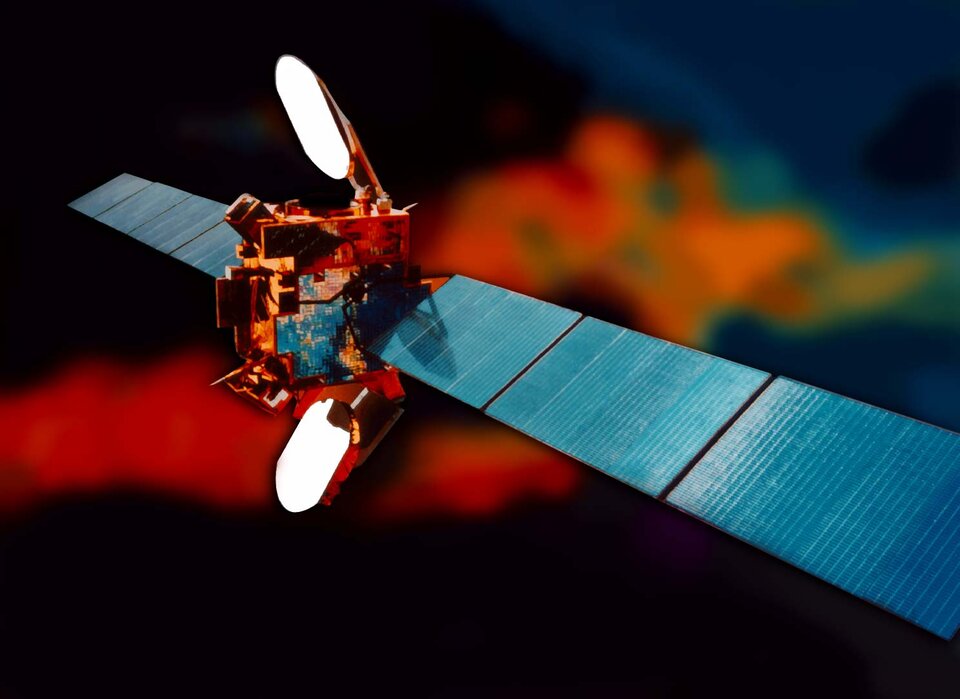
Cast4All, a Belgian company, has developed a "multicast management platform" which allows the distributor to select and send a film digitally via satellite to specified receivers and to monitor the reception status of each site to ensure reliable delivery. Elsacom, an Italian company, is leading a team including UCI, Screen-Digest and Cinecittà, which is preparing and will be running the pilot service for five months in10 European cinemas this summer. As well as showing feature movies, the pilot will also demonstrate other possible uses of the digital cinema. These include being able to tailor adverts to local audiences and show alternative content such as live events which can be transmitted directly to cinemas via satellite, just like live TV. The advent of digital cinema opens up new and varied uses for our movie theatres.

