Hubble's Advanced Camera unveils a panoramic new view of the Universe
Jubilant astronomers today unveiled humankind's most spectacular views of the Universe as captured by the NASA/ESA Hubble Space Telescope's new Advanced Camera for Surveys (ACS). They also reported that Hubble is operating superbly since the March servicing mission and are looking forward to more pictures from the newly revived NICMOS camera.
"The ACS is opening a wide new window onto the Universe. These are among the best images of the distant Universe humans have ever seen," says Johns Hopkins University astronomer Holland Ford, the lead scientist in the ACS' seven-year development. "The ACS will let us obtain the deepest image of the Universe for the foreseeable future," added astronomer Garth Illingworth, the deputy leader for the ACS.
The camera's tenfold increase in efficiency will open up much anticipated new 'discovery space' for Hubble. "ACS will allow us to push back the frontier of the early Universe. We will be able to enter the 'twilight zone' period when galaxies were just beginning to form out of the blackness following the cooling of the Universe from the Big Bang," says Ford.
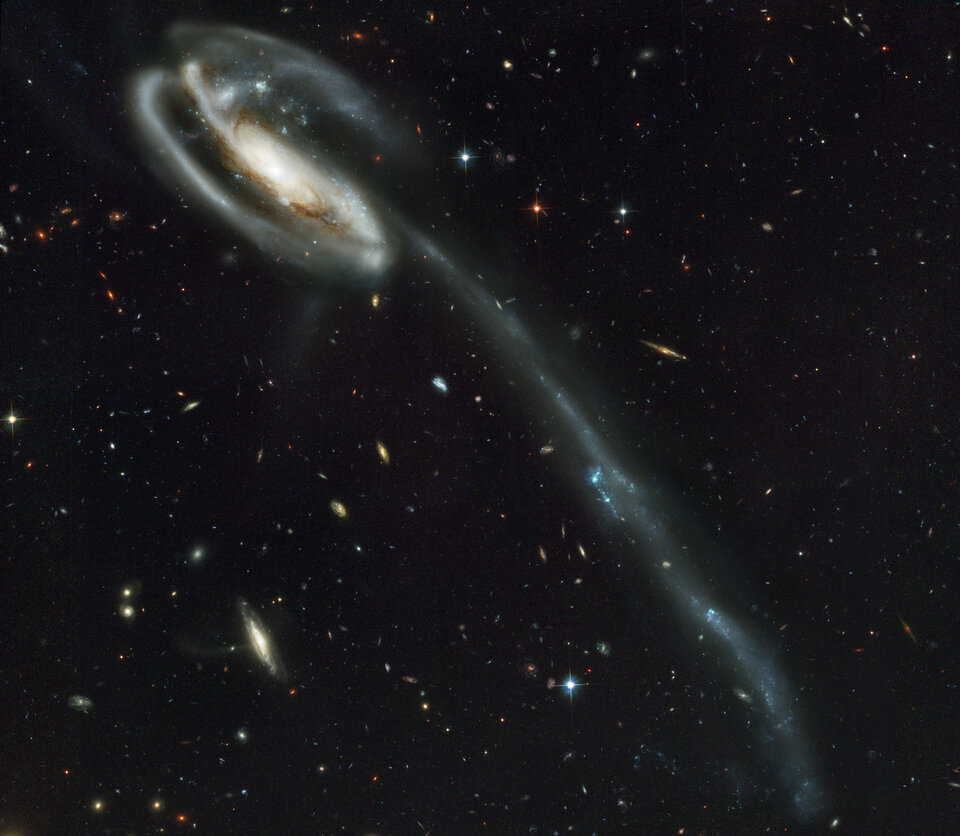
Among the suite of four 'suitable for framing' ACS science demonstration pictures released today is a stunning view of a colliding galaxy, dubbed the 'Tadpole', located 420 million light-years away. Unlike textbook images of stately galaxies, the 'Tadpole' with a long tidal tail of stars, looks like a runaway pinwheel firework. It captures the essence of our dynamic, restless and violent Universe.
But what came as an unexpected bonus is the enormous number of galaxies behind the Tadpole galaxy, - as many as 6000, twice the number in the legendary Hubble Deep Field (HDF) in 1995. Amazingly, the ACS picture was taken in one-twelfth the time it took for the original HDF, and in blue light it shows even fainter objects than the HDF. Like the HDF, the galaxies stretch back to nearly the beginning of time and contain myriad shapes that are snapshots of galaxies throughout the Universe's 13 billion-year evolution.
The ACS images are so sharp astronomers can identify 'building blocks' of galaxies, colliding galaxies, an exquisite 'Whitman's Sampler' of galaxies, and extremely distant galaxies in the field. The ACS image of the Tadpole illustrates the dramatic gains over the Wide Field Planetary Camera 2 that were expected from doubling the area and resolution, and five times improvement in sensitivity.
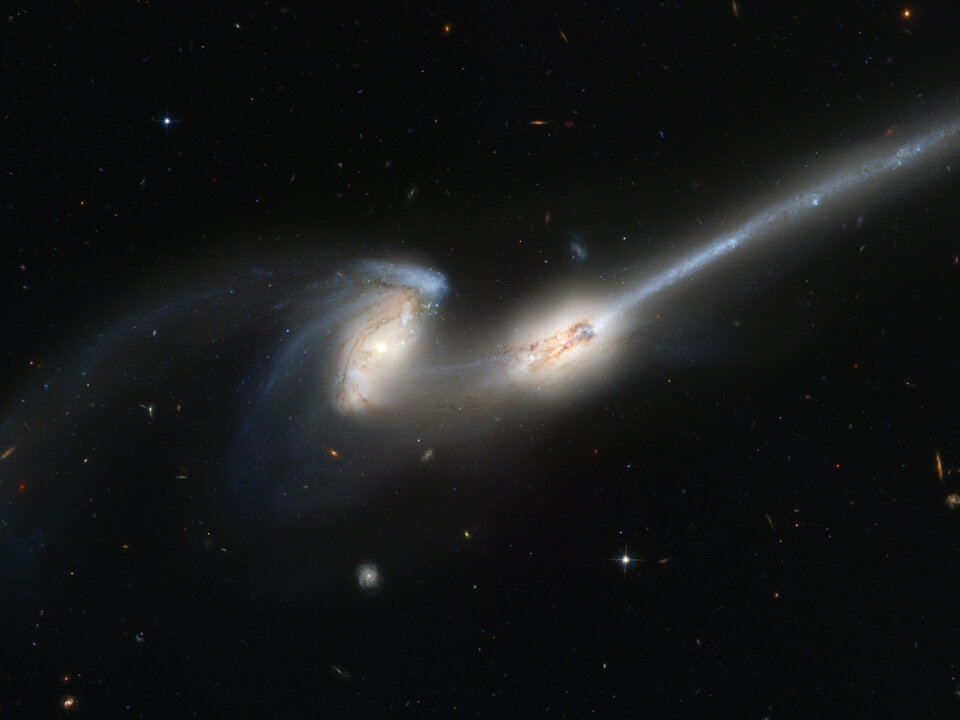
The other pictures include a stunning collision between two spiral galaxies – dubbed 'the Mice' – that presage what may happen to our own Milky Way several billion years in the future when it collides with the neighbouring galaxy in the constellation Andromeda. Computer simulations made by J. Barnes and J. Hibbard show that we are seeing the collision of the Mice approximately 160 million years after their closest encounter. Running the simulations forward in time shows that the two galaxies will eventually merge, forming an elliptical-like galaxy. A similar fate may await the Milky Way and the Andromeda galaxy.
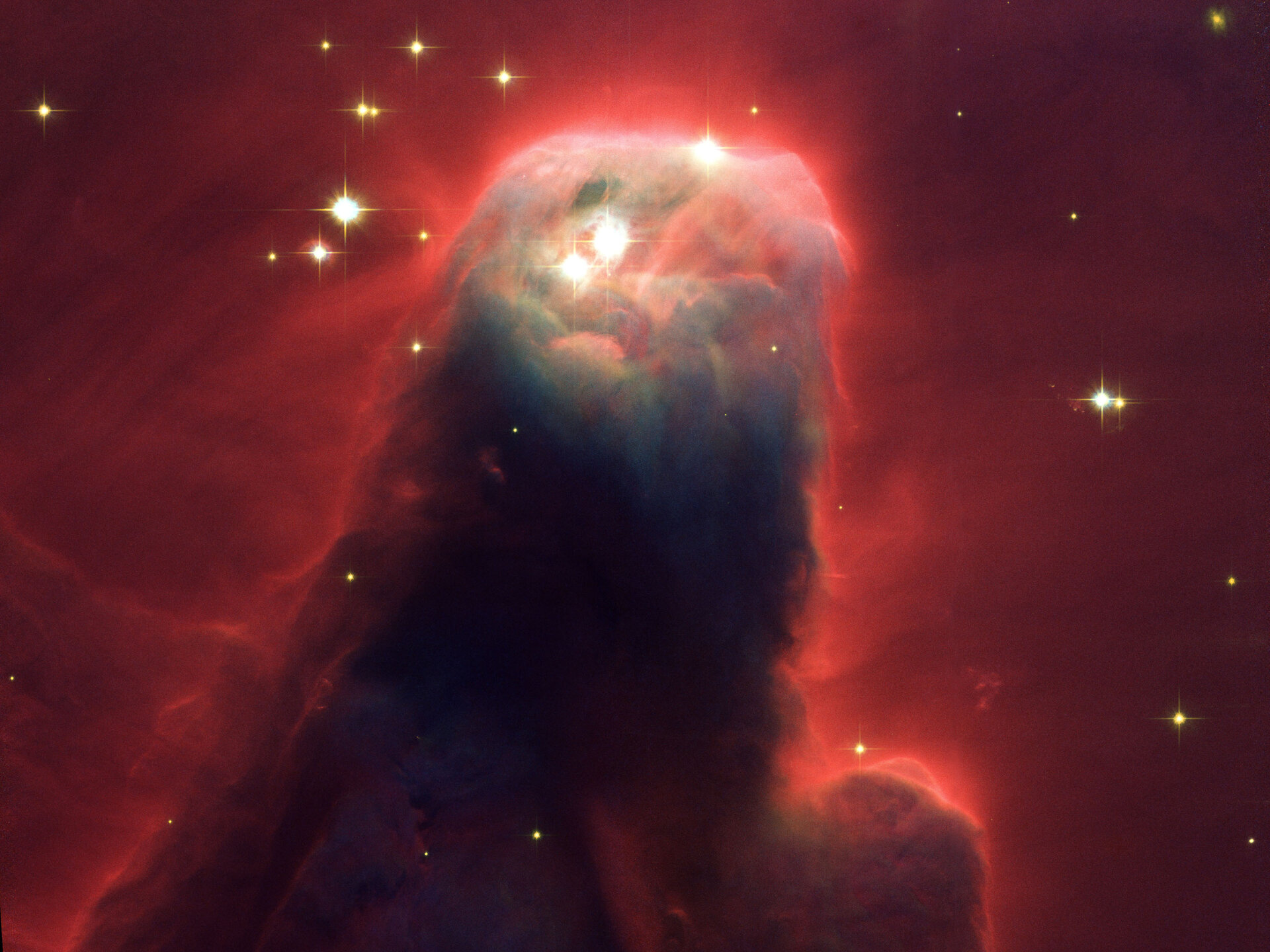
Looking closer to home, ACS imaged the Cone Nebula, a craggy-looking mountaintop of cold gas and dust that is a cousin to Hubble's iconic 'pillars of creation' in the Eagle Nebula, photographed in 1995.
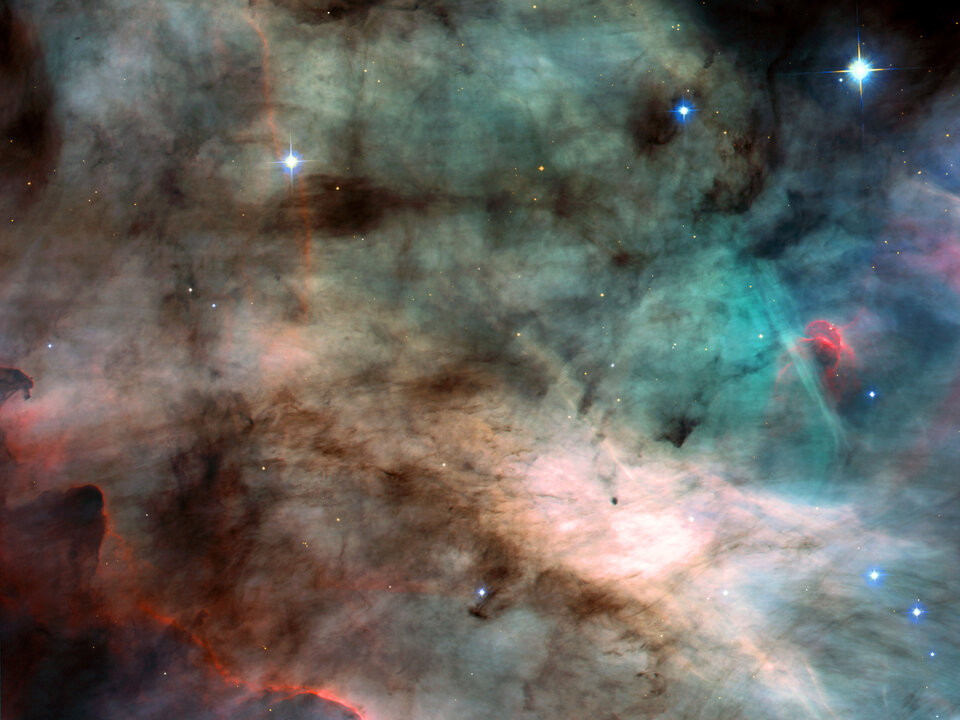
Peering into a celestial maternity ward called the Swan Nebula (M17), the ACS revealed a watercolour fantasy-world tapestry of vivid colours and glowing ridges of gas. Embedded in this crucible of star creation are embryonic planetary systems.
Mounted aboard the world's premier optical-ultraviolet telescope, the ACS is a camera of superlatives. It is expected to go beyond the sensitivity of the largest ground-based telescope to eventually see the very faintest objects ever. Its camera delivers a panoramic crispness comparable to that of a wide-screen IMAX movie, a staggering 16 million picture elements (megapixels) per snapshot (typical consumer cameras are 2 to 4 megapixels).
The Hubble Space Telescope is a project of international cooperation between ESA and NASA.
Contacts
Lars Lindberg Christensen
Hubble European Space Agency Information Centre, Garching, Germany
Phone: +49-89-3200-6306 (089 in Germany)
Cellular (24 hr): +49-173-38-72-621 (0173 in Germany)
E-mail:lars@eso.org