Space debris - evolution in pictures
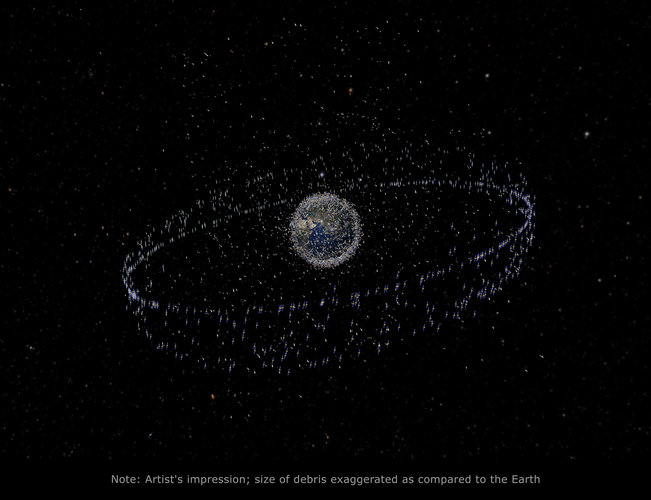
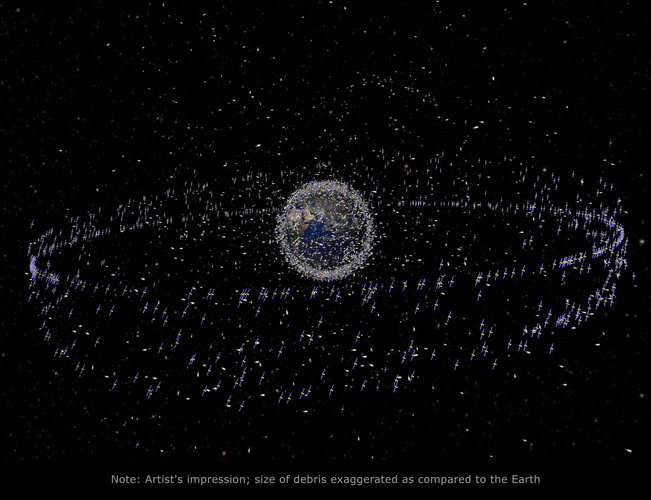
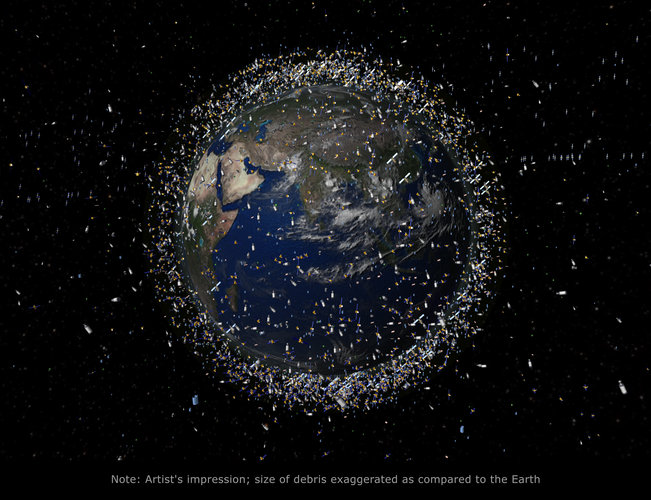
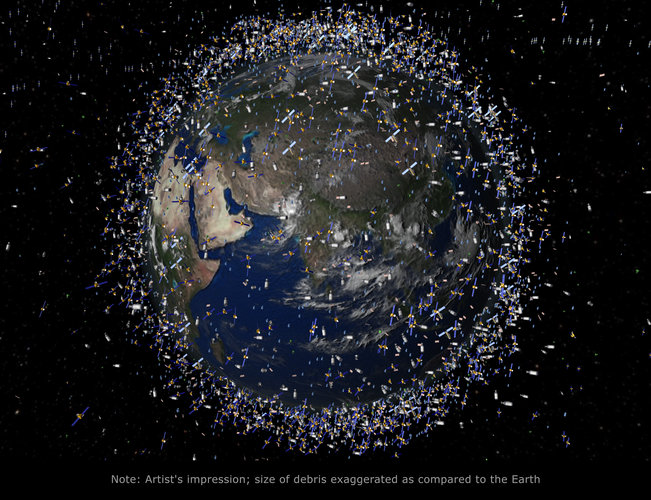
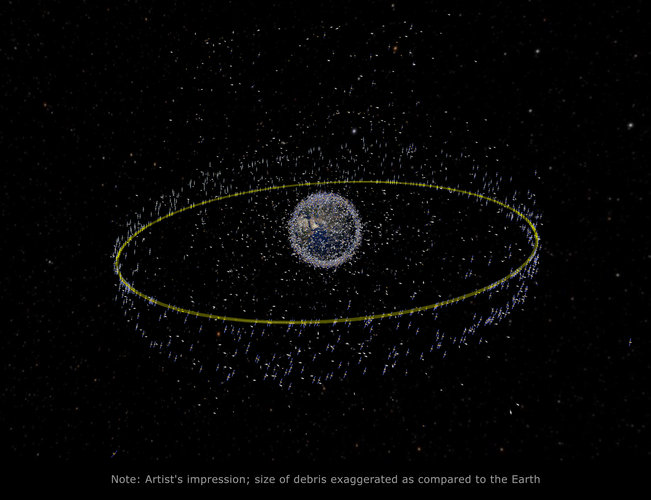
Since 1957, more than 4900 space launches have led to an orbital population today of more than 23 000 trackable objects with sizes larger than 10 cm. Some 1000 of these are operational satellites. The remaining 94% are space debris – objects that no longer serve any useful purpose. About 64% of the routinely tracked objects are fragments from some 250 breakups, mainly explosions and collisions of satellites or rocket bodies. In addition, an estimated 670 000 objects larger than 1 cm and 170 million objects larger than 1 mm are expected to be in orbit.
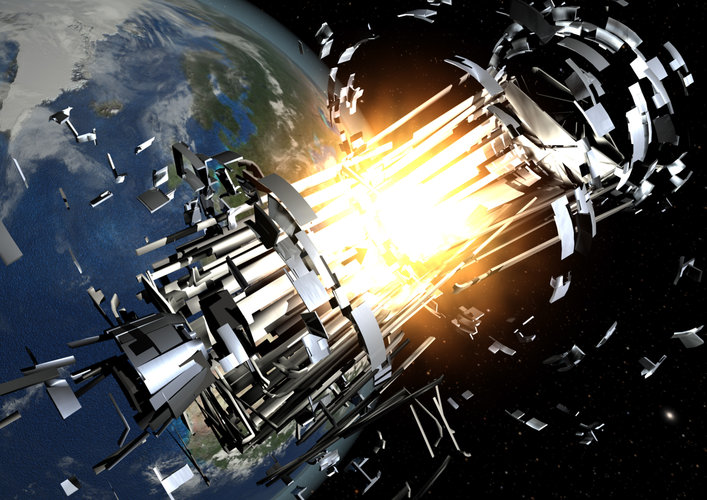
Owing to relative orbital velocities of up 56 000 km/hr, centimetre-sized debris can seriously damage or disable an operational spacecraft. Collisions with objects larger than 10 cm will lead to catastrophic break-ups, releasing hazardous debris clouds of which some fragments can cause further catastrophic collisions that may lead to an unstable debris environment in some orbit regions – the ‘Kessler syndrome’.
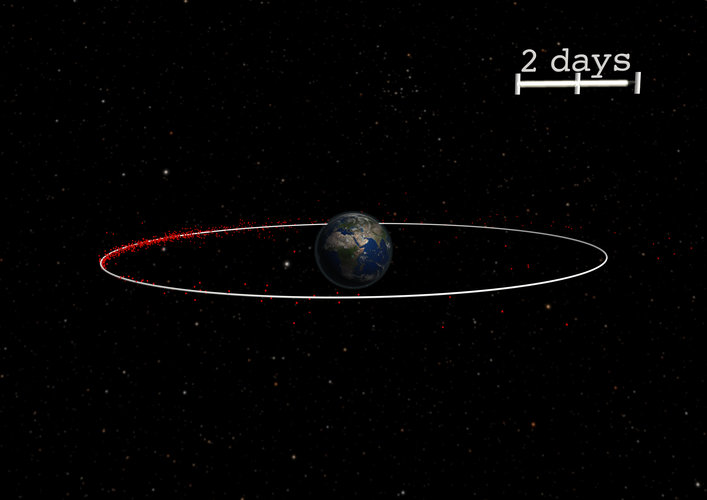
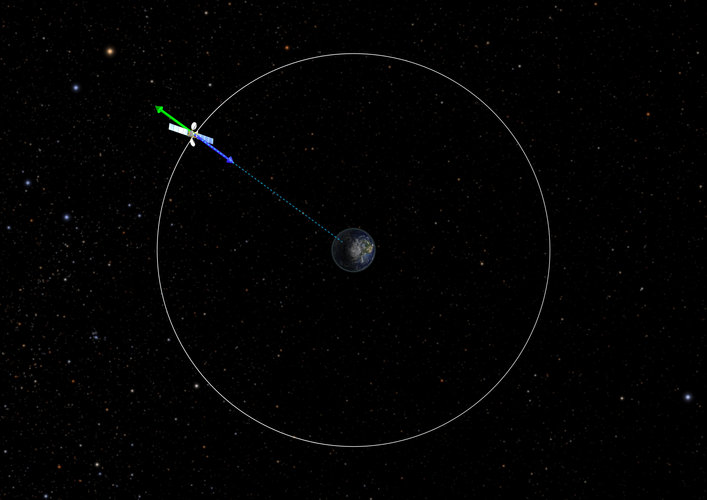
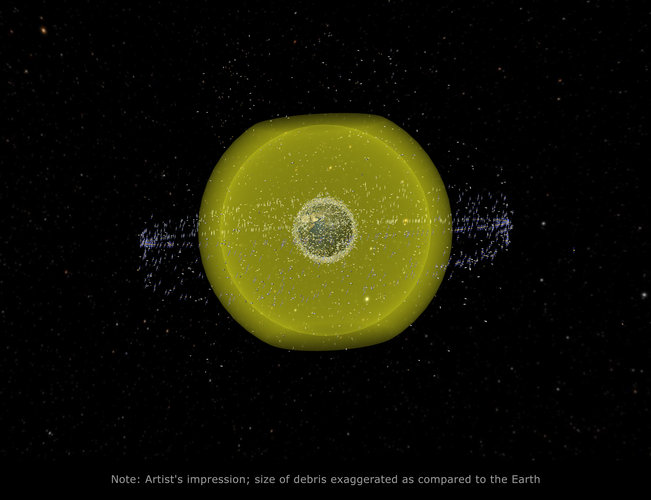
Note: Images in this gallery are artist's impressions; the sizes of debris objects are exaggerated as compared to the Earth.