ESA    Life in Space    Expanding Frontiers    Improving Daily Life    Protecting the Environment    Benefits for Europe  
   
Media Centre
Press ReleasesESA TelevisionLaunch Media CornerExhibitions
Services
PublicationsFrequently asked questionsESA-sponsored ConferencesHelpSite CreditsPortal terms of useCommentsSubscribe


Bookmark and Share


Space debris: evolution in pictures

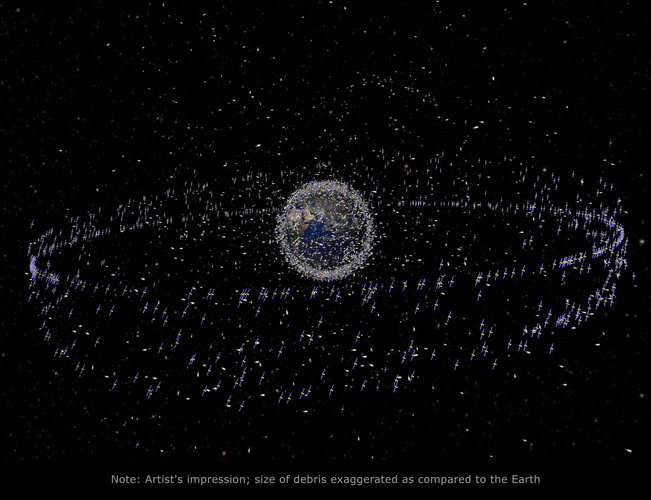
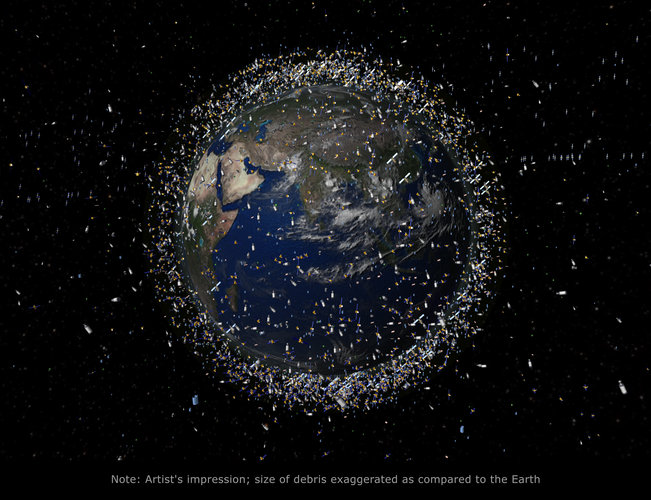
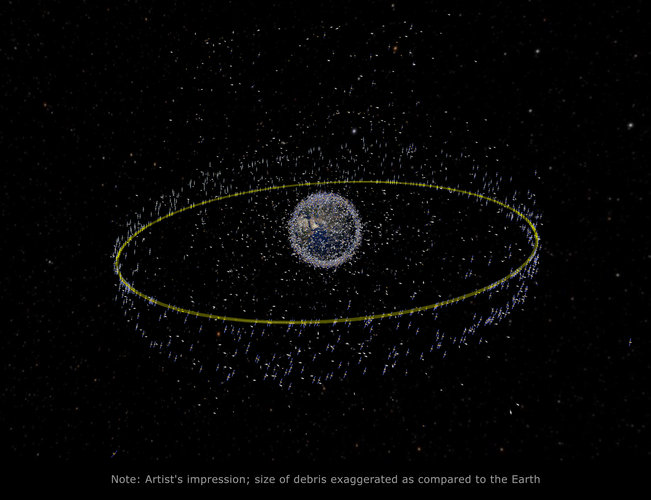
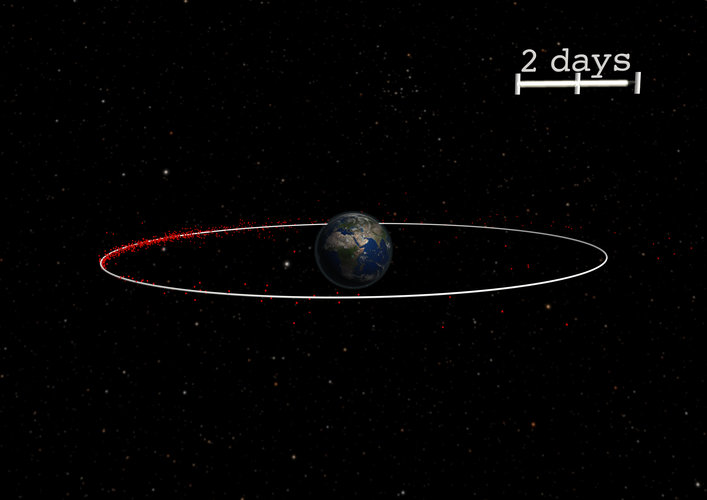
In almost 50 years of space activities, more than 4800 launches have placed some 6000 satellites into orbit, of which only a minor fraction - about 800 - are still operational today. Only 6 percent of the catalogued orbit population are operational spacecraft, while 38 percent can be attributed to decommissioned satellites, spent upper stages and mission-related objects (launch adaptors, lens covers, etc.).

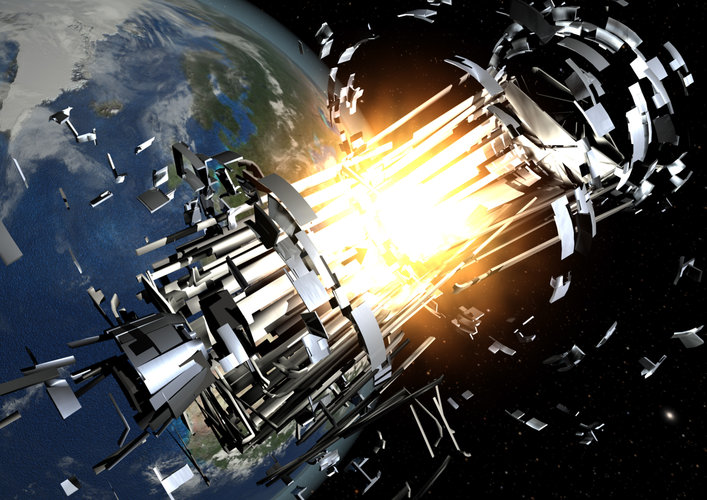
The remaining 56 percent originates from more than 200 in-orbit fragmentations which have been recorded since 1961. Except for a few collisions (less than 10 accidental and intentional events), the majority of the 200 break-ups were explosions of spacecraft and upper stages.

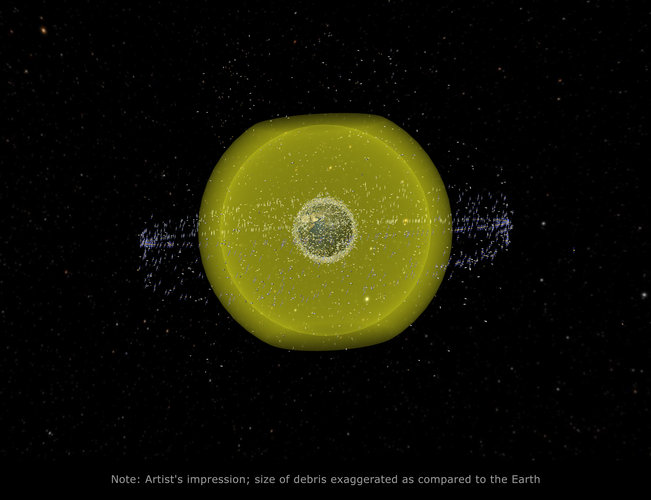
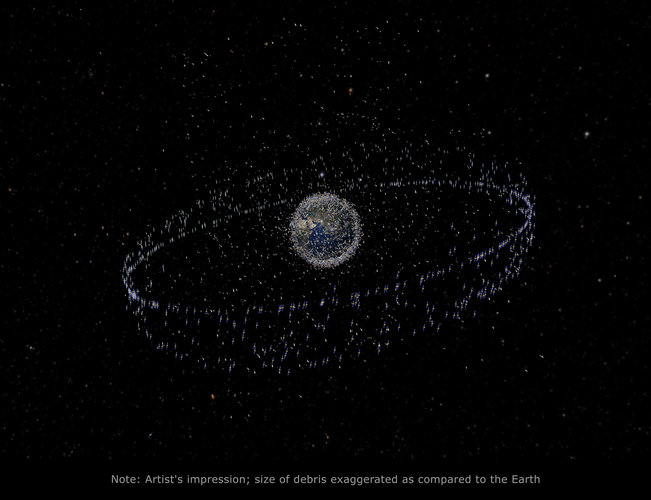
Note: Images in this gallery are artist's impressions; size of debris objects are exaggerated as compared to the Earth.
To thumbnails
prev page1 | 2 | 3 | 4 | 5 | 6 | 7 | 8 | 9 | 10next page | next 10 pages
viewHI-RES JPEGHI-RES TIFF
Caption:
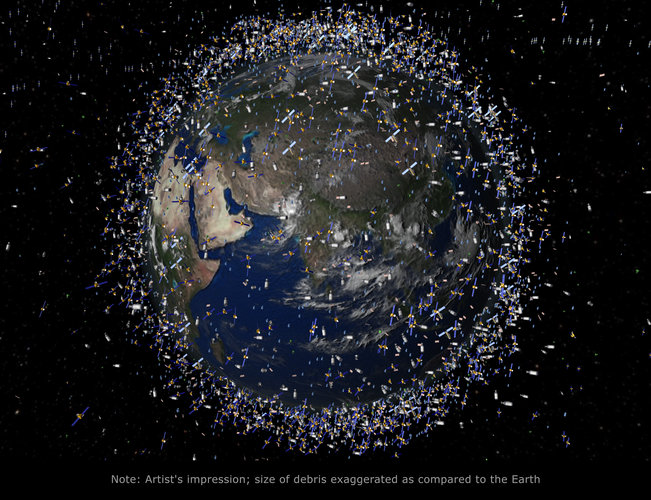
Objects in Low Earth Orbit (LEO) - view over the North Pole
Credits:
ESA
ID number:
SEMF5OK26DF
HI-RES JPEG size:
1732 kb
HI-RES TIFF size:
8143 kb
Related Images:
Operations
Space Situational Awareness (SSA)
Description
70% of all catalogued objects are in low-Earth orbit (LEO), which extends to 2000 km above the Earth's surface. To observe the Earth, spacecraft must orbit at such a low altitude. The spatial density of objects increases at high latitudes. Note: The debris field shown in the image is an artist's impression based on actual data. However the image does not show debris items in their actual size or density. Note: The debris objects shown in the images are an artist's impression based on actual density data. However, the debris objects are shown at an exaggerated size to make them visible at the scale shown.
To thumbnails
prev page1 | 2 | 3 | 4 | 5 | 6 | 7 | 8 | 9 | 10next page | next 10 pages
 
Related
ESA expert highlights space debris issuesSpace debris spotlight


   Copyright 2000 - 2011 © European Space Agency. All rights reserved.