Pioneering satellite reaches retirement

01 August 2011
One of ESA’s oldest working satellites is about to be retired, after orbiting Earth almost 85,000 times and travelling some 3.8 billion km. The second European Remote Sensing (ERS-2) satellite was launched in 1995. Now ESA has decided to take it out of service before it stops working and becomes a threat to other spacecraft.
Starting on 6 July, a series of thruster burns are gradually lowering its orbit from 800 km to about 550 km, where there is little risk of it colliding with other satellites. Instead of becoming a piece of space junk, ERS-2 will eventually enter Earth’s atmosphere and burn up.
ERS-1 (which operated between 1991 and 2000) and its sister satellite enjoyed long and distinguished careers. Together, they delivered a continuous stream of data over a period of 20 years, revolutionising studies of Earth’s atmosphere, land, oceans and polar ice.
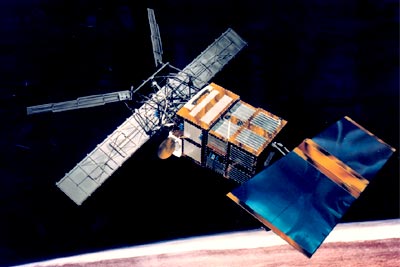
Their instruments included the first non-military radar in space. Able to observe the surface in all weathers, day or night, it was able to monitor how the ground moves during major earthquakes or volcanic eruptions. It could also map the height of the land surface.
Other instruments measured global sea-surface temperature and changes in sea level, important information for scientists studying climate change. Another key experiment on ERS-2 monitored the changing size and location of a huge hole in the layer of ozone gas above Antarctica.
Thousands of research projects and scientific papers have been based on ERS data. The information they sent back has advanced our understanding of how Earth works. And improved versions of the instruments they carried are being flown on missions such as ESA’s Envisat, the Earth Explorers and the Sentinels.