ESAExoMarsHuman Spaceflight and ExplorationESA ScienceAurora Programme
   
ExoMars Mission
Summary
FactsheetScientific objectivesTechnical objectivesDevelopment history
Mission elements
The SpacecraftThe RoverThe Ground SegmentThe Instruments
The team
Project team
Multimedia
ExoMars gallery
Services
ExoMars in the media


printer friendly page
ExoMars spacecraft composite
About the ExoMars Mission
 
Innovative technologies... enabling new science

ExoMars is the first mission in ESA's Aurora Exploration Programme. ExoMars will pursue important science and technology objectives aimed at extending Europe's capabilities in planetary exploration.
 
It will demonstrate the descent and landing of a large payload on Mars; the navigation and operation of a mobile scientific platform; a novel drill to obtain subsurface samples; a sample processing and distribution system; and meet challenging planetary protection and cleanliness levels necessary to achieve the mission’s ambitious scientific goals.

Establishing whether life ever existed, or is still active on Mars today, is one of the outstanding questions of our time. It is also a prerequisite to prepare for the future human exploration of the Red Planet.  
 
ExoMars rover
ExoMars rover - phase B1 concept
Exobiology and geology research

ExoMars will deploy a Rover carrying a comprehensive suite of analytical instruments dedicated to exobiology and geology research: the Pasteur payload. The Rover will travel several kilometres searching for traces of past and present signs of life, collecting and analysing samples from within surface rocks and from the subsurface, down to a depth of 2 metres.

The ExoMars Rover mission will be complemented by the Humboldt payload, to be accommodated on the Lander. Following the Rover's egress, the Humboldt station will be activated to study the environment and measure planetary geophysics parameters important for understanding Mars’s evolution and habitability.

Additionally, data from engineering sensors necessary for Entry, Descent, and Landing (EDL) will provide an opportunity to perform vital descent science measurements.

Planetary protection

Based on the Outer Space Treaty, the Committee On Space Research (COSPAR) has established a planetary protection policy that ExoMars adheres to.

The implementation of planetary protection requirements for ExoMars comprise restrictions on impact probabilities for flight hardware not intended to directly contact Mars, and biological and organic contamination control for all spacecraft elements. Specifically parts of the spacecraft that come into contact with the samples from Mars have to be sterile and clean to avoid compromising the life-detection experiments.
 
 
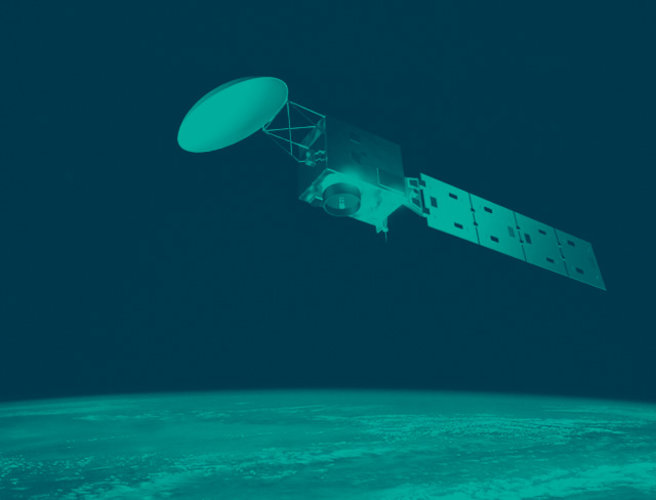
Mars Express artist's impression
Mars Express
Mobility and drilling capabilities

Recent discoveries from ESA's Mars Express have revealed multiple deposits containing salt and clay minerals that can only form in the presence of liquid water. This reinforces the hypothesis that ancient Mars may have been wetter, and possibly warmer, than it is today.

NASA's Mars Exploration Rovers (Spirit and Opportunity) were conceived as robotic geologists and they have demonstrated the past existence of wet environments on Mars. Their results have persuaded the scientific community that mobility is a must-have requirement for future missions.

ExoMars will have instruments to investigate whether life ever arose on the Red Planet. It will also be the first mission combining mobility and access to subsurface locations where organic molecules may be well-preserved; thus allowing, for the first time, to investigate Mars's third dimension: depth. This alone assures that ExoMars will break new scientific ground.

Finally, the many technologies developed for this project, will allow ESA to prepare for international collaboration on future missions, such as Mars Sample Return.
 
 
Last update: 5 March 2008


   Copyright 2000 - 2009 © European Space Agency. All rights reserved.