ESAHomeEarth ExplorersObserving the EarthLiving Planet
   
GOCE at a glance
The first of a seriesLooking into the forces that shape our planetA technological achievementAn intimate portrait of EarthFacts and figures
About the spacecraft
About the launch
Meet the team
Multimedia
Image galleryVideosAnimationsOnline resources
Services


Bookmark and Share


Article Images
Payload
 
Download:
 HI-RES MOV (Size: 2924 kb)
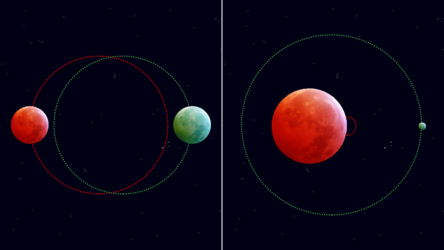
Forming the heart of GOCE (Gravity Field and Steady-State Ocean Circulation Explorer), the gravity gradiometer consists of three pairs of identical ultra-sensitive accelerometers, mounted on three mutually orthogonal 'arms'. One of the arms is aligned with the satellite’s trajectory, one pointing towards the centre of the Earth, and the third is perpendicular to the other two. This allows the simultaneous measurement of six independent but complementary components of the gravity field.

Credits: ESA - AOES Medialab
 
 
Download:
 HI-RES JPG (Size: 1219 kb)  HI-RES TIFF (Size: 13 532 kb)
Density variations in the Earth's crust are an important factor in shaping the geoid. External forces, such as the wind, cause the actual sea surface to deviate from the geoid. The combination of sea-surface height mapped by altimeters and the knowledge of the precise ocean geoid will improve our understanding of surface currents.

Credits: ESA - AOES Medialab
 
 
Download:
 HI-RES JPG (Size: 1084 kb)  HI-RES TIFF (Size: 14 335 kb)
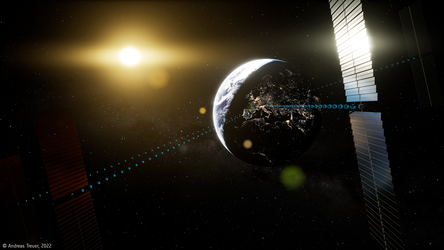
The position of GOCE is tracked by GPS satellites to obtain low-resolution gravity-field data.

Credits: ESA - AOES Medialab


In depth
Payload
Related links
Thales Alenia SpaceONERAInternational Laser Ranging Service


   Copyright 2000 - 2011 © European Space Agency. All rights reserved.