Cluster and Double Star uncover more on bright aurorae
Cluster data has helped provide scientists with a new view of magnetospheric processes, challenging existing theories about magnetic substorms that cause aurorae and perturbations in GPS signals.
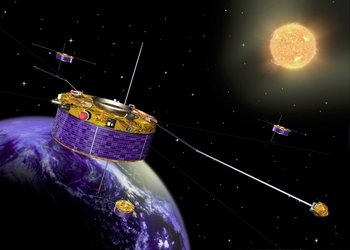
The onset of magnetic substorms that originate in Earth’s magnetosphere has been explained by two competing models: current disruption and near-earth reconnection. Current beliefs have been challenged using data from ESA’s Cluster satellites, and CNSA’s Double Star, a mission with ESA participation. A study published on 20 January 2007 in Geophysical Research Letters suggests a third type of substorm onset.
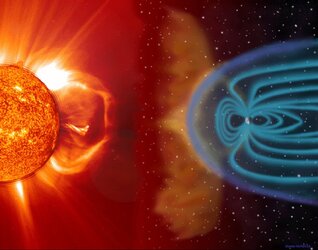
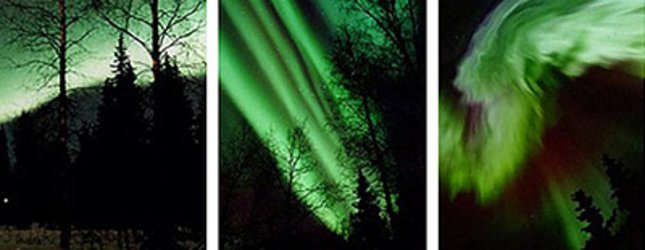
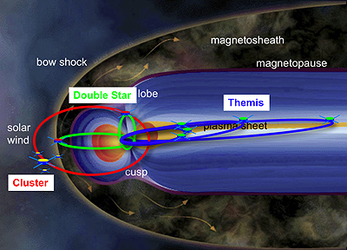
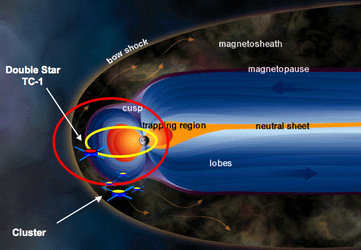
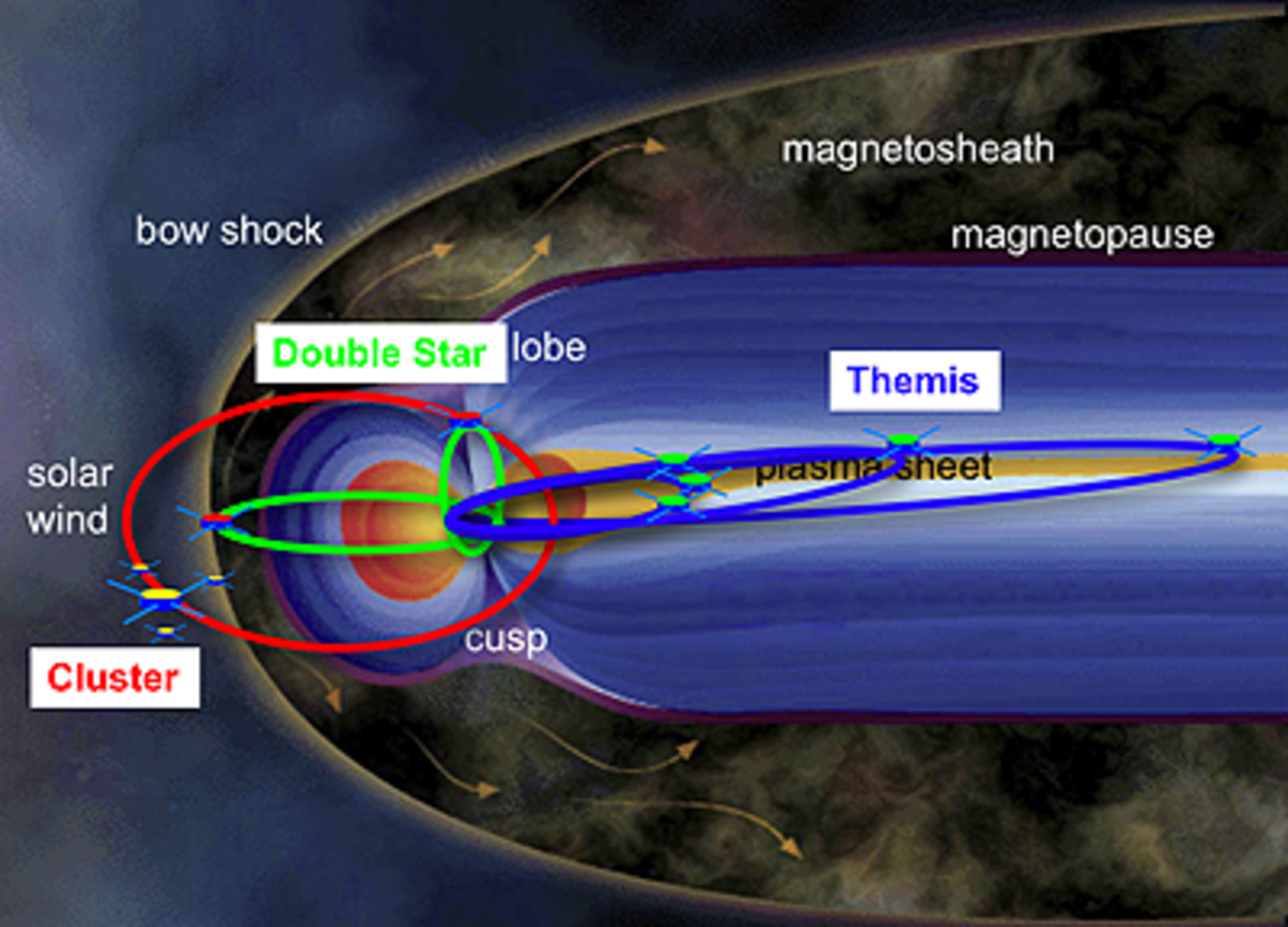
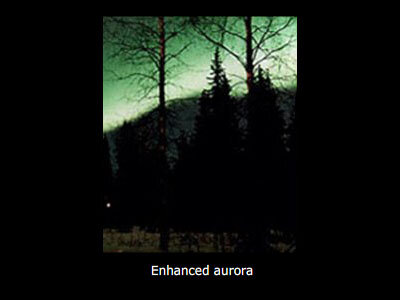
Magnetic substorms often cause bright and colourful aurorae at high latitudes, in places such as Scandinavia or Canada. These aurorae are caused by energetic electrons that spiral down Earth’s magnetic field lines and collide with atmospheric atoms at an altitude of about 100 km. The energetic electrons come from the magnetotail, located on the nightside of Earth where the solar wind stretches Earth’s magnetic field lines into a long tail.
At the centre of the magnetotail is a denser region known as the plasma sheet. Plasma is a gas composed of ions and electrons which is electrically neutral. It is spread over large distances in space and guided by the action of magnetic and electric fields. A substorm induces violent changes in the plasma sheet. It energises ions and electrons and hurls them Earthward. The substorm itself can occur as a series or in isolation.
Apart from producing the beautiful show of light, substorms also excite a large portion of Earth's ionosphere, perturbing the reception of GPS signals and communication between Earth and orbiting satellites. Despite decades of space research, the mechanism causing the onset of substorms remains a mystery.
There are three events associated with the onset of a substorm: auroral brightening, current disruption, and magnetic reconnection.
Auroral brightening is a sudden change of the aurora from light grey to very bright and colourful auroras at an altitude of about 100 km, visible from ground. Current disruption occurs at a height of roughly 60 000 km on the nightside or at a sixth of the distance to the Moon and is associated with turbulent fluctuations in the magnetic field.

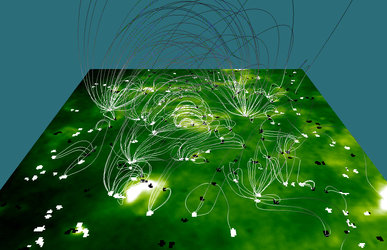
Magnetic reconnection is the process whereby magnetic field lines from different magnetic domains collide and reconnect, heating and accelerating plasma. It occurs at around a third of the distance to the Moon or at a height of 120 000 km, in a thin plane close to the magnetic equator of the magnetotail.
The difference between the two existing theories on magnetic substorms is that they differ on the order in which the events take place.
Prof Sergeev (St Petersburg State University, Russia) and colleagues from Europe, the USA and China studied three consecutive substorm onsets, from data collected on board Cluster and Double Star on 26 September 2005. For the first time, data indicate that the current disruption process and magnetic reconnection can coincide in space and time showing, possibly, two sides of the same process.

They also found that in this case, magnetic reconnection occurred closer to the Earth than usual, almost co-located with the current disruption process, between 60 000 and 90 000 km. Related localised auroral brightenings were captured few tens of seconds later by an ultra violet imager onboard the NASA’s IMAGE satellite.
“Cluster’s multipoint measurements and the spatial coverage possible together with Double Star have been instrumental in making these unique observations possible,” commented Sergeev.
In February 2007, NASA launched THEMIS, a five-satellite mission dedicated to the study of the onset of substorms. "With the many scientific satellites in orbit, we have a never-before opportunity to study the global solar-magnetospheric environment and the physical processes involved," said Philippe Escoubet, Cluster and Double Star project scientist of the European Space Agency.
Notes for editors:
The results appear in ‘Observation of repeated intense near-Earth reconnection on closed field lines with Cluster, Double Star and other spacecraft’ by V. Sergeev, V. Semenov, M. Kubyshkina, V. Ivanova, W. Baumjohann, R. Nakamura, T. Penz, A. Runov, T. L. Zhang, K. Glassmeier, V. Angelopoulos, H. Frey, J. Sauvaud, P. Daly, J. Cao, H. Singer, and E. Lucek. The paper is published in the 20 January 2007 issue of the Geophysical Research Letters.
The second STAMMS (Spatio - Temporal Analysis Multipoint Measurement in Space) workshop on Cluster, Double Star and Themis, sponsored by ESA and CNES will be held in Orléans, France, from 24 to 28 September this year.
For more information:
Victor Sergeev, Institute of Physics, St. Petersburg State University, Russia
Email: Victor @ geo.phys.spbu.ru
Philippe Escoubet, ESA Cluster Project Scientist
Email: Philippe.Escoubet @ esa.int