Hinode helps unravel long-standing solar mysteries
A year after launch, scientists working with Hinode, a Japanese mission with ESA participation, are meeting at Trinity College, Dublin, to discuss latest findings on solar mysteries - including new insights on solar flares and coronal heating.
Highlights include new insights on the workings of solar flares and on the mechanism behind coronal heating.
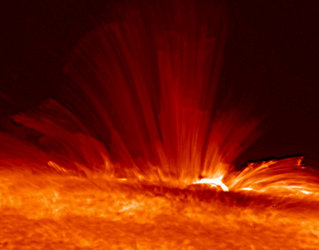
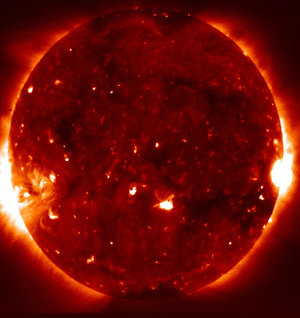
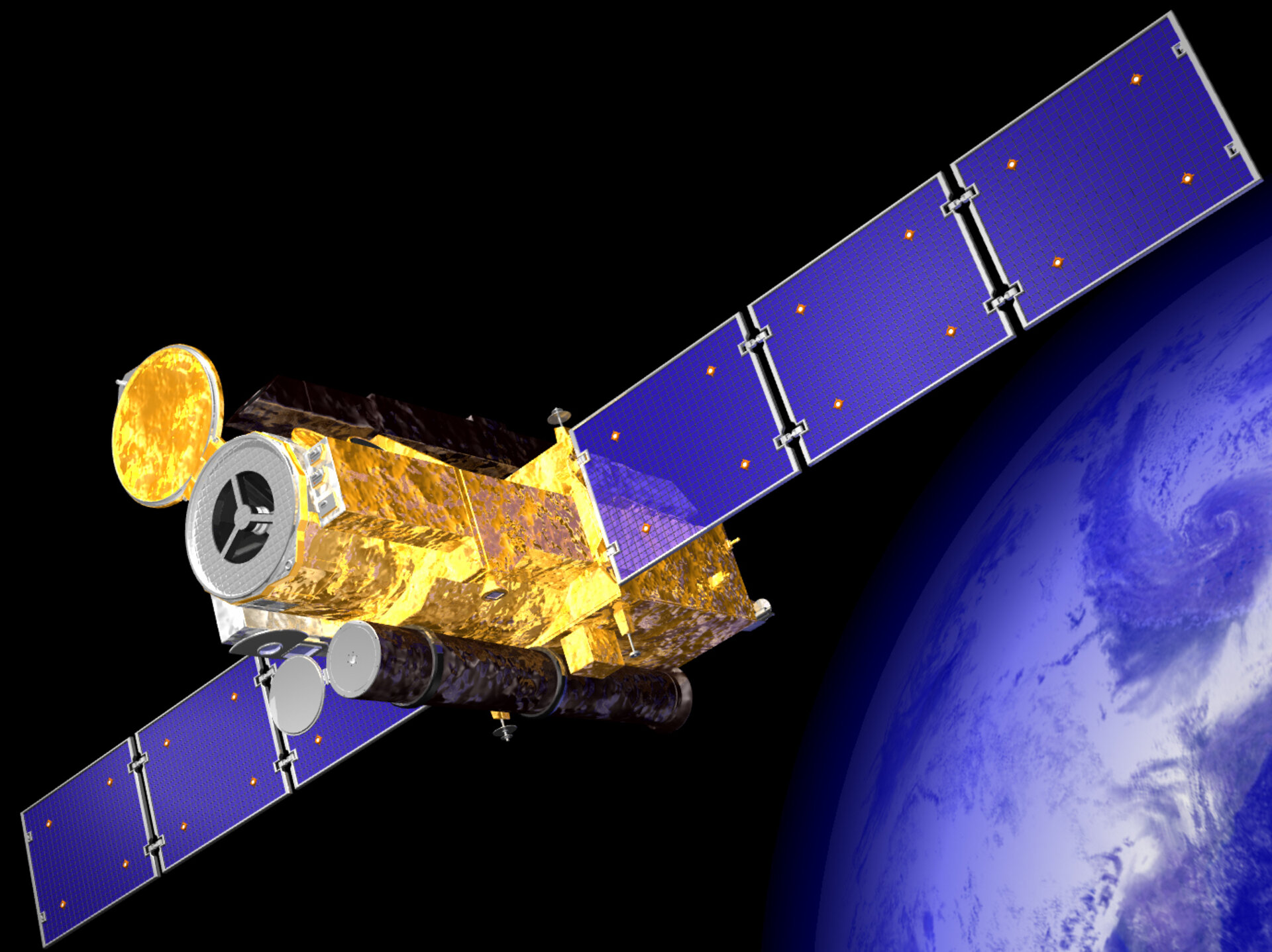
Hinode (Sunrise in Japanese) was launched to study magnetic fields on the Sun and their role in powering the solar atmosphere and driving solar eruptions. With its Extreme Ultraviolet Imaging Spectrometer (EIS), effectively a solar speed camera, it is now possible to pinpoint the source of eruptions during solar flares and to find new clues about the heating processes of the corona.
The speed camera is a spectrometer, an instrument that splits the light coming from solar plasma, a tenuous and highly variable gas, into its distinct colours (or spectral lines), providing detailed information about the plasma. The velocity of the gases in a solar feature is measured by the Doppler effect - the same effect that is used by police radars to detect speeding motorists.
“Hinode is an impressive example of international cooperation and is now helping us solve the mysteries of the Sun with spectacular new data,” says Bernhard Fleck, ESA’s Hinode and SOHO project scientist.

Keith Mason, of the Science and Technology Facilities Council (STFC) said, “Our Sun is a dynamic and violent entity and European astronomers have played a crucial role in understanding it; right from the first observation of a solar flare to present-day work to predict and protect against the Sun’s outbursts.”
Solar flares, massive energetic explosions that rise up from the Sun, can damage manmade satellites and pose a radiation hazard to astronauts. Despite decades of study, many aspects of this phenomenon are not well-understood. Hinode’s observations are now shedding light on possible mechanisms that accelerate solar particles in flares.

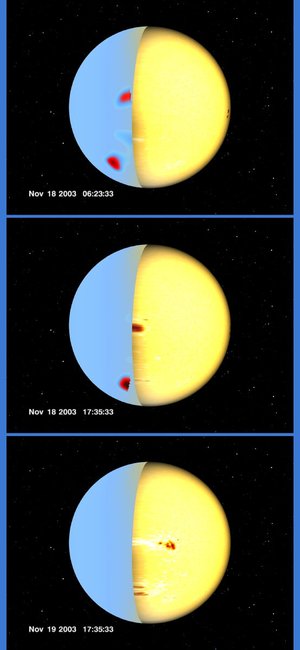
Louise Harra at the Mullard Space Science Laboratory, University College London, leading the EIS team says, “We knew that solar flares can impact a vast area on the Sun, sometimes leaving behind mysterious ‘dark patches’. Using Hinode, for the first time we have been able to train a speed camera on the material in these dark areas – which can be twenty times the diameter of the Earth."
"We have witnessed material flowing from the dark patch in the wake of the flare, feeding the particle flow that can be hazardous for anything in its path as it hurtles through space at 2000 times the speed of a fighter plane.”

These dark areas fade away after the flare, over several days. “In the long term, understanding solar storms in this new level of detail will allow us to make better predictions of ‘space weather’ storms. This is critical for satellite telecommunications, which we now take for granted”, she adds.
Ichiro Nakatani, JAXA Project Manager for Hinode commented, “We are delighted that nearly a year after launch, we are discovering new things about our nearest star, with many more discoveries to come. The years of hard work that went into developing the satellite were definitely worth it.”
Notes for editors:
The Hinode Science meeting is taking place at Trinity College Dublin from 20 to 24 August, and is hosted by the Solar Physics team. The team is led by Peter Gallagher and is funded by Science Foundation Ireland and ESA.
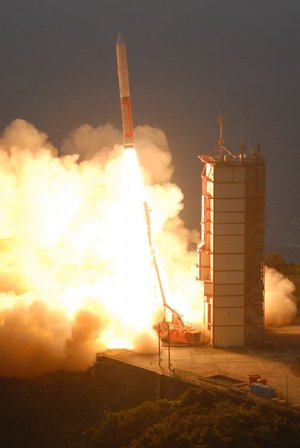
Hinode is a Japanese mission developed and launched by ISAS/JAXA, with NAOJ as domestic partner and NASA and STFC as international partners. It is operated by these agencies in co-operation with ESA and the Norwegian Space Centre.
Since 27 May 2007, European scientists have free access to spectacular data and images from Hinode. This free access is possible thanks to the opening of the Hinode Science Data Centre in Norway, developed and run by the Institute of Theoretical Astrophysics at the University of Oslo on behalf of ESA and the Norwegian Space Centre. It is part of ESA and Norway’s joint contribution to this solar mission.
The other part of the joint contribution to Hinode consists of ground station coverage through the SvalSat downlink station at Svalbard, which nearly quadruples the data rate and thus significantly increases Hinode’s science return. Svalsat is the only station in the world that can receive Hinode’s data during each of its 15 daily orbits.
Hinode's operations centre is located at JAXA's facility in Sagamihara, Japan.
For more information:
Bernhard Fleck, ESA SOHO and Hinode Project Scientist
Email: Bfleck @ esa.nascom.nasa.gov
Pål Brekke, Senior Advisor, Norwegian Space Centre
Email: Paal.Brekke @ spacecentre.no