SMART-1 celebrates its first anniversary
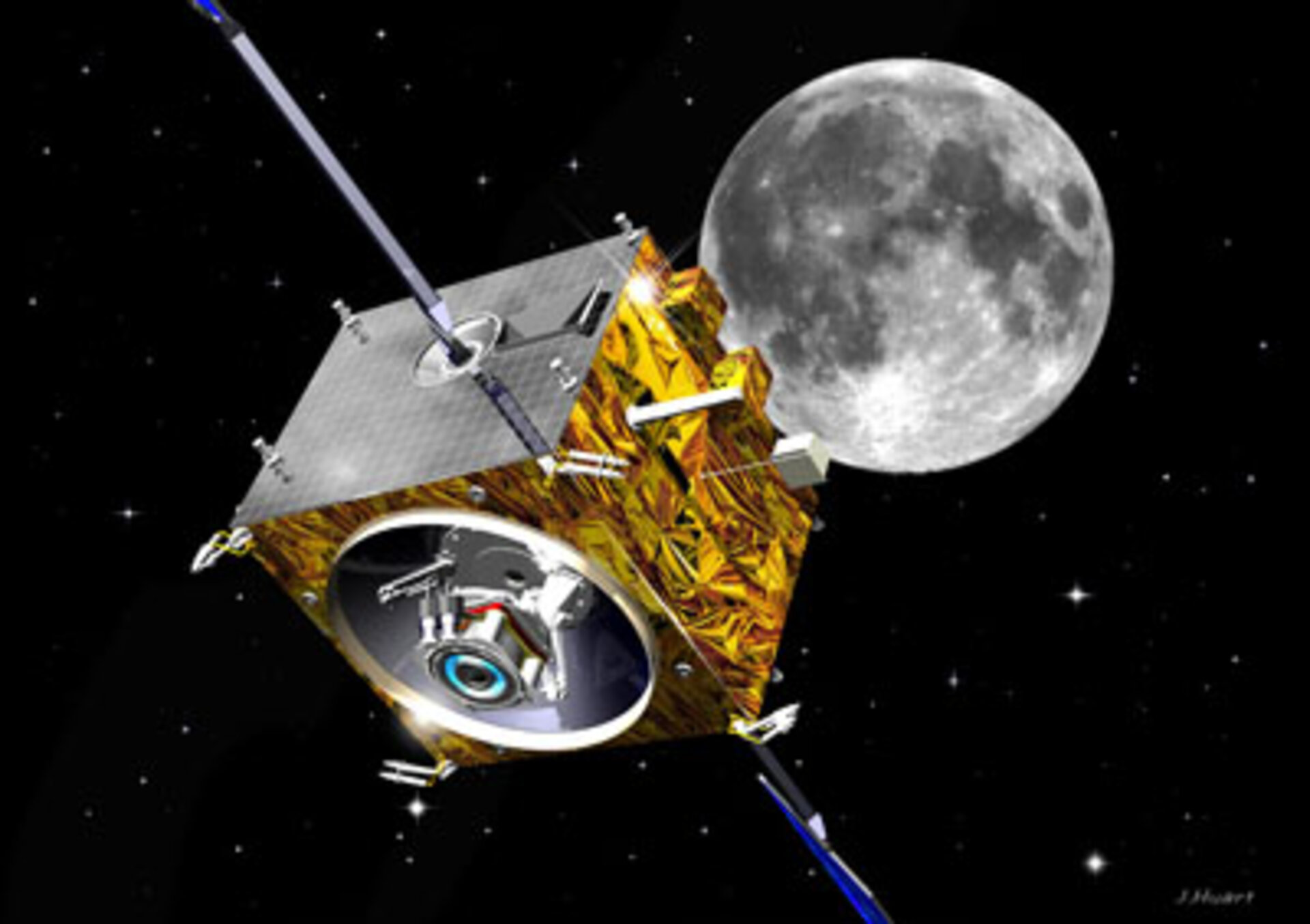
One year after its launch on 27 September 2003, ESA's SMART-1 spacecraft is in excellent health and preparing for the manoeuvres that will bring it into orbit around the Moon in mid November.
The first mission phase aiming at testing several innovative technologies has successfully been completed. It included the first European test of an 'ion drive', or solar-electric engine, as primary propulsion. It also carries a miniaturised payload for cruise science experiments, telecommunication and spacecraft navigation.
During its first year in space, SMART-1 has also successfully tested new space communication techniques. For the first time, SMART-1 has used very short radio waves (called Ka band at 32 Gigahertz, with the instrument KaTE) to communicate with Earth. They allow the deep-space transmission of much more information in a shorter period of time with respect to the commonly used frequencies.
Another achievement of SMART-1 is the successful test of a laser communication link experiment with ESA’s optical ground station in Tenerife, Canary Islands in February of this year. This laser technology, in which Europe is leading, has already been applied to telecommunication satellites, but this was the first time a laser link was used to communicate with a spacecraft which is far away and moving rapidly.
Both techniques will be crucial for future science missions where huge amounts of scientific data have to be transferred back to Earth over large distances in space.