Long-distance communication
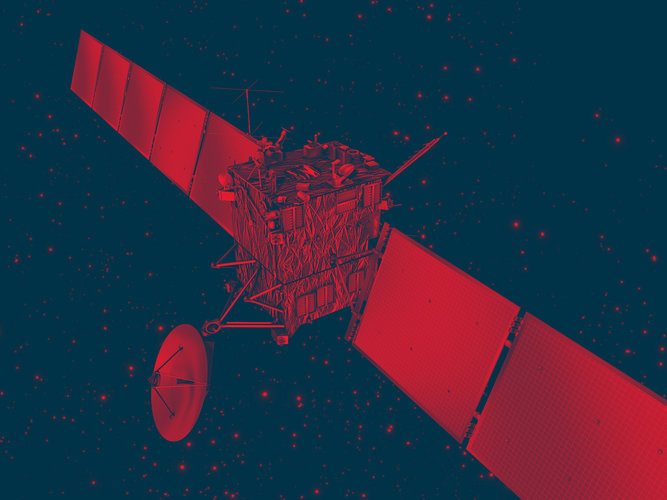
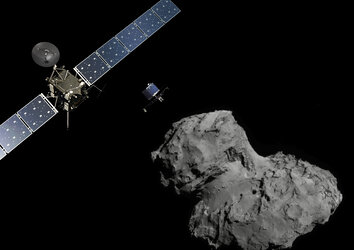
During Rosetta’s prolonged interplanetary expedition, reliable communications between the spacecraft and the ground were essential.
All of the scientific data collected by the instruments on board the spacecraft were sent to Earth via a radio link. The operations centre, in turn, remotely controlled the spacecraft and its scientific instruments via the same radio link.
The Mission Operations Centre during Rosetta’s entire 12-year journey was the European Space Operations Centre (ESOC) in Darmstadt, Germany. ESOC is responsible for all mission operations, including:
- mission planning, monitoring and control of the spacecraft and its payload;
- determination and control of the spacecraft trajectory;
- distribution of the scientific data received from the spacecraft to the Rosetta scientific community and the Principal Investigators.
A Science Operations Centre coordinated the requests for scientific operations received from the scientific teams supporting both the orbiter and the lander instruments.
Lander operations were coordinated through the German Aerospace Research Centre (DLR) control centre in Cologne, and the scientific control centre of CNES, the French space agency, in Toulouse.
Deep-space communications
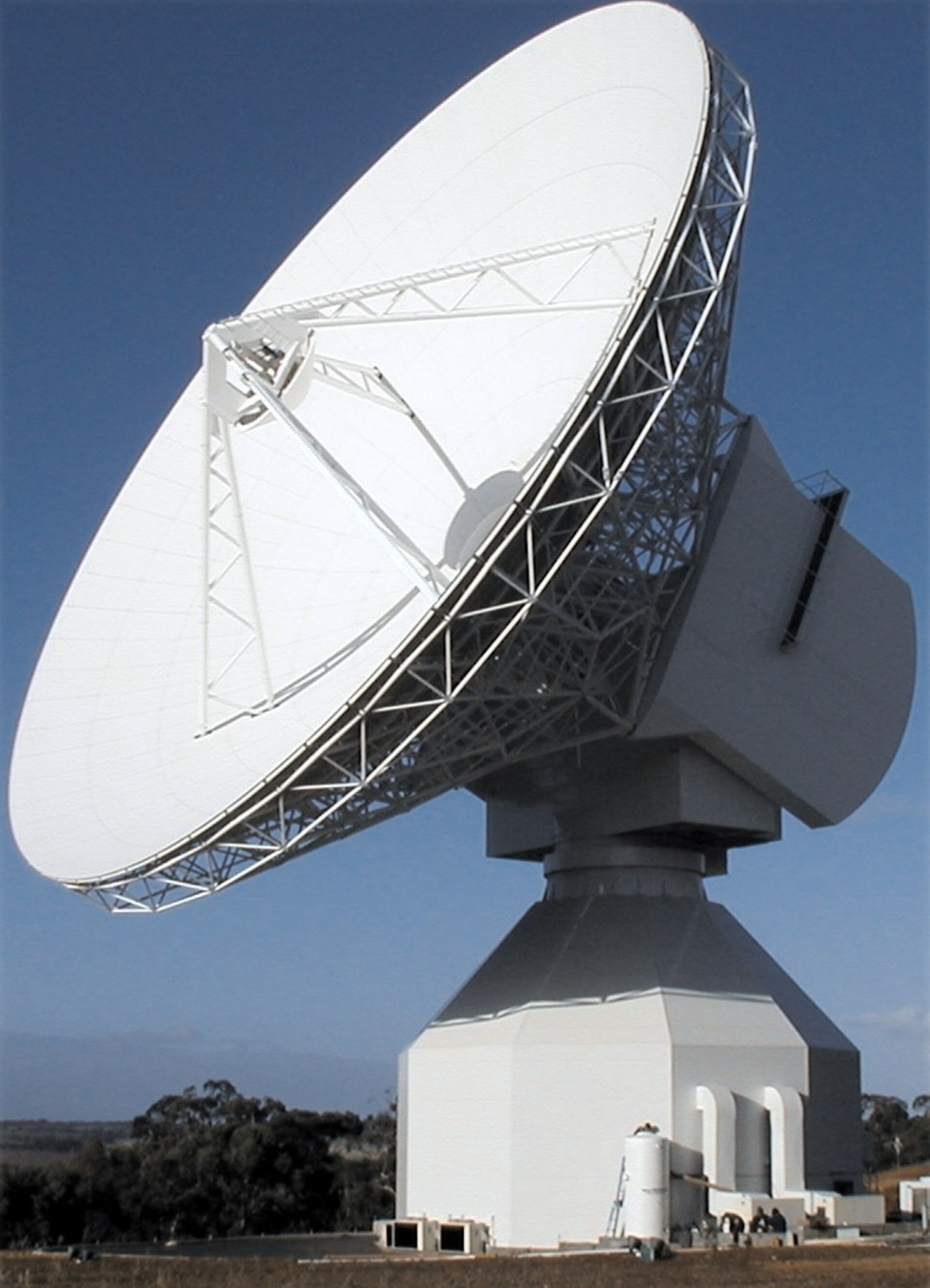
Radio communications between Rosetta and the ground used a newly developed deep-space antenna which was built by ESA at New Norcia, near Perth in Western Australia. This 35-metre diameter parabolic antenna concentrates the energy of the radio signal in a narrow beam, allowing it to reach distances of more than 1000 million kilometres from Earth.
Signals are transmitted and received in two radio frequency bands: S-band (2 GHz) and X-band (8 GHz). The radio signals, travelling at the speed of light, took up to 50 minutes to cover the distance between the spacecraft and Earth!
ESA's 35-metre parabolic antenna at Cebreros also provided further coverage for Rosetta.
Massive memory
During the mission, the rate at which data could be sent from Rosetta to Earth varied from 10 to 22 000 bits per second. However, the rotation of the Earth meant that real-time communications were not always possible.
The spacecraft was visible from the New Norcia antenna for an average of 12 hours per day. In addition, there were several periods of communications black-out when the spacecraft passed behind the Sun.
To overcome these breaks in communication, Rosetta’s solid-state memory of 25 Gbits capacity was able to store all scientific data and then transmit them to Earth at the next opportunity.