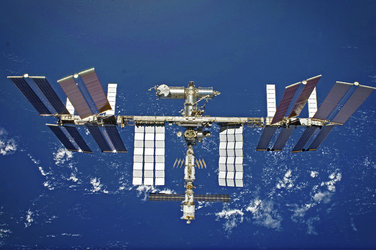
The Space Station as a blazing star
Visibility of the International Space Station (ISS) is currently particularly good in the evening sky. Until November, stargazers all over Europe can observe the ISS as a very bright, fast-moving point of light in the sky.
Especially in the early evenings right after sunset, the ISS - home of ESA astronaut Thomas Reiter since early July - is very distinct and can be easily distinguished from the stars.
Timing
The visibility periods of the ISS alternate each day - on some days the spacecraft is only visible in the morning, and on the following day in turn, only in the evening.

For the rest of October and all through November there are better-than-usual opportunities in Europe for viewing the ISS in the evenings. Given a cloudless night sky, the ISS can be viewed passing at a speed of 28 000 km/h from West to East.
Online tool
The exact time of visibility depends on the location of the viewer.
Go to http://www.esa.int/seeiss to find out the best viewing times from where you live.
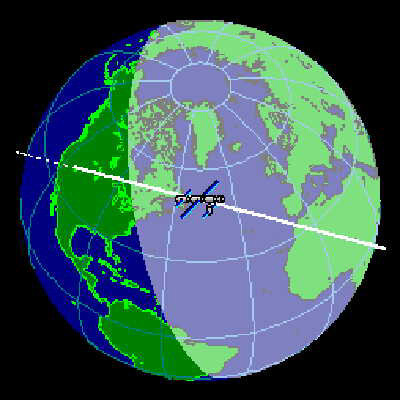
erreicht werden. In zwei Schritten gelangt man dann zum Ziel. Zunächst wird das Land, also beispielsweise Deutschland ausgewählt, im zweiten Schritt folgt der Ort, von dem aus die Beobachtung erfolgen soll. Die Datenbank enthält die Angaben von über zwei Millionen Orten, so dass die Auswahl kein Problem sein sollte. Im Ergebnis wird eine Tabelle mit den Sichtbarkeiten für mehrere Tage angezeigt.