The 21st Century Columbus
In 1492, a small fleet of ships led by the Genoese navigator, Christopher Columbus, discovered the Americas. Now, over 500 years later, a second Columbus – named in his honour - is set to embark on another mission of exploration.
If all goes according to plan, the Shuttle Atlantis will lift off from Florida on 7 February 2008 with the European Space Agency’s Columbus laboratory. Two days later, the lab will be delivered to the International Space Station (ISS), ready for installation on the Harmony node at the Station’s front end.

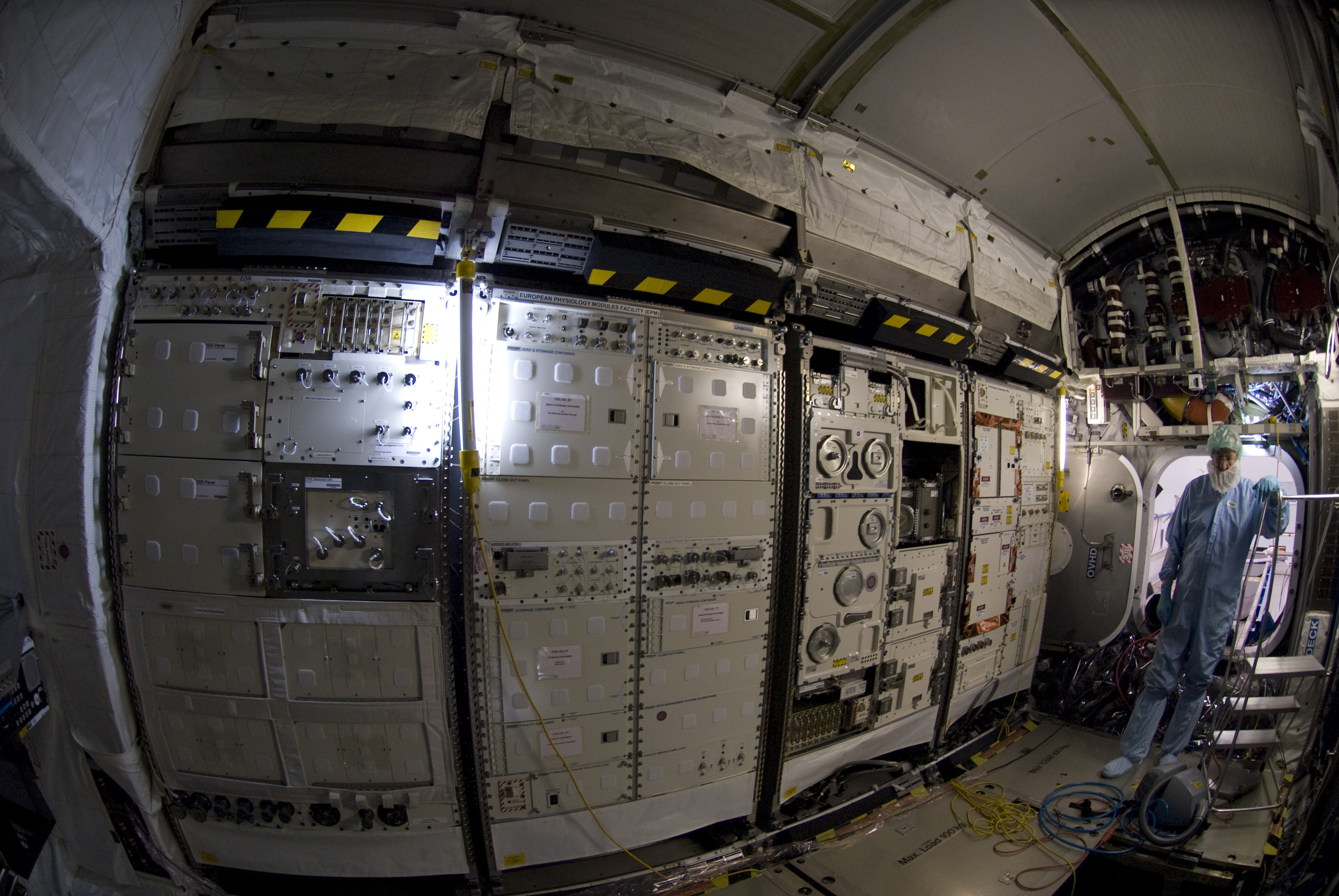
Columbus laboratory final hatch closure in NASA's Space Station Processing Facility
The 21st century Columbus is one of the most important European contributions to the ISS. Weighing in at nearly 13 tonnes, the aluminium cylinder is about 6.8 metres long and 4.5 metres wide – roughly the size of a London bus. Several astronauts from ESA and other space agencies will be able to work alongside each other in shirtsleeve conditions inside the module.

The multi-purpose science laboratory will be used to conduct experiments in many different fields. Along the walls and “ceiling” of the cylindrical module will be 10 scientific racks, each about the size of a telephone booth. (Remember, there is no “up” or “down” in space.) These racks will be used for research into the behaviour of fluids, various living organisms (including humans) and materials in zero gravity.

Outside Columbus are four platforms where other experiments can be mounted and exposed to the harsh space environment. There is no doubt that Christopher Columbus would be amazed to learn about the technological marvel that bears his name!
Last modified 01 February 2008