Exoplanets hunting

Have you ever gone hunting… for planets?
It might sound strange, but astronomers are doing exactly that! For centuries, we thought the eight planets in our Solar System were all there was. But over the past few decades, scientists have discovered thousands of worlds orbiting distant stars. These are called extrasolar planets, or exoplanets for short, and they’re far more common than we once imagined. The hunt for planets isn’t over, but is only just beginning!
Finding exoplanets, however, is a real challenge. They’re small, dark, and almost impossible to see through even the most powerful telescopes. Instead, astronomers use a set of clever tricks, following clues and patterns to reveal these faraway worlds.
Trick 1: Spot a planet with direct imaging
The first and simplest idea is to simply take a picture of a planet. This method is known as Direct Imaging.
This is easier said than done! The light from a star can easily drown out the faint glow of any planets nearby. To overcome this, astronomers use special tools that block the bright starlight, uncovering faint planets in orbit. This trick works best for very large planets that orbit far from their stars. These worlds reflect more light, and are far enough away that they can be separated from the star’s glare.
While Direct Imaging has revealed some impressive discoveries, it only works for a small number of planetary systems.
Trick 2: Look for wobbling stars using radial velocity
Like a real hunter, sometimes you can’t see your target and so need to look for clues nearby instead. Stars can leave hints that they’re hiding a planet. One of these clues is that the star wobbles!
As a planet orbits around a star, the planet’s gravity pulls on the star too, making the star wobble in space. The scientific name for this is radial velocity.
The movement is very small, but using sensitive tools it can be possible to spot shaky stars, and so signs that exoplanets may be there too!
Trick 3: Track position changes using astrometry
Another way to detect stars moving strangely (and so may be orbited by exoplanets) is by carefully measuring a star’s position in the sky.
A star with a planet won’t travel through space in a perfectly straight line, but will instead trace a tiny, looping path as it responds to the planet’s gravity. It’s like the star and its planets are performing a cosmic dance!
This technique is called astrometry, and it’s used by ESA’s Gaia mission. The bigger the planet and the further it is from the star, the easier it is to find with astrometry.
Trick 4: Watch for shadows using the transit method
Sometimes a hunter doesn’t see their target, but rather its shadow! If a planet passes in front of its star from our point of view, it blocks a small fraction of the light. This is called a transit. The star appears to dim slightly, then returns to normal brightness once the planet moves out of the way.
Transits are challenging to see because the change in light is so small, but special planet-hunting telescopes such as ESA’s Plato mission are very good at their job! Plato can even find exoplanets similar to Earth around stars like our Sun, even though these planets are quite small, so they don’t block much light!
Exoplanet hunters must be patient, waiting months or even years to see a repeated pattern of star dimming. ESA’s Plato mission is designed to watch thousands of stars at once, searching for these repeating signals. By measuring how much the light dims and how often the transit occurs, astronomers can use Plato’s work to find a planet’s size and orbit.
The hunt continues!
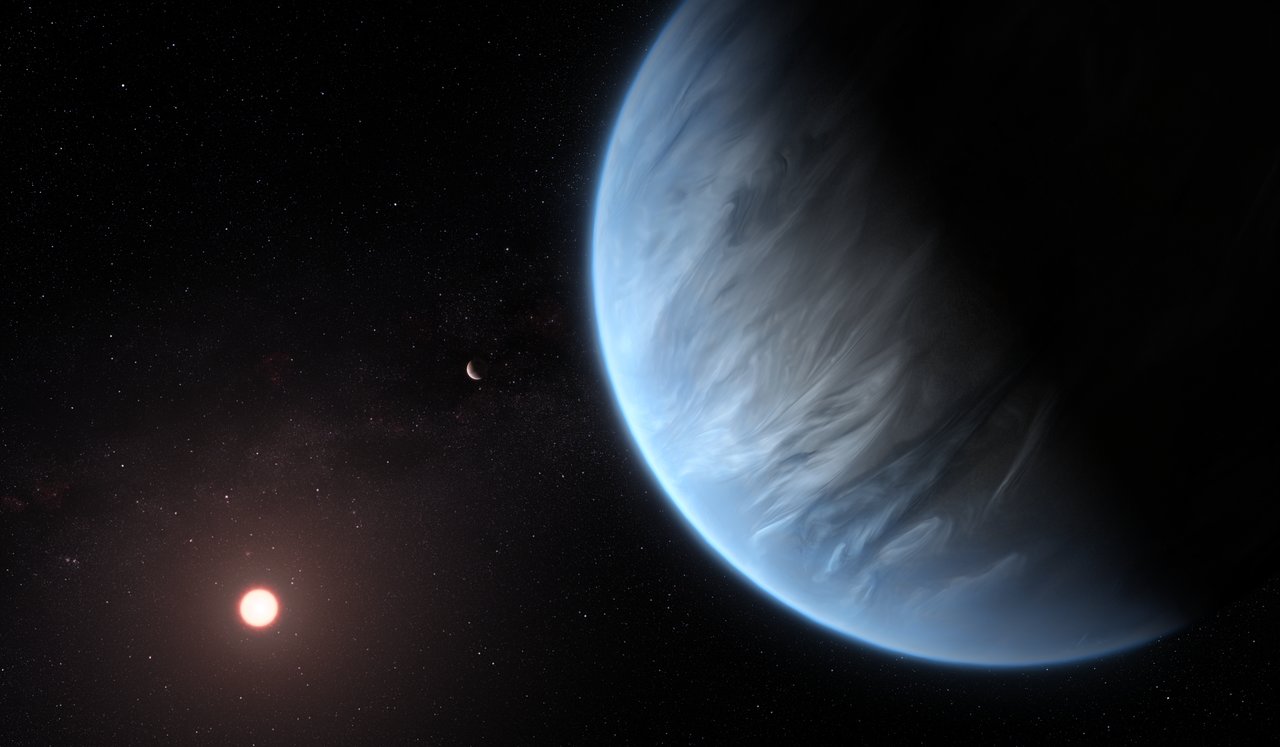
Using these tricks, astronomers have discovered thousands of exoplanets, revealing a remarkable variety of worlds. Some are enormous gas giants orbiting close to their stars. Others are frozen planets drifting far away. A few may even lie in areas around their stars where the temperature is just right for liquid water to exist!
And this is only the beginning. Many planets have yet to be found, hidden in the light of their stars or waiting for the right technique to reveal them. Perhaps one of these planets is like Earth, and could even be home to life. Would you like to help track down a planet like that?

Last modified 22 May 2026