Science Operation Centres
ESAC has been chosen as the site for the Science Operations Centres (SOCs) for the ESA Science missions, both astronomy and planetary. This means ESAC is rapidly evolving into an astronomical hot-spot, a meeting point for top-level international space scientists working in different, but closely-related areas.
The role of the SOCs

Once a space telescope has reached its operating orbit, or when a Solar System mission is on its way to its far-away destination, then it is the scientists’ task to use it in the best way possible. For instance, if the telescope is an observatory-type mission, then astronomers from all over the world can submit observing proposals, in which they ask for the instruments to be pointed to study particular objects. Once such proposals have been evaluated and selected, the ‘agenda’ for the telescope’s operation needs to be carefully designed. This is just one of the tasks usually performed at the SOCs for an ESA mission. They are also often responsible for the calibration of the instruments onboard the spacecraft, and for helping the scientific community to process and analyse the data obtained by the instruments being flown.
The SOCs at ESAC
ESAC currently hosts the Science Operations Centres (SOCs) for the following missions:
- XMM-Newton, launched in 1999. The most sensitive X-ray telescope ever built, used to study violent phenomena, such as active black holes.
- Integral, launched in 2002. A gamma-ray space telescope to detect the most energetic events in the cosmos, such as gamma-ray bursts.
- Mars Espress, launched in 2003. Studying the "Read Planet" in great detail.
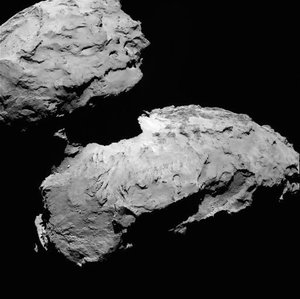
- Rosetta, launched in 2004. It will reach Comet 67P/Churyumov-Gerasimenko in 2014.
- Venus Express, launched in 2005. Analysing the Venusian atmosphere with unprecedented sensitivity.
- Herschel, to be launched in 2008. An observatory at infrared and sub-millimetre wavelenghts to observe the first stars and galaxies ever formed. It will have the largest telescope mirror launched to date.
- Planck, to be launched together with Herschel. It will study the origin and evolution of the Universe.
- LISA Pathfinder, to be launched in 2010. It will prove technoligies por the LISA mission.
Gaia, to be launched in 2011. It will produce a three-dimensional map of the Milky Way.
ESAC will soon welcome the SOC of BepiColombo, a mission to Mercury to be launched in 2013.
ESAC also plays a role in missions conducted in collaboration with other space agencies, such as AKARI, JAXA's infrared sky surveryor, where ESAC provides precise attitude information for the mission's catalogues and user support to the European astronomers who have observing opportunities. In the future ESAC will contribute to the NASA-led James Webb Space Telescope, the successor to the Hubble Space Telescope. The ESAC site also hosts the Spanish Laboratory for Space Astrophysics and Fundamental Physics (LAEFF), an innovative research facility aimed mainly at encouraging young Spanish scientists to enter the fields of astrophysics and fundamental physics.