• → European Space Agency
      • Space for Europe
      • Space News
      • Space in Images
      • Space in Videos
    • About Us

      • Welcome to ESA
      • DG's news and views
      • For Member State Delegations
      • Business with ESA
      • Law at ESA
      • ESA Exhibitions
      • ESA Publications
      • Careers at ESA
    • Our Activities

      • Space News
      • Observing the Earth
      • Human Spaceflight
      • Launchers
      • Navigation
      • Space Science
      • Space Engineering & Technology
      • Operations
      • Telecommunications & Integrated Applications
      • Preparing for the Future
    • Connect with Us

    • For Media

      • Media
      • ESA TV
      • Videos for professionals
      • Photos
    • For Educators

    • For Kids

    • ESA

    • ESOC

    • Operations

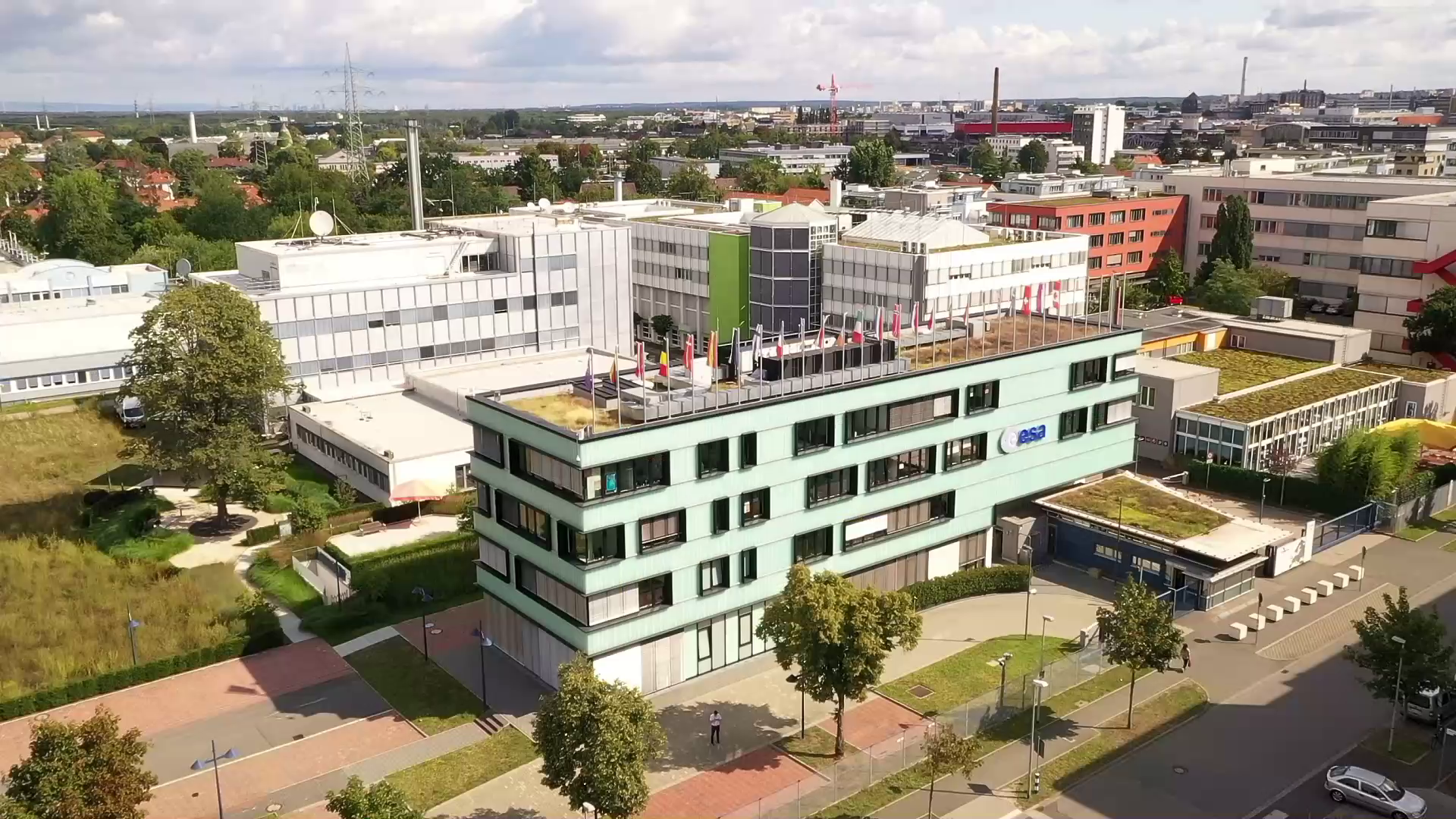
    • European Space Operations Centre
    • Centre overview
    • ESOC Brochure (PDF)
    • Mission history and status
    • Multimedia

      • Images
      • Videos
    • Where missions come alive
    • The life of a mission
    • Ground segment: preparing for launch
    • Launch campaign
    • Countdown
    • Liftoff!
    • Routine operations
    • Specialised facilities
    • Where we work and what we do
    • Centre of excellence
    • Ground station network
    • Space debris research & services
    • Space Situational Awareness
    • ESA Navigation Support Office
    • Software for space
    • cesah
    • Empowering European industry
    • Today: ESA ground systems software
    • Tomorrow: European Ground Systems Common Core (EGS-CC)
    • Advanced Mission Concepts
    • What's happening
    • Workshop on Tracking, Telemetry & Command Systems 13-16 Sep 2016
    • 7th European Conference on Space Debris 18-21 April 2017
    • ESOC access
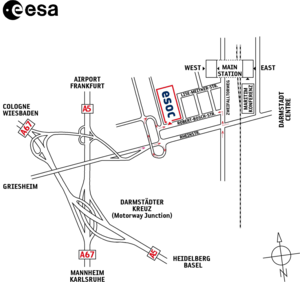
    • Getting to ESOC
    • Contact us
    • ESOC guided tours

    ESA > About Us > ESOC

    The longest call

    The longest call

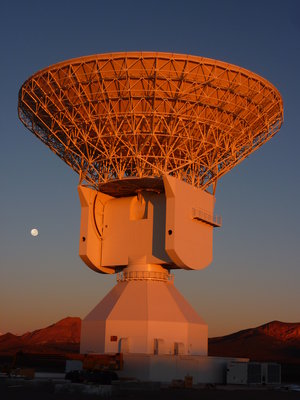
    Operations image of the week: ESA’s deep-space tracking station in Australia makes the longest-ever ‘catch’ for the Agency
    Space debris conference

    Space debris conference

    Europe's top forum for information exchange, technical discussions and networking between space debris researchers worldwide | 7th European Space Debris Conference, 18-21 April 2017, ESOC, Darmstadt
    ESOC: Our world

    ESOC: Our world

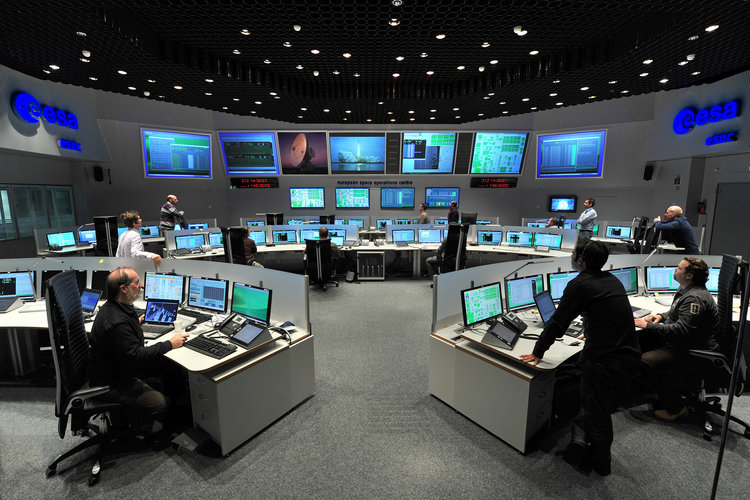
    Our world is about systems, communication and exploration; our passion is for humanity’s voyages into the Universe
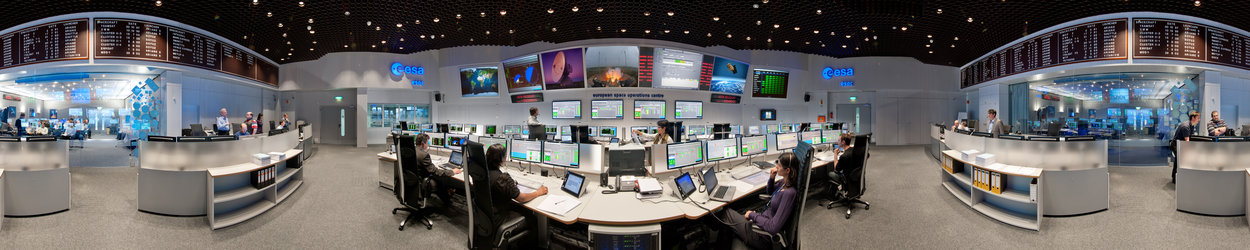
    Mission controllers

    Mission controllers

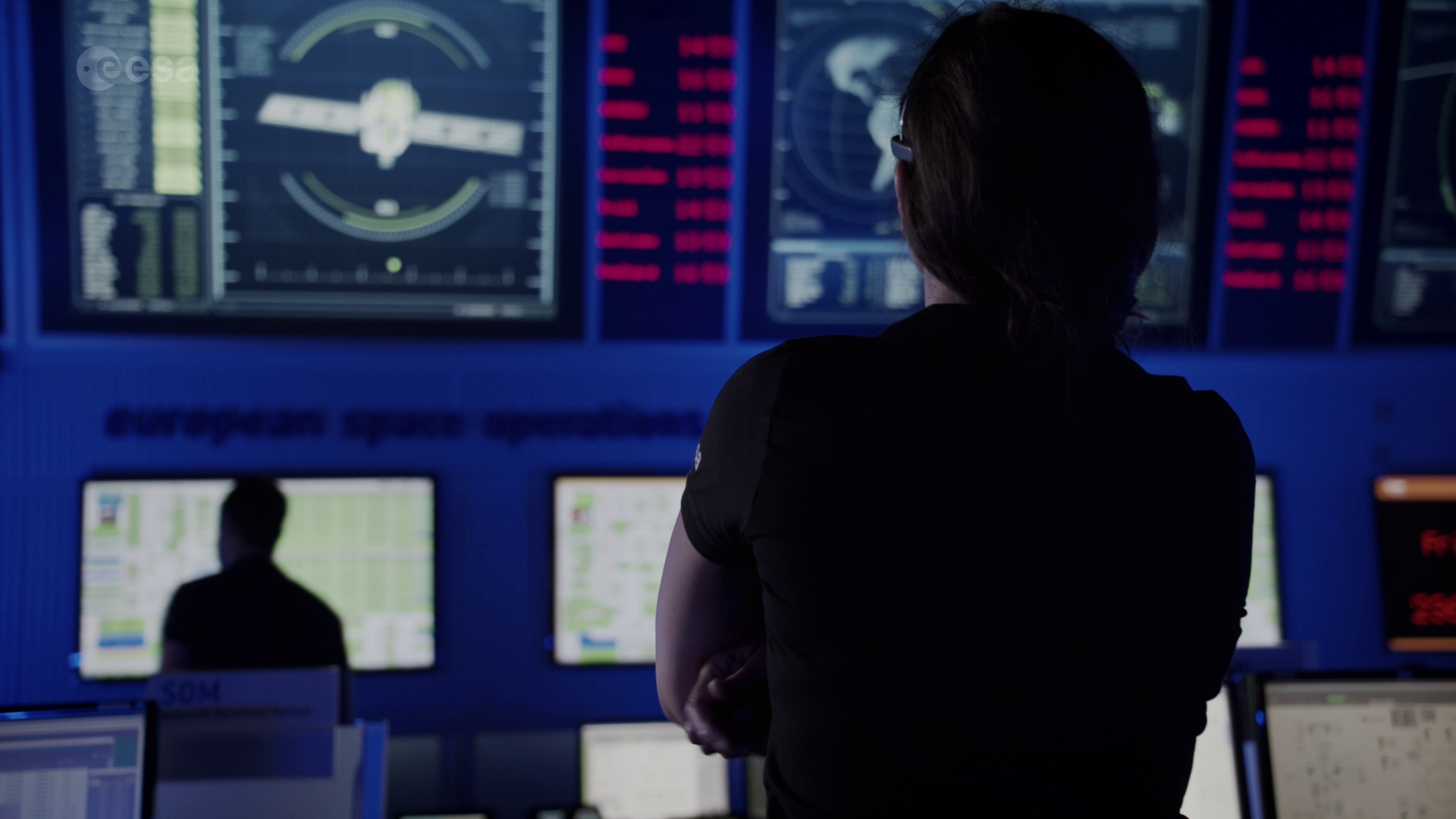
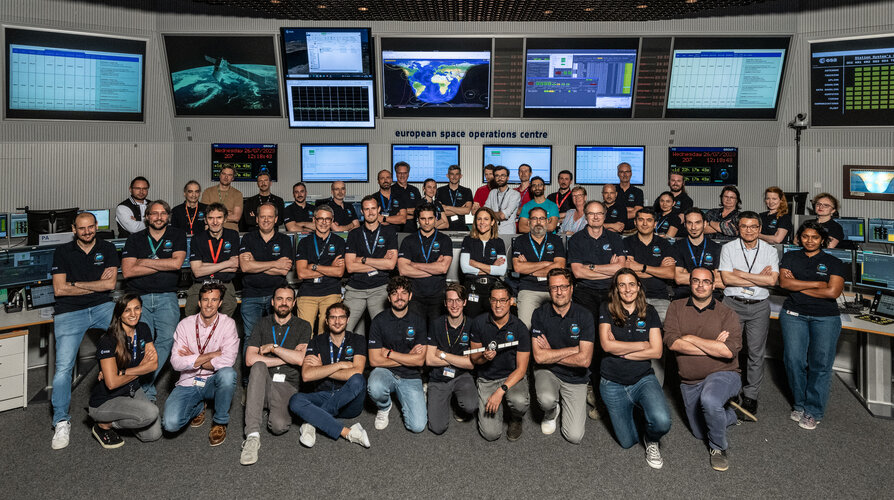
    Operations image of the week: A happy mission control team at ESA just after ExoMars completed its first deep-space engine firing en route to the Red Planet
    ExoMars/TGO hangout

    ExoMars/TGO hangout

    Watch a replay of a Google+ Hangout with updates and Q&A with ESA experts and scientists focusing on the crucial milestones during the spacecraft's seven-month cruise to the Red Planet
    Mars navigation

    Mars navigation

    Operations image of the week: ESA is using quasars – some of the Universe’s most enigmatic objects – to perform ultraprecise navigation for ExoMars
    Over the rainbow

    Over the rainbow

    Operations image of the week: ESA’s deep-space tracking station in Argentina framed by a rainbow and highlighted by the Sun
    Cold gas in deep space

    Cold gas in deep space

    Operations image of the week: Mission controllers use these cold-gas thrusters to keep LISA Pathfinder where it needs to be
    Archive

    Latest News

    In 2016, NASA's Cassini mission will begin its final 'Grand Finale' and ESA’s superbly sensitive deep-space tracking stations will be called in to help gather crucial radio science data.

    Most distant catch for ESA station18 August 2016

    In 2016, NASA's Cassini mission will begin its final 'Grand Finale' and ESA’s superbly sensitive deep-space tracking stations will be called in to help gather crucial radio science data.

    Most distant catch for ESA station18 August 2016 An ESA tracking station has acquired signals from the international Cassini spacecraft orbiting Saturn, across more than 1.4 billion km of space.

    So you want to drive a spacecraft?16 August 2016

    So you want to drive a spacecraft?16 August 2016 ESA’s Education Office is organising a four day course at the ESA Academy that will take 22 university students into the fascinating world of spacecraft operations. The course will show how different ‘driving’ a spacecraft is from designing it.

    Engine burn gives Mars mission a kick28 July 2016

    Engine burn gives Mars mission a kick28 July 2016 Following a lengthy firing of its powerful engine this morning, ESA’s ExoMars Trace Gas Orbiter is on track to arrive at the Red Planet in October.

    Europe’s workhorse Sentinel ready for action13 July 2016

    Europe’s workhorse Sentinel ready for action13 July 2016 Getting the bigger picture on the health of our planet drew another step closer today as Europe’s Sentinel-3A satellite was handed over to Eumetsat for operations.

    Mars Express monitored the flyby of comet Siding Spring on 19 October 2014

    A little help from friends15 June 2016

    Mars Express monitored the flyby of comet Siding Spring on 19 October 2014

    A little help from friends15 June 2016 ESA’s first Mars orbiter will provide an important helping hand when the second arrives at the Red Planet in October.

    Keeping LISA Pathfinder up there13 June 2016

    Keeping LISA Pathfinder up there13 June 2016 Simply getting ESA’s gravitational-wave technology demonstration mission into its initial operational orbit was a challenge. Keeping it there requires teamwork, cold gas and lots of little pushes.

    News Archive

    Focus on

    • ExoMars operations
      ExoMars operations
      ExoMars operationsThe teamwork, techniques and expertise that are enabling ESA's next Mars mission to navigate the complex and challenging journey to the Red Planet
    • ESOC Ground Systems Engineering
      ESOC Ground Systems Engineering
      ESOC Ground Systems EngineeringDesigning, building and maintaining infrastructure on the ground to operate missions in space
    • National news
    • ESA Lokale Nachrichten
      • ExoMars operations
      • Follow ESA missions
      • Rocket Science blog
      • ESA's ATV blog direct from ATV mission control
        ESA's ATV blog direct from ATV mission control
        Rosetta Blog
      • Spacecraft Operations
        Spacecraft Operations
        Operations
      • Ground Systems Engineering
      • Space Debris Office
      • Space Sitauational Awareness - Detecting space hazards
        Space Sitauational Awareness - Detecting space hazards
        SSA - Space Situational Awareness
      • Video & images
      • Ground station chillax
      • SARAS – a Spanish acronym for ‘Fast Acquisition of Satellites and Launchers’ – is a circular array of eight small radio-frequency sensors mounted around the rim of an existing dish antenna.
        SARAS – a Spanish acronym for ‘Fast Acquisition of Satellites and Launchers’ – is a circular array of eight small radio-frequency sensors mounted around the rim of an existing dish antenna.

        Tracking station gallery
      • ESA's webcam at the ESTRACK 35m deep-space station, Cebreros
        ESA's webcam at the ESTRACK 35m deep-space station, Cebreros
        Cebreros webcam
      • Malargüe webcam
    • App Store
    • Subscribe
    • LATEST ARTICLES
    • · Proba-3: seeing through shadow to …
    • · Most distant catch for ESA station
    • · How to dock CubeSats
    • · Spotlight on Schiaparelli’s landin…
    • · Aladin wind probe ready for Aeolus
    • FAQ

    • Jobs at ESA

    • Site Map

    • Contacts

    • Terms and conditions