

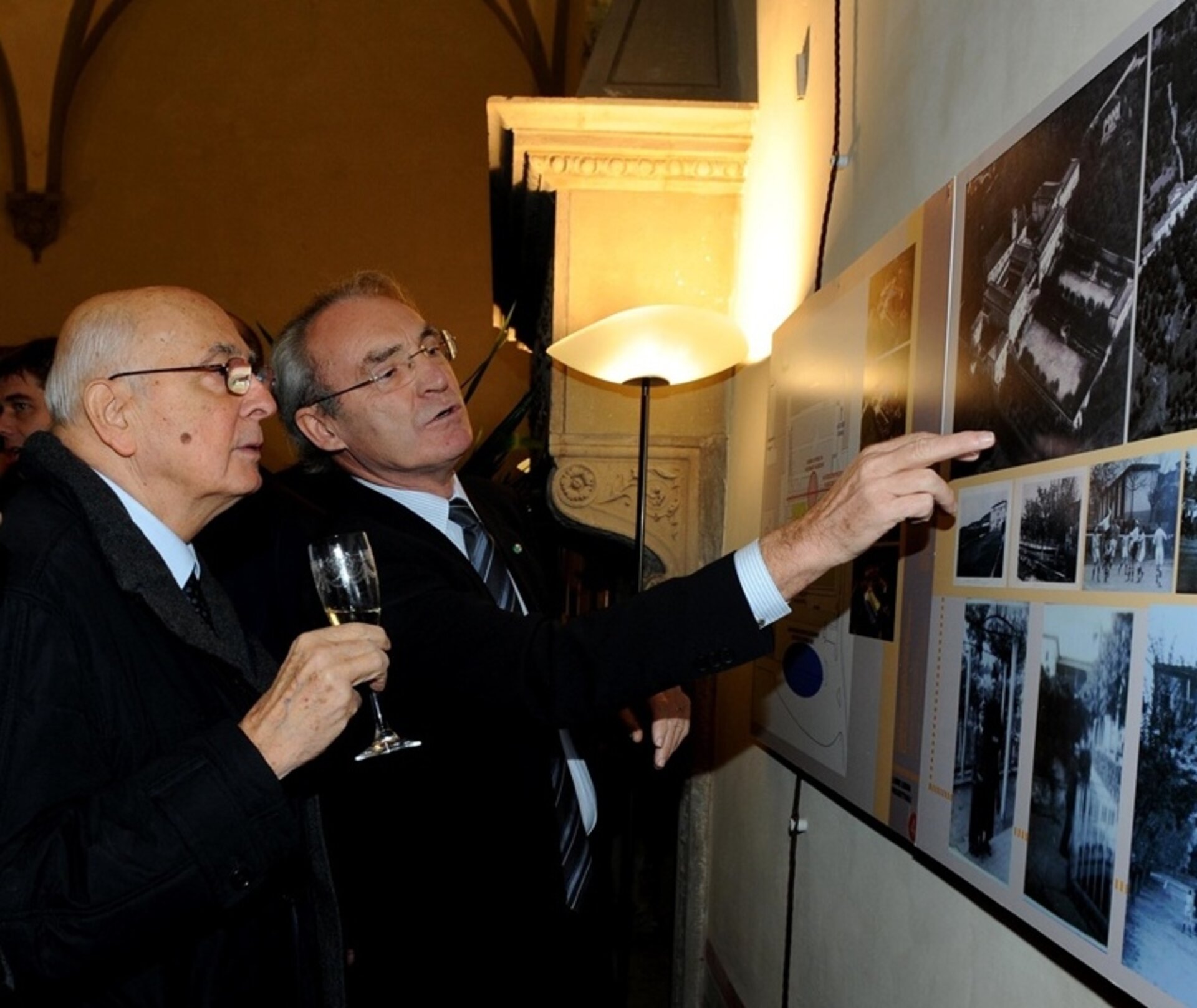
Preserving corporate memory
Safeguarding and making the most of the legacy of the pioneers of the European space effort, the European University Institute (EUI) and ESA have been closely linked since the late 1980s.
This cooperation, marked by trust and excellence, has turned out to be very fruitful, whether in handling the historical archives of the European space organisations, for which the EUI is the custodian, or in ESA’s History Project, which was initially hosted at the Institute when Prof. John Krige held a chair there.
The Agency’s memory, knowledge and knowhow are embedded in these valuable resources, and their long-term preservation and controlled dissemination, for the benefit of Member States and the research community at large, is a major objective for ESA. Such a legacy represents the continuity of the European endeavour in space and testifies to the sustained commitment of founding members and key players.
ESA began to consolidate its archives in 1989, with a ‘Contrat de dépôt’ signed with the EUI (Florence, Italy). In so doing, ESA had three objectives: to safeguard the heritage of its forerunners (COPERS, CETS, ESC, ELDO, ESRO), to provide a solid archival and historical base for research on the building of a European space power, and to promote its achievements through increased transparency regarding its decision-making process and the management of its programmes.
With the EUI being one of the most attractive and stimulating world-class places of learning, this cooperation significantly enlarged the visibility of ESA within the various research communities and among EU stakeholders.
The ESA History Project was the first to exploit these historical archives. It produced an impressive result, contained in two large volumes and a collection of monographs covering the histories of ESRO and ELDO, and the history of ESA until 1987.
Its continuation draws on the archives of the Member States, to build the history of those national programmes that have sustained and complemented the international effort. This led in particular to the publication of eight additional monographs. An oral history project is also part of this initiative.
Today, the bulk of records older than 15 years on European collaboration and joint undertakings in space are preserved at the EUI. Historical archives that are in the public domain now include more than 35,000 files. The catalogue can be consulted online.
In December 1985, the Historical Archives of the European Communities (now European Union) opened in a building made available to the Italian state by the regional council of Tuscany, Villa Il Poggiolo. They were granted guarantees and immunity by the hosting country, which is a prerequisite for the deposit of ESA documents and papers, also covered by privileges and immunities.
In 2009, the documents held in this villa occupied 5500 m of shelving, which was the maximum space available. The decision was made to transfer the archives to a more spacious building, the highly prestigious Villa Salviati. The new site, which has twice the archival capacity, will have state-of-the-art means of conservation and consultation.
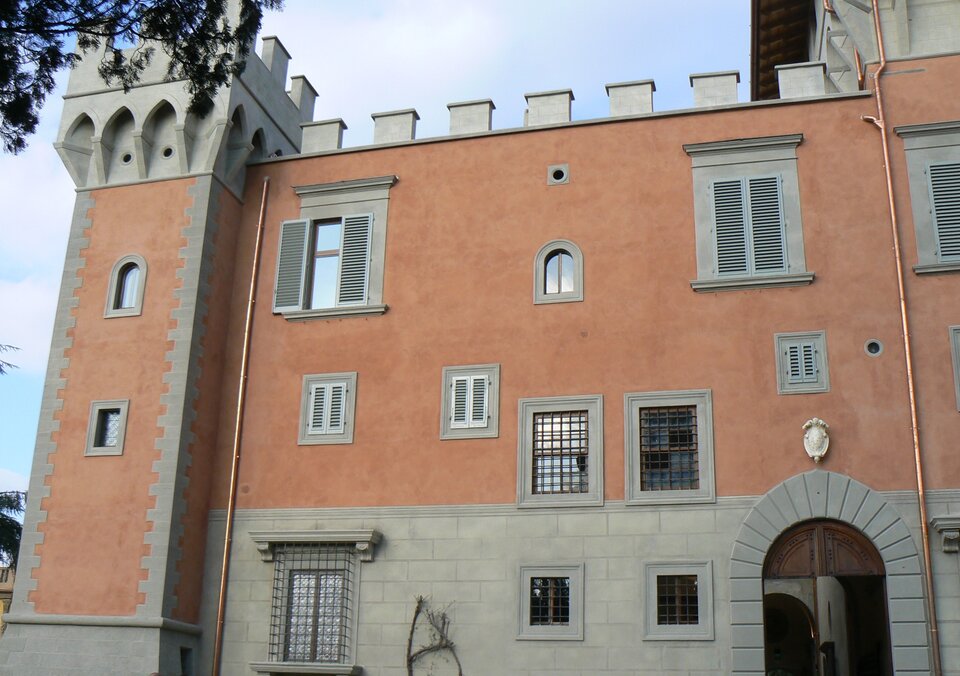
Villa Salviati was acquired and subsequently restored by the Italian government to accommodate the Archives and the Robert Schuman Centre. On 17 December 2009, the new premises were officially inaugurated in the presence of the President of Italy, Giorgio Napolitano.
Evoking the complex genesis of the project, EUI President Yves Mény underlined the necessity to preserve and transmit the cultural heritage of Europe, and invited decision-makers to make the most of the high-level research work produced within the EUI.
Miguel Angel Martínez, Vice-President of the European Parliament, mentioned his profound emotion to be standing in a place so ‘chargée d’histoire’. He was referring not only to the Florentine Renaissance, which changed the face and fate of Europe, but also to the memory of the founding fathers of the European Communities ‘qui l’ont pacifiée’. All the speakers expressed the hope that the inspirational spirit of the pioneers would instil in future generations the political will to develop and unify Europe, to solve recurrent problems and face the challenges ahead.
Josep Borrell, former President of the European Parliament and leading now the future of the EUI, summarised those challenges: “We must be aware of the fact that climate change, growing competition from emerging economies, mass migration, energy and food crises, trade and financial liberalisation, international terrorism and rising inequality are transforming the lifestyles of European citizens and opening windows of opportunity for us to tackle these global challenges successfully.”
No doubt the cooperation between the ESA and the EUI will be successful in the next decade and that brainstorming, cross-fertilisation and tangible results in research and development will prove beneficial to decision-makers and European citizens.


