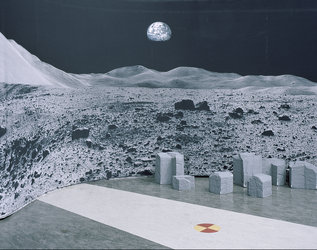
Backdrop - The European Space Agency - with text
THE EUROPEAN SPACE AGENCY
From the beginnings of the space age, Europe has been actively involved in spaceflight, launching satellites for Earth observation, navigation, telecommunications and astronomy, sending probes to the far reaches of the Solar System, and cooperating in the human exploration of space.
Space is now recognised as a key asset for Europe, providing essential information needed by decision-makers in responding to global challenges, such as climate change and security. Space contributes to Europe’s growth and employment, and provides indispensable technologies and services. It increases our understanding of our planet and the Universe.
Since 1975, the European Space Agency, ESA, has been shaping the development of this space capability and ensuring that investment continues to deliver benefits. By pooling the resources of 18 Member States, ESA can undertake programmes and activities far beyond the scope of any single European country, developing the launchers, spacecraft and ground facilities needed to keep Europe at the forefront of global space activities.
The Member States are: Austria, Belgium, the Czech Republic, Denmark, Finland, France, Germany, Greece, Ireland, Italy, Luxembourg, the Netherlands, Norway, Portugal, Spain, Sweden, Switzerland and the United Kingdom. Canada takes part in some projects under a cooperation agreement. Hungary, Poland and Romania are participating in a Plan for European Cooperating States.
www.esa.int