• → European Space Agency

      • Space for Europe
      • Space News
      • Space in Images
      • Space in Videos
    • About Us

      • Welcome to ESA
      • DG's News and Views
      • For Member State Delegations
      • Business with ESA
      • ESA Exhibitions
      • ESA Publications
      • Careers at ESA
    • Our Activities

      • Space News
      • Observing the Earth
      • Human Spaceflight
      • Launchers
      • Navigation
      • Space Science
      • Space Engineering
      • Operations
      • Technology
      • Telecommunications & Integrated Applications
    • For Public

    • For Media

      • Media
      • ESA TV
      • Videos for professionals
      • Photos
    • For Educators

    • For Kids

    • ESA

    • [1/6] Novaya Zemlya archipelago, Arctic Circle
    • [2/6] Betelgeuse’s enigmatic environment
    • [3/6] VA212 transfer to final assembly area
    • [4/6] Visiting Venus
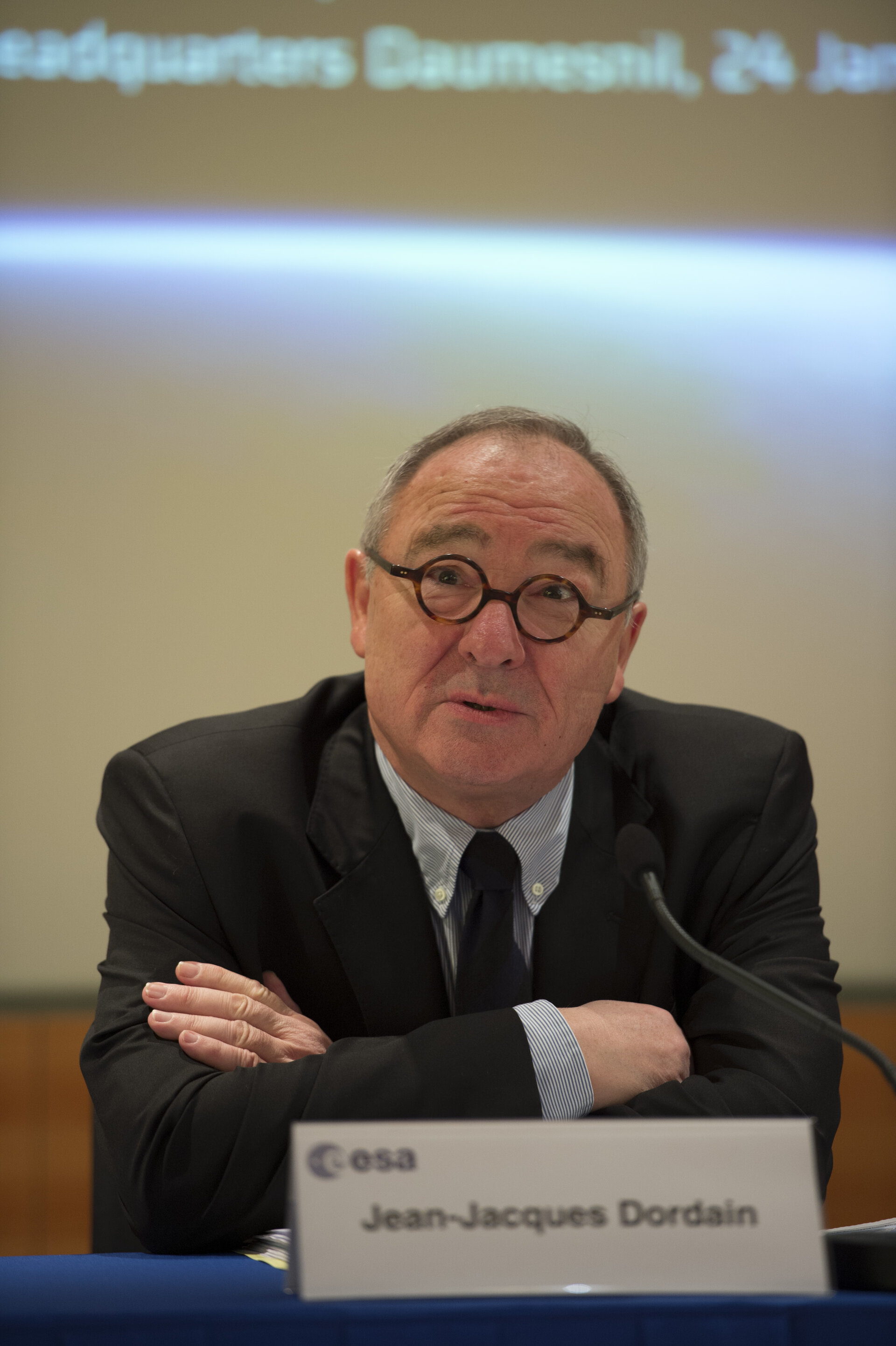
    • [5/6] Jean-Jacques Dordain during the annual press briefing on 24 January 2013
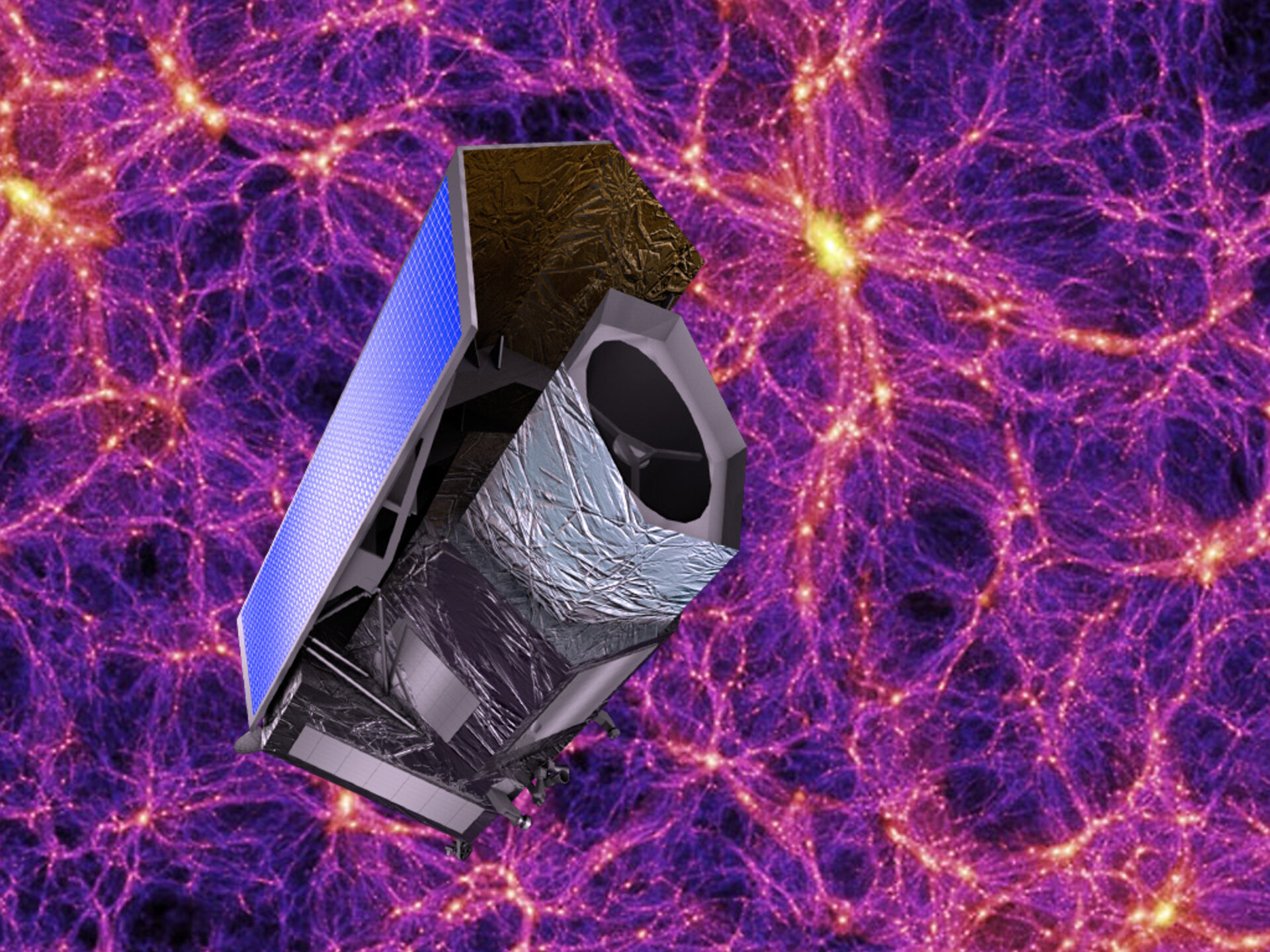
    • [6/6] Euclid

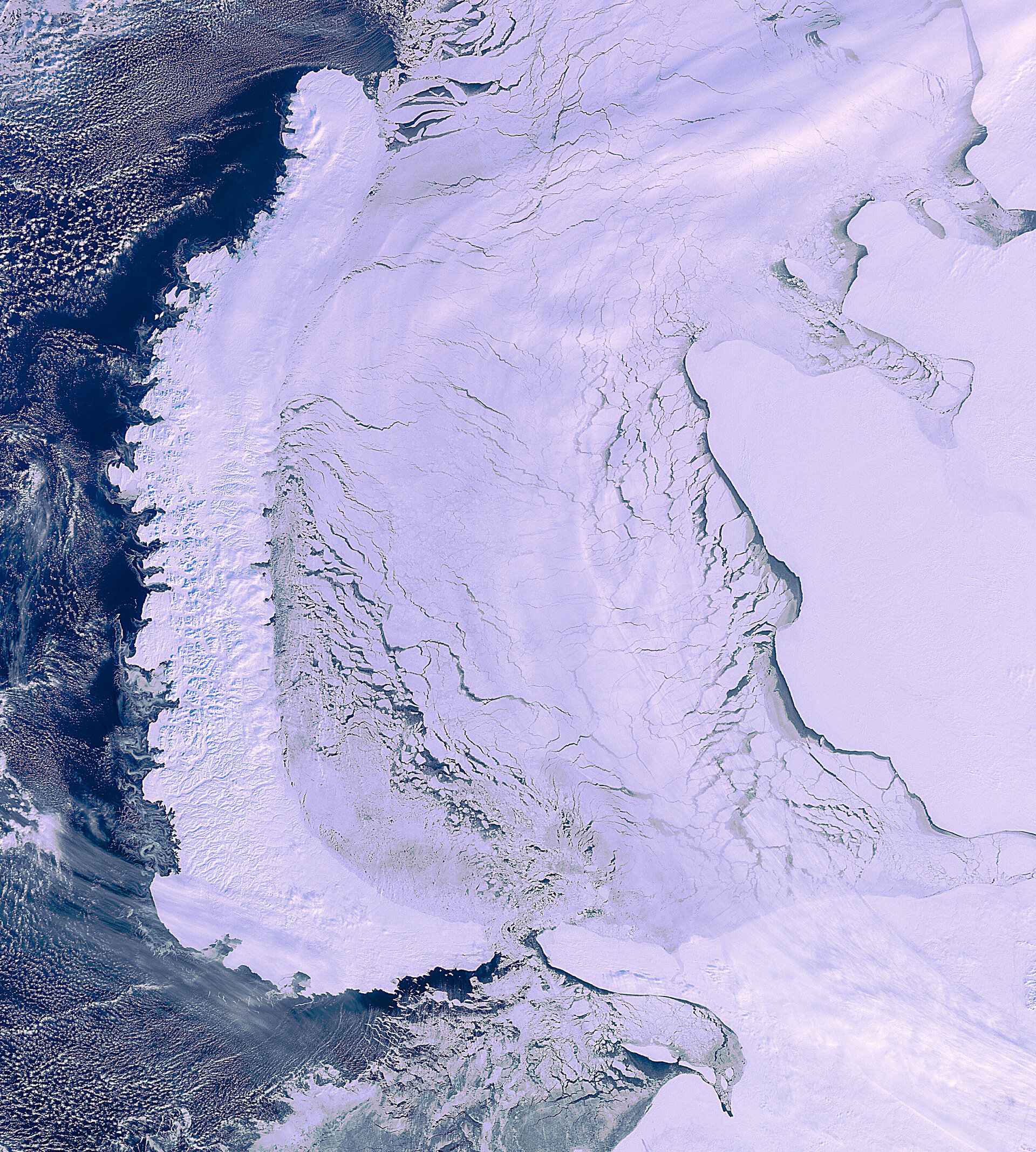
    Novaya Zemlya archipelago, Arctic Circle
    Novaya Zemlya archipelago, Arctic Circle

    This Envisat image from 19 March 2012 shows the elongated islands of the Novaya Zemlya archipelago on the left, the mainland of northwestern Russia to the right and an ice-covered Kara Sea in the centre. The Barents Sea is off the islands’ west coast. Located completely within the Arctic Circle, Novaya Zemlya is an extension of the Ural Mountains. 

    The Arctic’s hard environment makes it difficult to explore. Today, satellites can provide a breadth of information on polar regions such as sea-ice extent, and can facilitate navigation and communications.

    This image is featured on the Earth from Space video programme.

    Credits: ESA
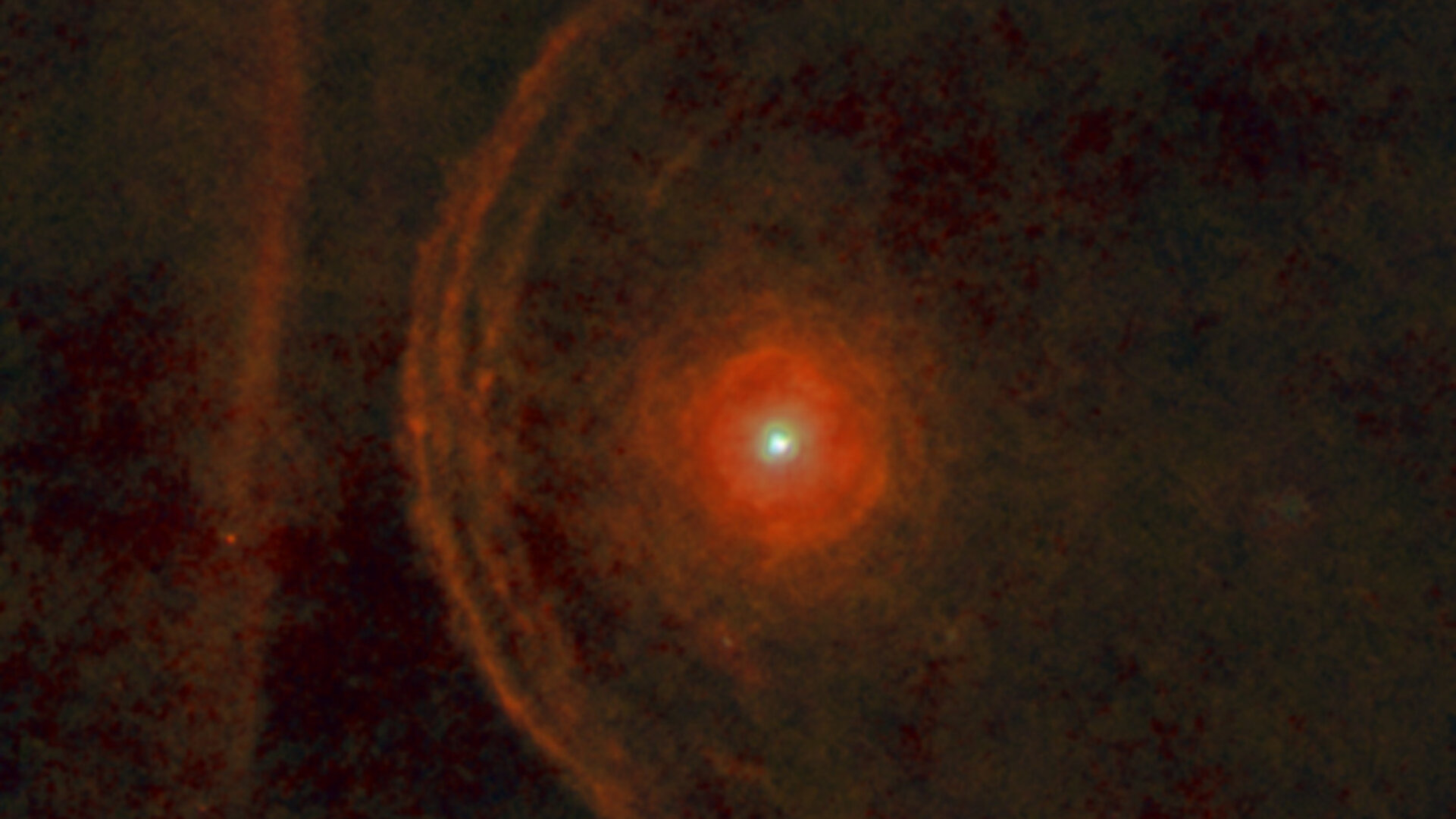
    Betelgeuse’s enigmatic environment
    Betelgeuse’s enigmatic environment

    Composite colour image of the Herschel PACS 70, 100, 160 micron-wavelength images of Betelgeuse. North is to the top left, east is to the bottom left, and the image is about 25 arcminutes across.

    The star (centre) is surrounded by a clumpy envelope of material in its immediate vicinity. A series of arcs 6–7 arcminutes to the left of the star is material ejected from Betelgeuse as it evolved into a red supergiant star, shaped by its bow shock interaction with the interstellar medium. A faint linear bar of dust is illuminated at a distance of 9 arcminutes and may represent a dusty filament connected to the local Galactic magnetic field or the edge of an interstellar cloud. If so, then Betelgeuse’s motion across the sky implies that the arcs will hit the wall in 5000 years time, with the star colliding with the wall 12 500 years later. 

    Credits: ESA/Herschel/PACS/L. Decin et al
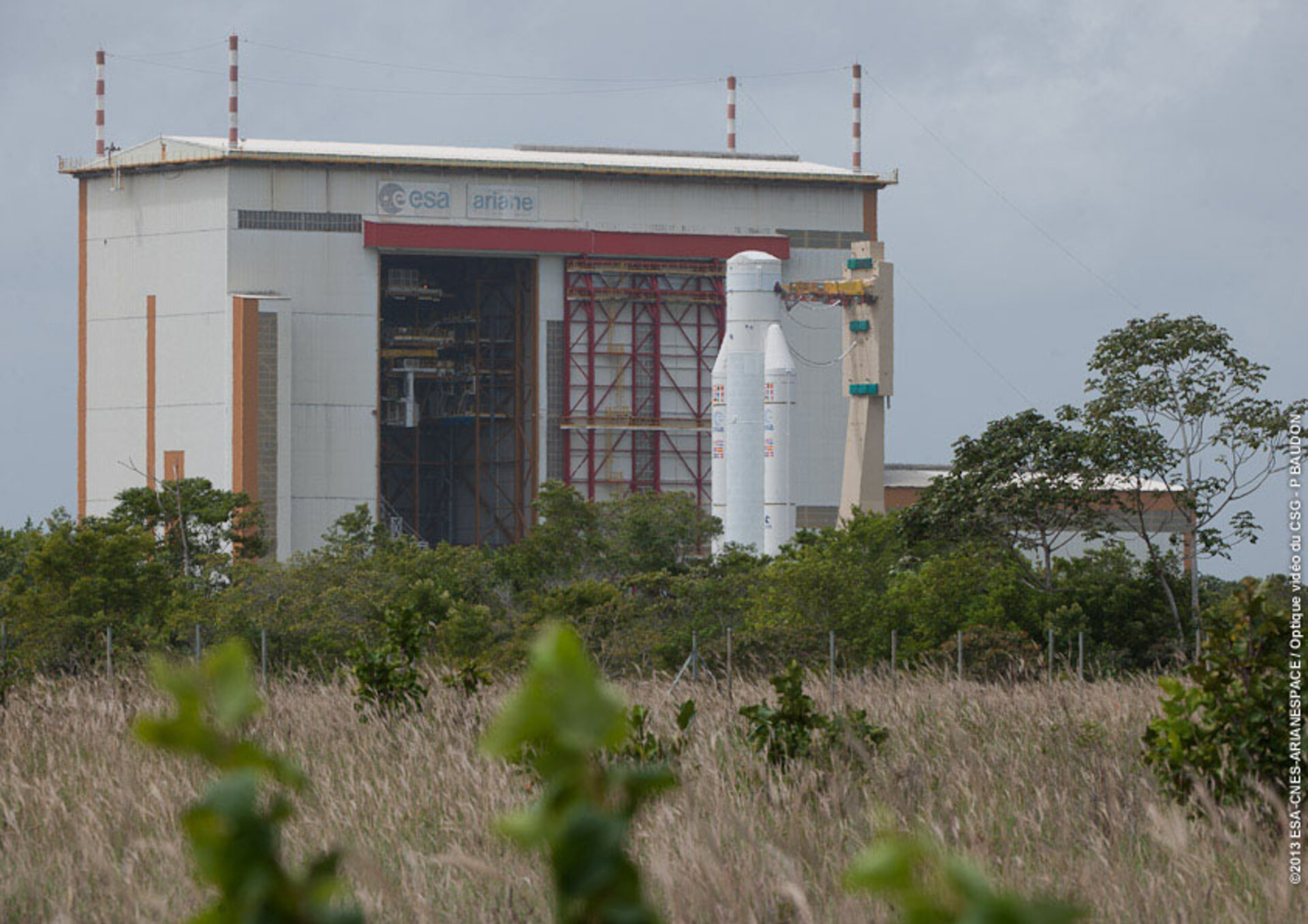
    VA212 transfer to final assembly area
    VA212 transfer to final assembly area

    Ahead of the launch of Ariane 5 flight VA212, the launcher and fully integrated final stage are transferred to the final assembly area at Europe's Spaceport, Kourou, French Guiana.

    Credits: ESA/CNES/Arianespace/Optique Video du CSG
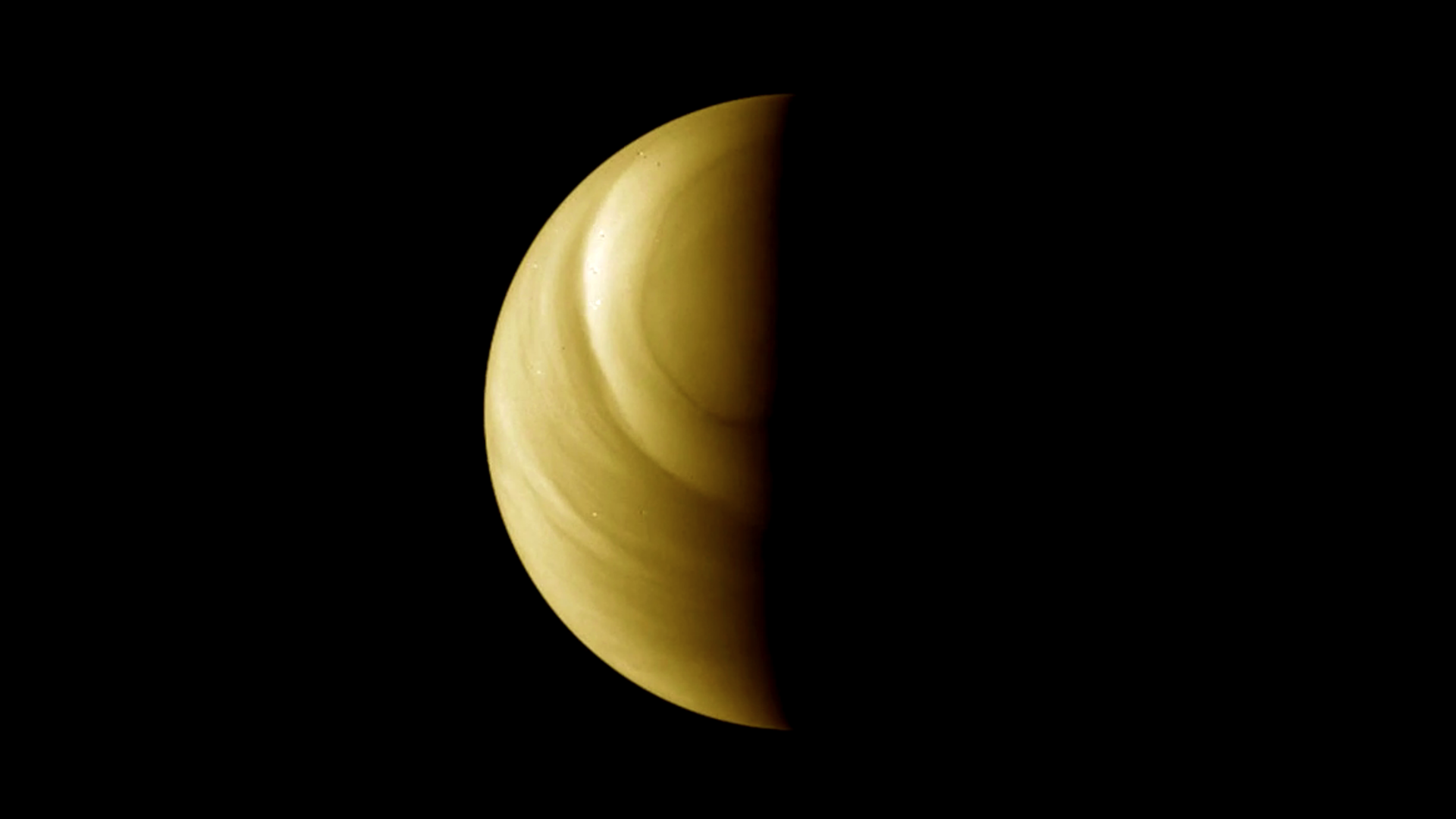
    Visiting Venus
    Visiting Venus

    A screenshot from a new animation of an orbit of Venus, taken from data collected by ESA's Venus Express spacecraft.
     
    The movie begins from a staggering 66 000 km above the south pole, staring down into the swirling south polar vortex. From this bird’s-eye view, half of the planet is in darkness, the ‘terminator’ marking the dividing line between the day and night sides of the planet.
     
    The movie is based on images snapped by the Venus Monitoring Camera over a period of 18 hours during one of the spacecraft’s 24-hour orbits around the planet on 7–8 January last year. It was compiled using public data from the Venus Express data archive.

    Credits: ESA/MPS/DLR/IDA, M. Pérez-Ayúcar & C. Wilson
    Jean-Jacques Dordain during the annual press briefing on 24 January 2013
    Jean-Jacques Dordain during the annual press briefing on 24 January 2013

    On Thursday, 24 January, ESA Director General Jean-Jacques Dordain met the press at the traditional start-of-year gathering, providing an overview of ESA’s achievements in 2012 and the challenges ahead in 2013.


    Credits: ESA–S. Corvaja, 2013
    Euclid
    Euclid

    Artist impression of Euclid.

    Credits: ESA

    Week in Images

    Our week through the lens:
    21-25 January 2013

    Access the image

    Access the image

    Access the image

    Access the image

    Access the image

    Access the image

    Rate this

    Views

    Share

    • Currently 5 out of 5 Stars.
    • 1
    • 2
    • 3
    • 4
    • 5
    Rating: 4.78/5 (28 votes cast)

    Thank you for rating!

    You have already rated this page, you can only rate it once!

    Your rating has been changed, thanks for rating!

    3704
    Tweet

    Connect with us

    • RSS
    • Youtube
    • Twitter
    • Flickr
    • G+
    • Facebook
    • Livestream
    • Subscribe
    • App Store
    • LATEST ARTICLES
    • · Rare merger reveals secrets of gal…
    • · Watching for hazards: ESA opens as…
    • · ESA astronaut Timothy Peake set fo…
    • · Space drives e-mobility
    • · Proba-V opens its eyes
    • FAQ

    • Jobs at ESA

    • Site Map

    • Contacts

    • Terms and conditions