• → European Space Agency

      • Space for Europe
      • Space News
      • Space in Images
      • Space in Videos
    • About Us

      • Welcome to ESA
      • DG's News and Views
      • For Member State Delegations
      • Business with ESA
      • ESA Exhibitions
      • ESA Publications
      • Careers at ESA
    • Our Activities

      • Space News
      • Observing the Earth
      • Human Spaceflight
      • Launchers
      • Navigation
      • Space Science
      • Space Engineering
      • Operations
      • Technology
      • Telecommunications & Integrated Applications
    • For Public

    • For Media

    • For Educators

    • For Kids

    • ESA

    • ATV

    • International Space Station

    • Human Spaceflight and Exploration

    • Flight plan
    • ATV mission concept
    • ATV flight phases
    • ATV cargo capacity
    • Spacecraft
    • ATV configuration
    • ATV Integrated Cargo Carrier
    • ATV Service Module
    • ATV evolution
    • ATV Missions
    • ATV-1: Jules Verne
    • ATV-2: Johannes Kepler
    • ATV-3: Edoardo Amaldi
    • ATV-4: Albert Einstein
    • Operations
    • Flight operations
    • ATV Control Centre
    • Crew role
    • Industry
    • ESA's role
    • European industry
    • ATV Downloads

      • Downloads
      • ATV Edoardo Amaldi factsheet English (pdf)
      • ATV Edoardo Amaldi factsheet French (pdf)
      • ATV Edoardo Amaldi factsheet Italian (pdf)
      • ATV Edoardo Amaldi factsheet German (pdf)
      • ATV Edoardo Amaldi info kit English (pdf)
      • ATV Edoardo Amaldi info kit Italian (pdf)
      • ATV Edoardo Amaldi info kit French (pdf)
      • ATV Edoardo Amaldi info kit German (pdf)
      • ATV Edoardo Amaldi info kit Russian (pdf)
      • ATV: Servicing the International Space Station (pdf)
      • ATV-3 Poster
      • ATV-3 Panels
    • Multimedia gallery
    • ATV image gallery
    • ATV video gallery
    • ATV on Flickr
    • Services

    ESA > Our Activities > Human Spaceflight > ATV

    ATV Control Centre

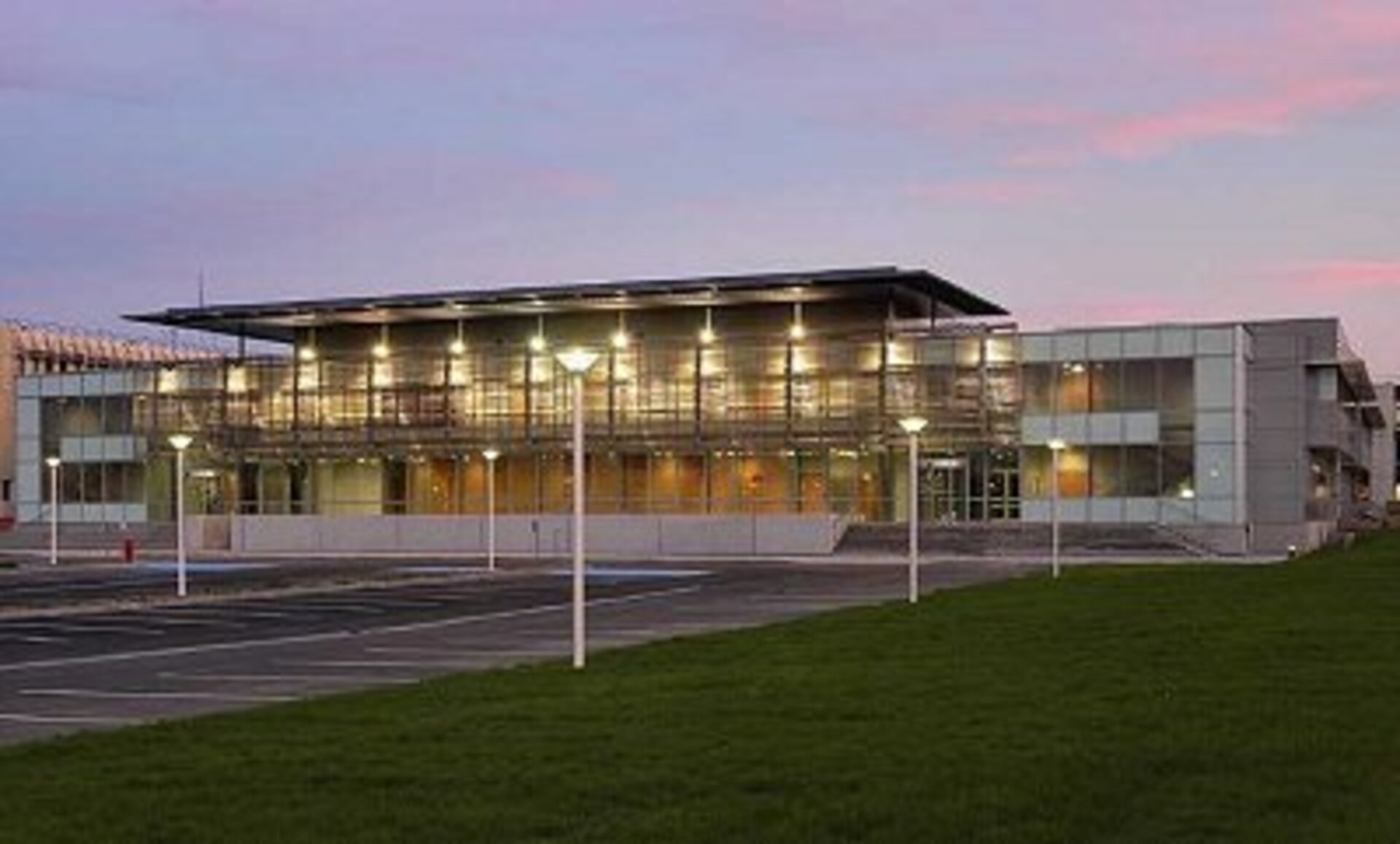
    Fermat Building houses the ATV Control Centre
    ATV Control Centre is housed in the CNES Fermat Building in Toulouse

    The main function of the Automated Transfer Vehicle Control Centre (ATV-CC) is to operate the Automated Transfer Vehicle (ATV).

    In the elegant modern style 'Fermat Building' of the Toulouse space centre, the French space agency CNES, under a contract signed with ESA in 2003, developed and operates, a complex space control centre specialised in handling ATV missions in orbit.

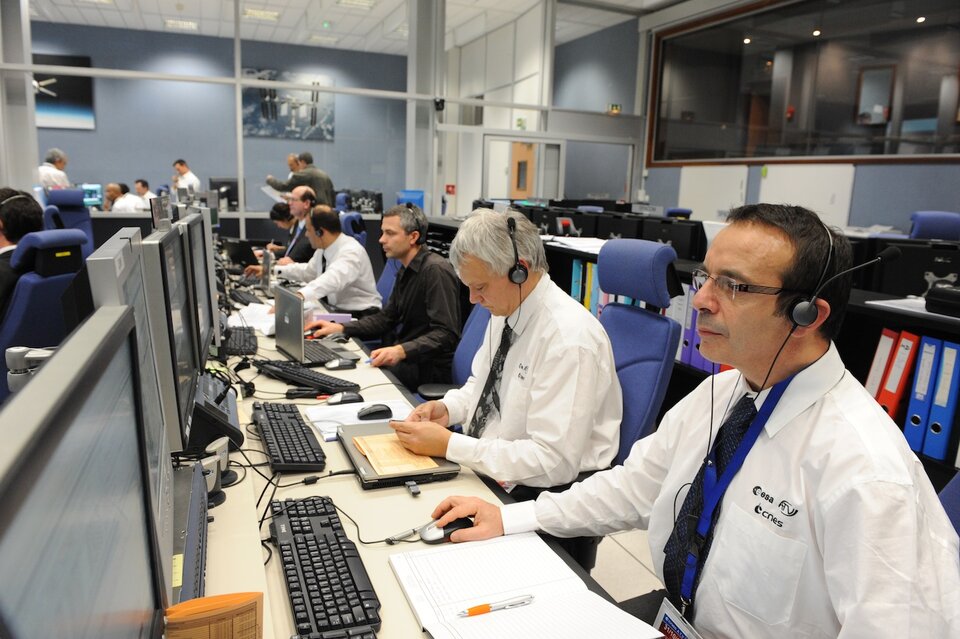
    Under the authority of ESA, the ATV-CC is responsible for the preparation and validation of the monitoring and control tools used by the 30 mission control staff during the flight. The Control Centre is also responsible for carrying out the pre-programmed mission plans and, if needed, to implement any changes.

    ATV-CC during Ariane launch attempt 15 February 2011
    The Flight Control Room

    Additionally the Centre is in charge of the orbitography, the localisation of the ATV and the monitoring of its approach to ISS. This is a challenging task, requiring a very high degree of technical skill, since it is the first time that Europe accomplishes this kind of operation.

    Among the different flight control and piloting capabilities, the ATV-CC is also be able to direct the separation (undocking) of ATV from ISS. The Control Centre can then command an operation to keep the ATV in the vicinity of ISS for up to eight weeks, if needed, before a re-docking.

    The mission scenario requires complex interactions and shared responsibilities between space organisations dispersed throughout the world.


    ESA mission directors on console at ATV-CC
    Team at work in the ATV Control Centre

    First, the ATV-CC works with the Guiana Space Centre, in charge of launch and deployment of the ATV. For rendezvous, docking and departure, the ATV-CC works in close coordination with the Mission Control Centres in Moscow and Houston.

    All the ATV ground control commands are issued from Toulouse. For example, in case of a major malfunction during the rendezvous, the ATV-CC, as well as the ISS crew, can initiate the Collision Avoidance Manoeuvre to move the 20-tonne spaceship away from the Station before re-attempting a rendezvous the next day.

    To allow continuous coordination with the other control centres and to remain in constant contact with the ATV during the mission, using relay satellites - like TDRSS and Artemis -, the ATV-CC relies on the European communication network, called the Interconnection Ground Subnetwork (IGS), which is based at the GSOC (German Space Operations Centre of DLR), at Oberpfaffenhofen in Germany. The ATV-CC is directly linked to the Columbus Control Centre at the GSOC, which also plays the role of the central node of the communications network with our partners.

    Last update: 2 March 2011

    Rate this

    Views

    Share

    • Currently 0 out of 5 Stars.
    • 1
    • 2
    • 3
    • 4
    • 5
    Rating: 0/5 (0 votes cast)

    Thank you for rating!

    You have already rated this page, you can only rate it once!

    Your rating has been changed, thanks for rating!

    121
    facebook
    twitter
    reddit
    google plus
    digg
    tumbler
    digg
    blogger
    myspace

    Connect with us

    • RSS
    • Youtube
    • Twitter
    • Flickr
    • Google Buzz
    • Subscribe
    • App Store
    • LATEST ARTICLES
    • · CryoSat hits land
    • · Ariane 5 completes seven launches …
    • · Measuring skull pressure without t…
    • · Malargüe station inauguration
    • · The solar wind is swirly
    • FAQ

    • Jobs at ESA

    • Site Map

    • Contacts

    • Terms and conditions