• → European Space Agency

      • Space for Europe
      • Space News
      • Space in Images
      • Space in Videos
    • About Us

      • Welcome to ESA
      • DG's News and Views
      • For Member State Delegations
      • Business with ESA
      • ESA Exhibitions
      • ESA Publications
      • Careers at ESA
    • Our Activities

      • Space News
      • Observing the Earth
      • Human Spaceflight
      • Launchers
      • Navigation
      • Space Science
      • Space Engineering
      • Operations
      • Technology
      • Telecommunications & Integrated Applications
    • For Public

    • For Media

    • For Educators

    • For Kids

    • ESA

    • Astrolab Mission

    • Human Spaceflight and Exploration

    • Astronauts

    • International Space Station

    • Astrolab Mission
    • About the mission
    • Why Astrolab?
    • Mission facts
    • Factsheets (pdf)
    • This week on ISS
    • Science programme
    • Human physiology
    • Biology
    • Radiation
    • Physics
    • Technology
    • Education
    • Meet the crew
    • Thomas Reiter
    • Léopold Eyharts
    • Michael E. Lopez-Alegria
    • Mikhail Tyurin
    • Expedition 13
    • Astrolab Mission live
    • ESA Television
    • NASA TV live
    • Reiter EVA blog
    • Multimedia
    • Multimedia gallery
    • Services

    ESA > Our Activities > Human Spaceflight > Astrolab

    Biology

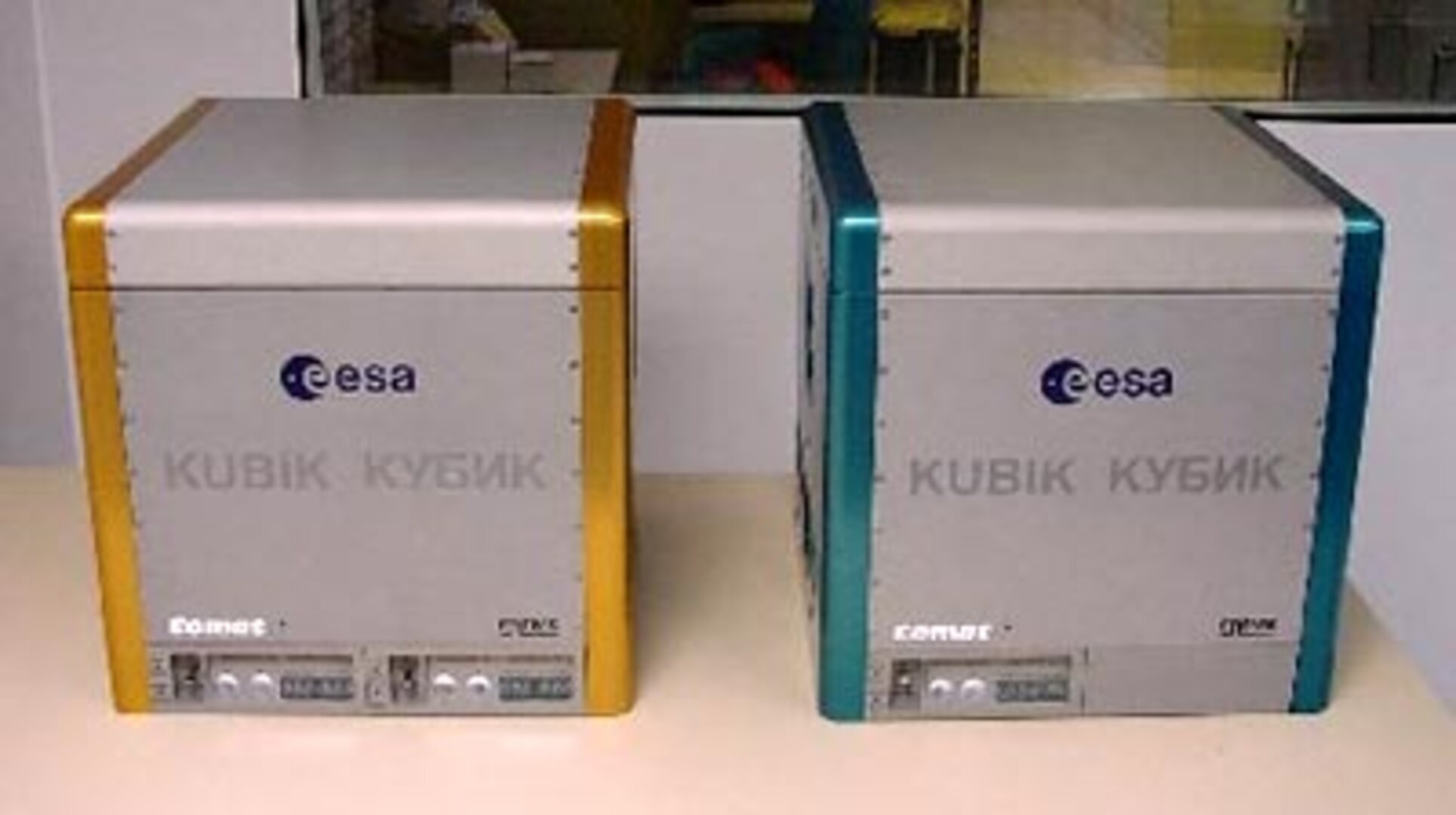
    Kubik incubators
    Biology experiments will use the Kubik incubators flown to the Station in March

    BASE
    In the Bacterial Adaptation to Space Environments (BASE) experiment, the science team will study how bacteria cope with and adapt to the different space flight environmental parameters (e.g. weightlessness, cosmic radiation, space electromagnetism, space vibrations). Based on these results, scientists will try to assess how such adaptations might influence their potential to contaminate and biodeteriorate the space habitat, their potential to endanger crew health, or their function in waste recycling or food production systems. The scientists will also study the physiology, gene expression, gene re-arrangement and gene transfer of cultures of several model bacteria grown under microgravity and other spaceflight conditions.
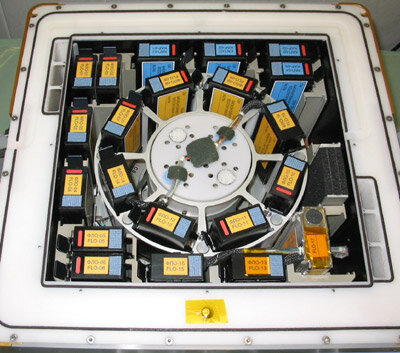
    Kubik centrifuge configuration
    Kubik with centrifuge configuration loaded with experiment containers

    LEUKIN
    The aim of this experiment is to study the signal transduction pathway of the activation of T-lymphocytes. The focus is on the role of the IL-2 receptor and on the determination of its genetic expression. The hypothesis to be tested is that the lack of expression of IL-2 R is the major cause for the loss of activation in re-suspended cells in weightlessness. This experiment will help us better understand the mechanisms by which spaceflight alters immune cell function, which may help in the development of more adequate preventative or corrective measures for immune suppression during long term space missions.


    European Portable Glovebox
    European Portable Glovebox

    YING
    This experiment will study the influence of weightlessness on “Flo processes”, cell-surface interaction on solid and cell-cell interaction in liquid media in yeast cells (Saccharomyces cerevisiae). Weightlessness will have a direct impact on the yeast cell physiology due to a changed gravitational micro-environment and in the case of yeast cell cultivation in liquid media, also the changed shear environment in microgravity will have an effect. The overall goal is to obtain a detailed insight into the importance of gravity and shear stress on the formation of organised cell structures, such as yeast flocs, biofilms and filaments, which are of considerable interest for both fundamental science and industry as well as the medical field.

    Last update: 18 June 2006

    Rate this

    Views

    Share

    • Currently 0 out of 5 Stars.
    • 1
    • 2
    • 3
    • 4
    • 5
    Rating: 0/5 (0 votes cast)

    Thank you for rating!

    You have already rated this page, you can only rate it once!

    Your rating has been changed, thanks for rating!

    5
    facebook
    twitter
    reddit
    google plus
    digg
    tumbler
    digg
    blogger
    myspace

    Connect with us

    • RSS
    • Youtube
    • Twitter
    • Flickr
    • Google Buzz
    • Subscribe
    • App Store
    • LATEST ARTICLES
    • · CryoSat hits land
    • · Ariane 5 completes seven launches …
    • · Measuring skull pressure without t…
    • · Malargüe station inauguration
    • · The solar wind is swirly
    • FAQ

    • Jobs at ESA

    • Site Map

    • Contacts

    • Terms and conditions