• → European Space Agency

      • Space for Europe
      • Space News
      • Space in Images
      • Space in Videos
    • About Us

      • Welcome to ESA
      • DG's News and Views
      • For Member State Delegations
      • Business with ESA
      • ESA Exhibitions
      • ESA Publications
      • Careers at ESA
    • Our Activities

      • Space News
      • Observing the Earth
      • Human Spaceflight
      • Launchers
      • Navigation
      • Space Science
      • Space Engineering
      • Operations
      • Technology
      • Telecommunications & Integrated Applications
    • For Public

    • For Media

    • For Educators

    • For Kids

    • ESA

    • Astrolab Mission

    • Human Spaceflight and Exploration

    • Astronauts

    • International Space Station

    • Astrolab Mission
    • About the mission
    • Why Astrolab?
    • Mission facts
    • Factsheets (pdf)
    • This week on ISS
    • Science programme
    • Human physiology
    • Biology
    • Radiation
    • Physics
    • Technology
    • Education
    • Meet the crew
    • Thomas Reiter
    • Léopold Eyharts
    • Michael E. Lopez-Alegria
    • Mikhail Tyurin
    • Expedition 13
    • Astrolab Mission live
    • ESA Television
    • NASA TV live
    • Reiter EVA blog
    • Multimedia
    • Multimedia gallery
    • Services

    ESA > Our Activities > Human Spaceflight > Astrolab

    Complex plasma physics

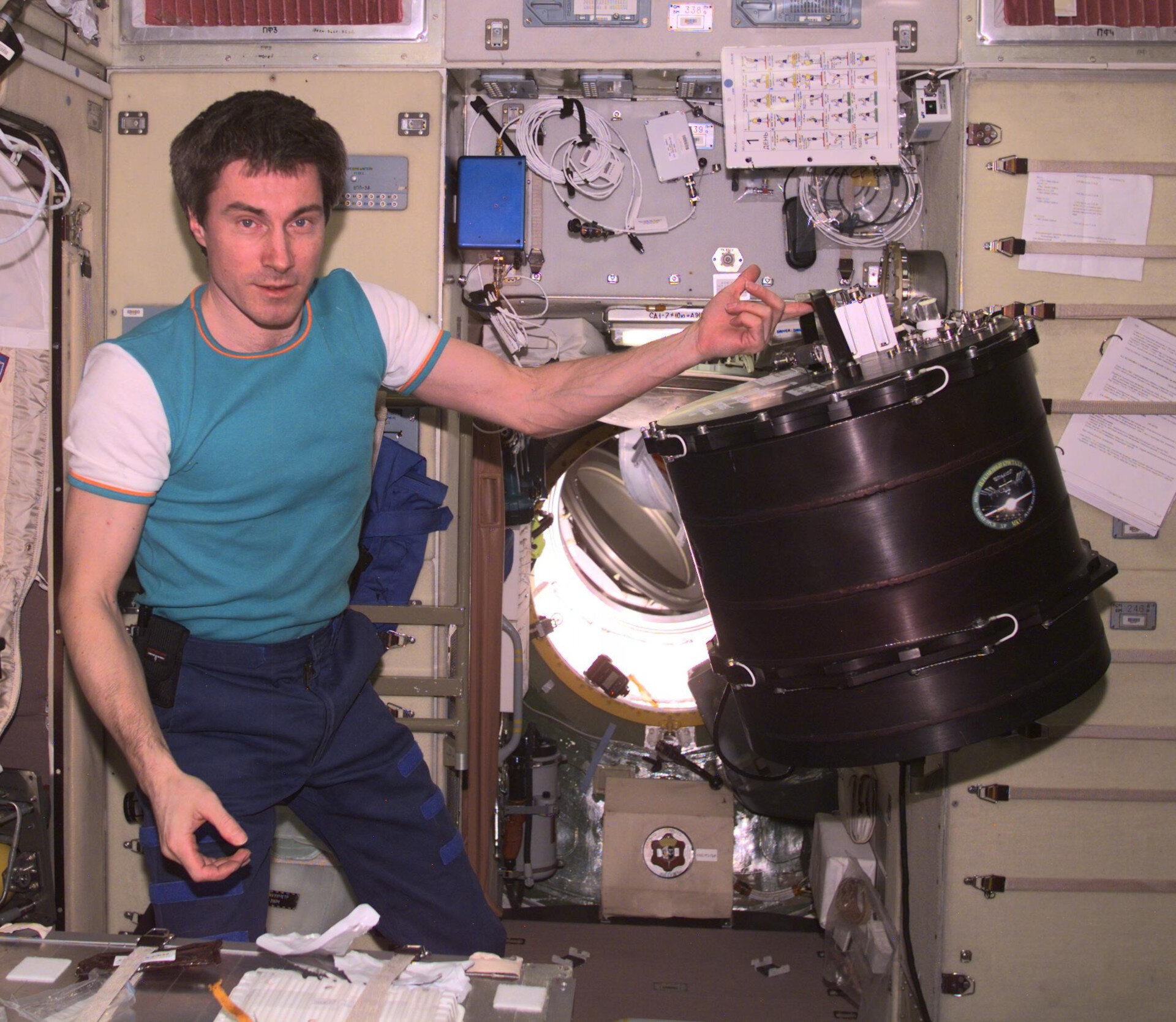
    PKE-Nefedov experiment
    Sergei Krikalev with the PKE-Nefedov experiment during Expedition 1 mission

    PK-3+
    Plasma is the most disordered and ubiquitous state of matter in our Universe, being composed of charged electrons and ions. An important area of research within this field is the study of complex plasmas, which are plasmas enriched with micro-particles. This component adds special properties to the plasma, making it possible to undertake fundamental investigations under weightless conditions. In addition to the benefits of increased understanding of fundamental physics, this research has applications across many scientific disciplines such as plasma processing and fluid dynamics.

    The PK-3 Plus facility will carry out research on complex plasmas under weightless conditions over a broad range of fundamental parameters. The experiment was built under the responsibility of the German Aerospace Center, DLR and will replace the PK-3 (PKE-Nefedov) facility, which was in use on the ISS since March 2001.

    Last update: 18 June 2006

    Rate this

    Views

    Share

    • Currently 0 out of 5 Stars.
    • 1
    • 2
    • 3
    • 4
    • 5
    Rating: 0/5 (0 votes cast)

    Thank you for rating!

    You have already rated this page, you can only rate it once!

    Your rating has been changed, thanks for rating!

    4
    facebook
    twitter
    reddit
    google plus
    digg
    tumbler
    digg
    blogger
    myspace

    Connect with us

    • RSS
    • Youtube
    • Twitter
    • Flickr
    • Google Buzz
    • Subscribe
    • App Store
    • LATEST ARTICLES
    • · CryoSat hits land
    • · Ariane 5 completes seven launches …
    • · Measuring skull pressure without t…
    • · Malargüe station inauguration
    • · The solar wind is swirly
    • FAQ

    • Jobs at ESA

    • Site Map

    • Contacts

    • Terms and conditions