• → European Space Agency

      • Space for Europe
      • Space News
      • Space in Images
      • Space in Videos
    • About Us

      • Welcome to ESA
      • DG's News and Views
      • For Member State Delegations
      • Business with ESA
      • ESA Exhibitions
      • ESA Publications
      • Careers at ESA
    • Our Activities

      • Space News
      • Observing the Earth
      • Human Spaceflight
      • Launchers
      • Navigation
      • Space Science
      • Space Engineering
      • Operations
      • Technology
      • Telecommunications & Integrated Applications
    • For Public

    • For Media

    • For Educators

    • For Kids

    • ESA

    • Human Spaceflight

    • Astronauts

    • International Space Station

    • Research

    • Education

    • Exploration

    • How to become an astronaut
    • European astronauts
    • The European astronaut corps
    • European astronaut charta
    • Astronaut gallery
    • Astronaut biographies

      • Jean-François Clervoy
      • Samantha Cristoforetti
      • Frank De Winne
      • Pedro Duque
      • Léopold Eyharts
      • Christer Fuglesang
      • Alexander Gerst
      • André Kuipers
      • Andreas Mogensen
      • Paolo Nespoli
      • Luca Parmitano
      • Timothy Peake
      • Thomas Pesquet
      • Hans Schlegel
      • Roberto Vittori
    • European astronauts in space
    • European astronauts in new functions
    • Astronaut training

      • Related articles
      • The challenges of astronaut training
      • Basic training
      • Advanced training
      • Increment-specific training
      • Neutral buoyancy EVA training
      • ATV training
    • European Astronaut Centre
    • The European Astronaut Centre
    • Organisation and structure
    • Mission participation and support
    • Getting to EAC
    • Contact us
    • Living in space

      • Living in space
      • Learning to live with the laws of motion
      • Daily life
    • Services
    • Calendar
    • Subscribe
    • RSS feeds

    ESA > Our Activities > Human Spaceflight > Astronauts

    Increment-specific training

    The astronauts learn everything they need to know for their mission

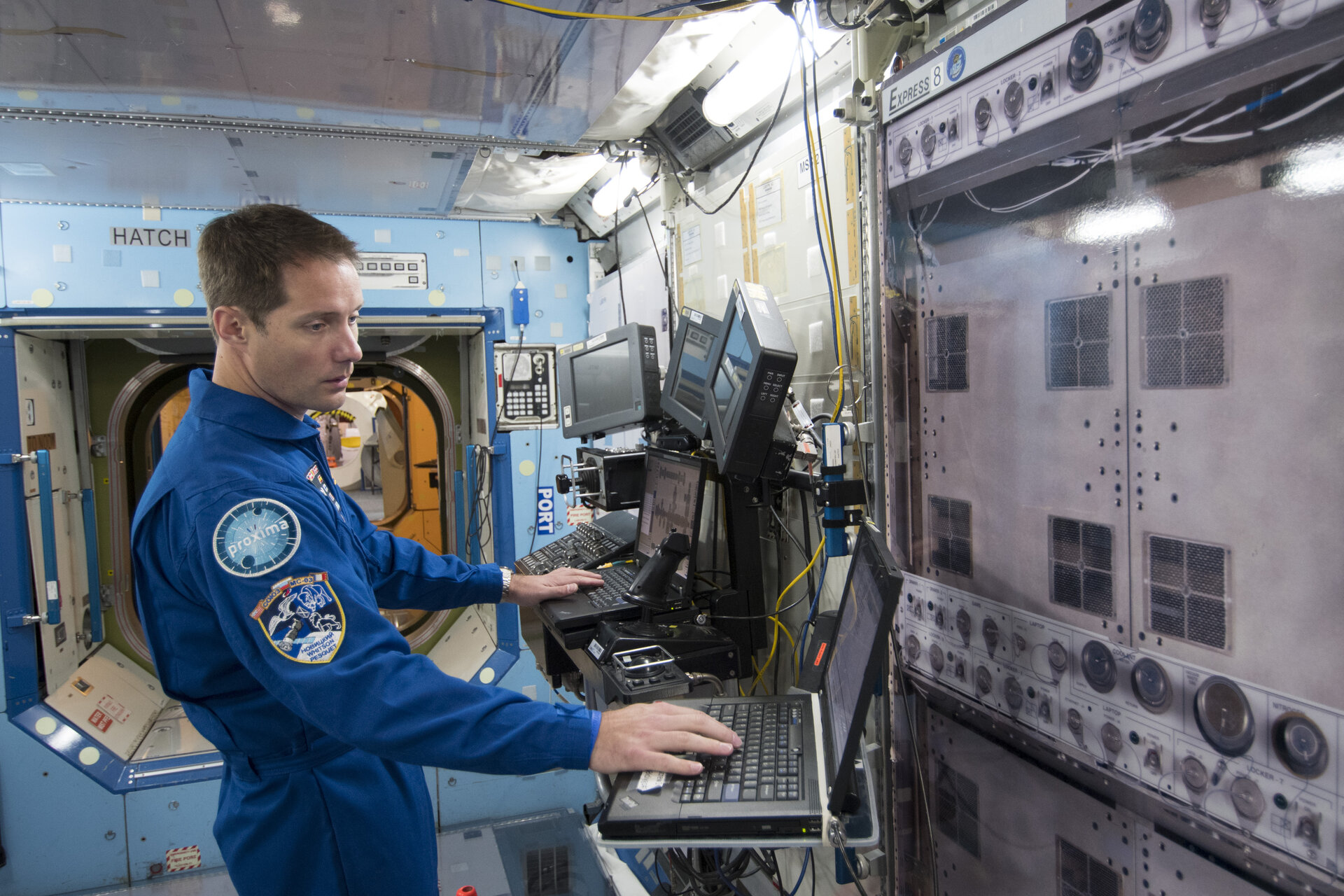
    As soon as an astronaut is assigned to a mission, the 'Increment-Specific Training' starts (increment is jargon for the time period between the exchange of crews on board the ISS, you could call it 'mission-specific training').

    During this 18-month training phase the astronauts learn everything they need to know for their mission. All crewmembers, prime and backup crews, selected for the spaceflight will train together.

    This is important not only because the crewmembers have to get to know each other (later they will spend about half a year together in the enclosed environment of the ISS), but they also learn to work together efficiently as a team and according to the distributed roles and responsibilities that they are assigned to.

    The crew tasks on the ISS are individually tailored, always considering the particular astronaut’s experience and professional background.

    Crew qualification levels
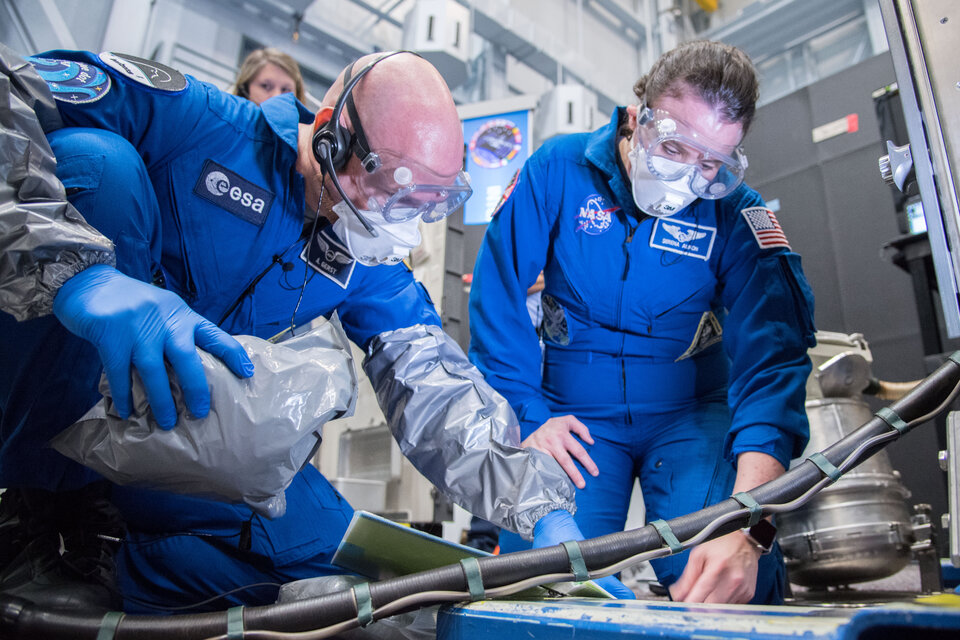
    Expedition 18 crew participate in Columbus training at EAC
    Expedition 18 crew members participate in Columbus user level training

    In general three crew qualification levels are defined; user level, operator level and specialist level. For every onboard system a set of minimum qualifications needed to safely operate and maintain the system is pre-defined (e.g. one specialist, one operator and one user).

    Each crewmember, while being specialist for some systems, will be operator or only user for other systems. Consequently, the training programme for each crewmember is individually tailored to his or her set of tasks and pre-defined qualification levels.


    Columbus operator training at EAC
    Hans Schlegel participates in Columbus operator training

    Increment Specific Training also includes training to deal with off-nominal situations, failure analysis and recovery/repair activities.

    Astronauts learn how to run the experiments scheduled for their mission, and they are trained to dock new modules to the Station, in case new elements are added to the ISS during their mission.

    ISS replica

    The increment training phase also includes the multi-segment training, which is implemented in the ‘Space Station Training Facility’ at NASA's Johnson Space Center, in Houston, the United States. This training facility is a replica of the whole ISS in which the astronauts can train for emergency situations that affect the whole Station.

    Eyharts and Melvin during emergency training at JSC
    Emergency scenario training session in JSC mock-up facility

    Shortly before flight the training departments of all five international ISS partners have to provide a written statement in which they declare that all crewmembers have successfully completed the crew training and that - from a training perspective – they are ready to fly to the ISS.

    For more about the increment specific training, see the ATV Training article.

    Last update: 10 April 2008

    Rate this

    Views

    Share

    • Currently 0 out of 5 Stars.
    • 1
    • 2
    • 3
    • 4
    • 5
    Rating: 0/5 (0 votes cast)

    Thank you for rating!

    You have already rated this page, you can only rate it once!

    Your rating has been changed, thanks for rating!

    61
    facebook
    twitter
    reddit
    google plus
    digg
    tumbler
    digg
    blogger
    myspace
    • Related articles
      • ATV training

    Connect with us

    • RSS
    • Youtube
    • Twitter
    • Flickr
    • Google Buzz
    • Subscribe
    • App Store
    • LATEST ARTICLES
    • · CryoSat hits land
    • · Ariane 5 completes seven launches …
    • · Measuring skull pressure without t…
    • · Malargüe station inauguration
    • · The solar wind is swirly
    • FAQ

    • Jobs at ESA

    • Site Map

    • Contacts

    • Terms and conditions