

Jean-François Clervoy
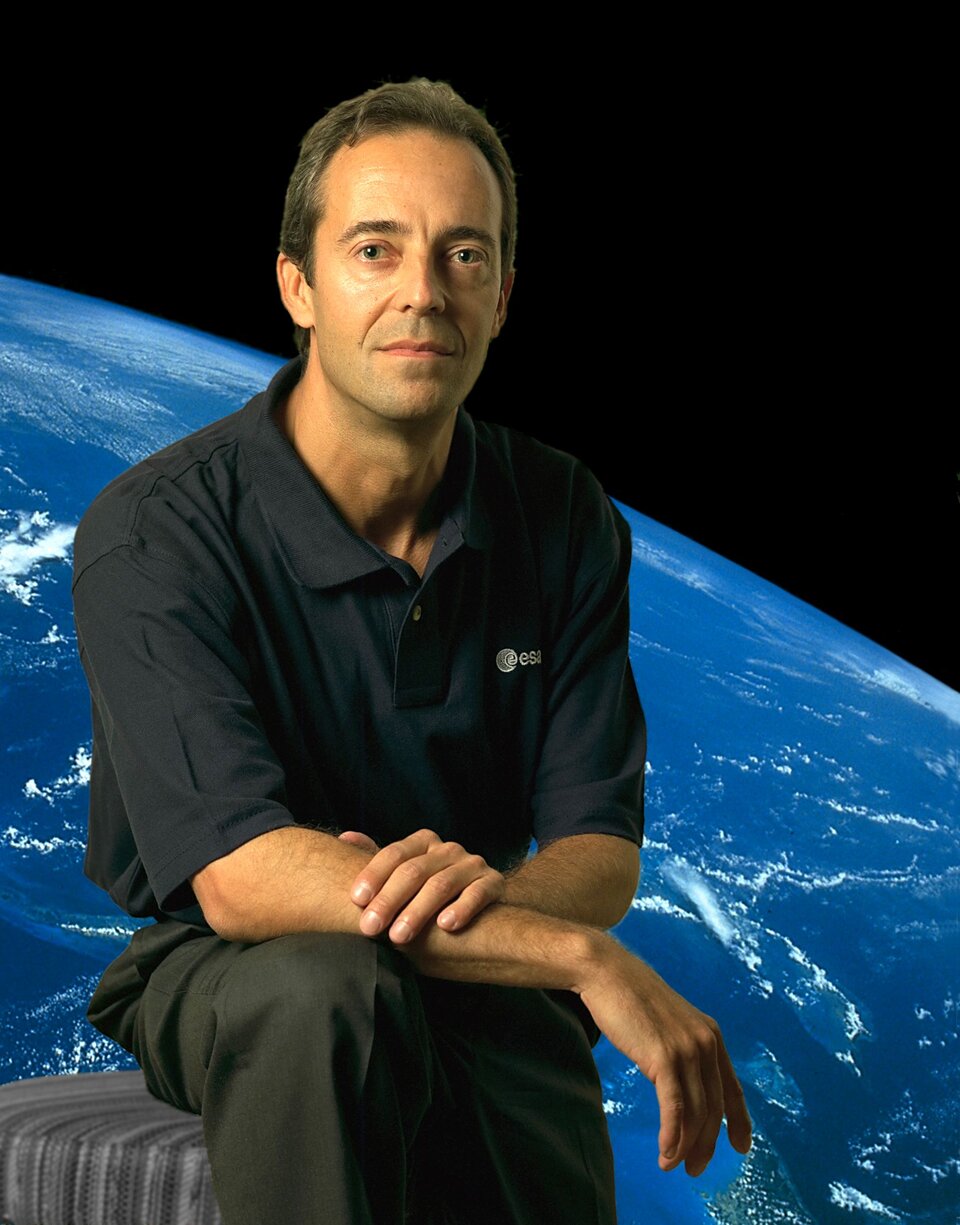
Born on 19 November 1958 in Longeville-les-Metz, France Jean-François Clervoy considers Toulouse, France, to be his adopted hometown. He is married to Laurence Boulanger and they have two children. Jean-François enjoys racquet sports, skill games, canyoning and skiing. He also likes playing with boomerangs, frisbees and kites. His mother lives near Paris, France.
Education
- 1976: baccalaureate from the Collège Militaire de Saint Cyr l’Ecole
- 1978: he took superior and special Maths classes at the Prytanée Militaire, La Flèche, France
- 1981: graduated from Ecole Polytechnique, Paris, France
- 1983: graduated from Ecole Nationale Supérieure de l’Aéronautique et de l’Espace, Toulouse, France
- 1987: graduated as Flight Test Engineer from Ecole du Personnel Navigant d’Essais et de Réception, Istres, France
- Jean-François is an Ingénieur Général de l’Armement in the French DGA defence procurement agency
Organisations
- Member of the Association of Space Explorers (ASE)
- Distinguished member of the French Aeronautics and Astronautics Association (3AF)
- Permanent member of the Air and Space Academy (AAE)
- Permanent member of the International Academy of Astronautics (IAA)
- Senior member of the American Institute of Aeronautics and Astronautics (AIAA)
- Member of the board of the Aeroclub of France (AéCF)
- Ambassador of the World Ocean Network (WON)
- Patron of the marine life preservation non-profit association ‘Te mana o te moana’ in French Polynesia
- ESA representative for the SeaOrbiter ocean exploration project
- Member and co-founder of the Latécoère Explorers association
- Corresponding member of the National Academy of Sciences, Literature and Arts of Bordeaux
Special honours
- Three NASA Space Flight Medals
- Two NASA Exceptional Service Medals
- Officier de l’ordre national de la Légion d’honneur
- Chevalier de l’ordre national du Mérite
- Komarov and Koroliev Awards from the Fédération Aéronautique Internationale
- Medal of Aeronautics
- Grand Prix (Chabot-Didon) of the National Academy of Metz
Experience
In 1983 Jean-François was seconded from the Délégation Générale pour L’Armement (DGA) to French space agency CNES where he works on autopilot systems for various projects such as the SPOT Earth observation satellite, the STAR optical intersatellite space link and the Vega comet probe.
He was selected for the second group of French astronauts in 1985 and started intensive Russian language training. From 1987 to 1992 he directed the parabolic flight programme at the Flight Test Center in Brétigny-sur-Orge, France, and provided technical support to the European human space programme within the ESA Hermes crew office in Toulouse.
From 1983 to 1987, Jean-François also lectured on signal processing and general mechanics at the Ecole Nationale Supérieure de l’Aéronautique et de l’Espace, Toulouse.
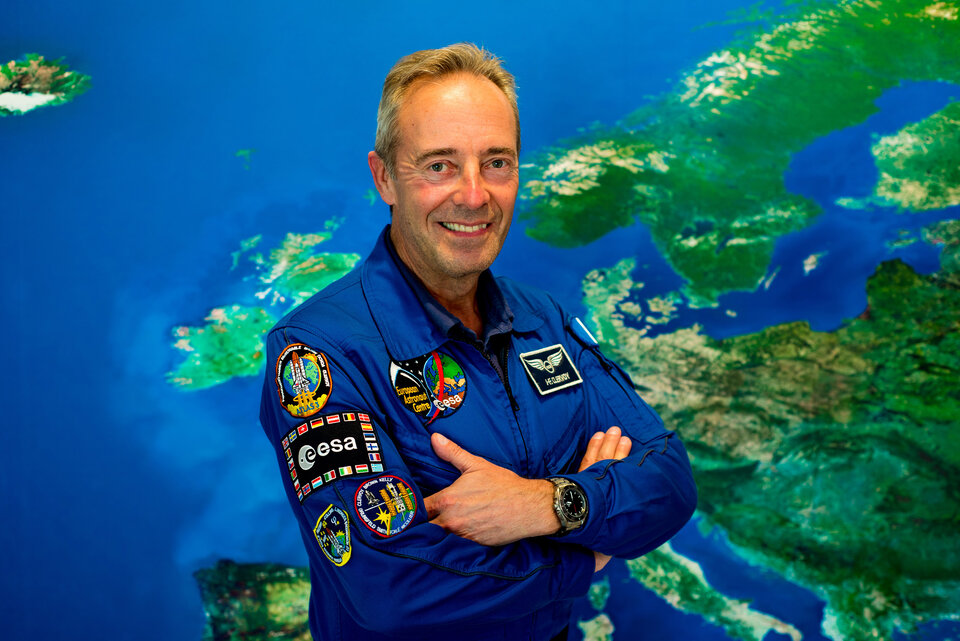
In 1991, he trained in Star City, Russia, on the Soyuz and Mir systems. In 1992, he joined the ESA astronaut corps at the European Astronaut Centre in Cologne, Germany. In August 1992 Jean-François was detached to the NASA Johnson Space Center in Houston, USA, to qualify as a Space Shuttle mission specialist.
Between spaceflights, Jean-François was assigned as flight software verification lead in the Shuttle Avionics Integration Laboratory and as robotics display design lead for the Space Shuttle and the International Space Station. After his third spaceflight, he was assigned as the International Space Station display integration lead in NASA’s Astronaut Office at the Johnson Space Center.
Jean-François flew twice on the Space Shuttle Atlantis and once on Discovery, spending a total of 675 hours in space.
From 2001 through 2008 he was assigned as Senior Advisor Astronaut for ESA’s Automated Transfer Vehicle in Les Mureaux, France. In 2008, he was appointed member of the selection board for the new ESA astronaut class, and became coach of the new class during their first year of training.
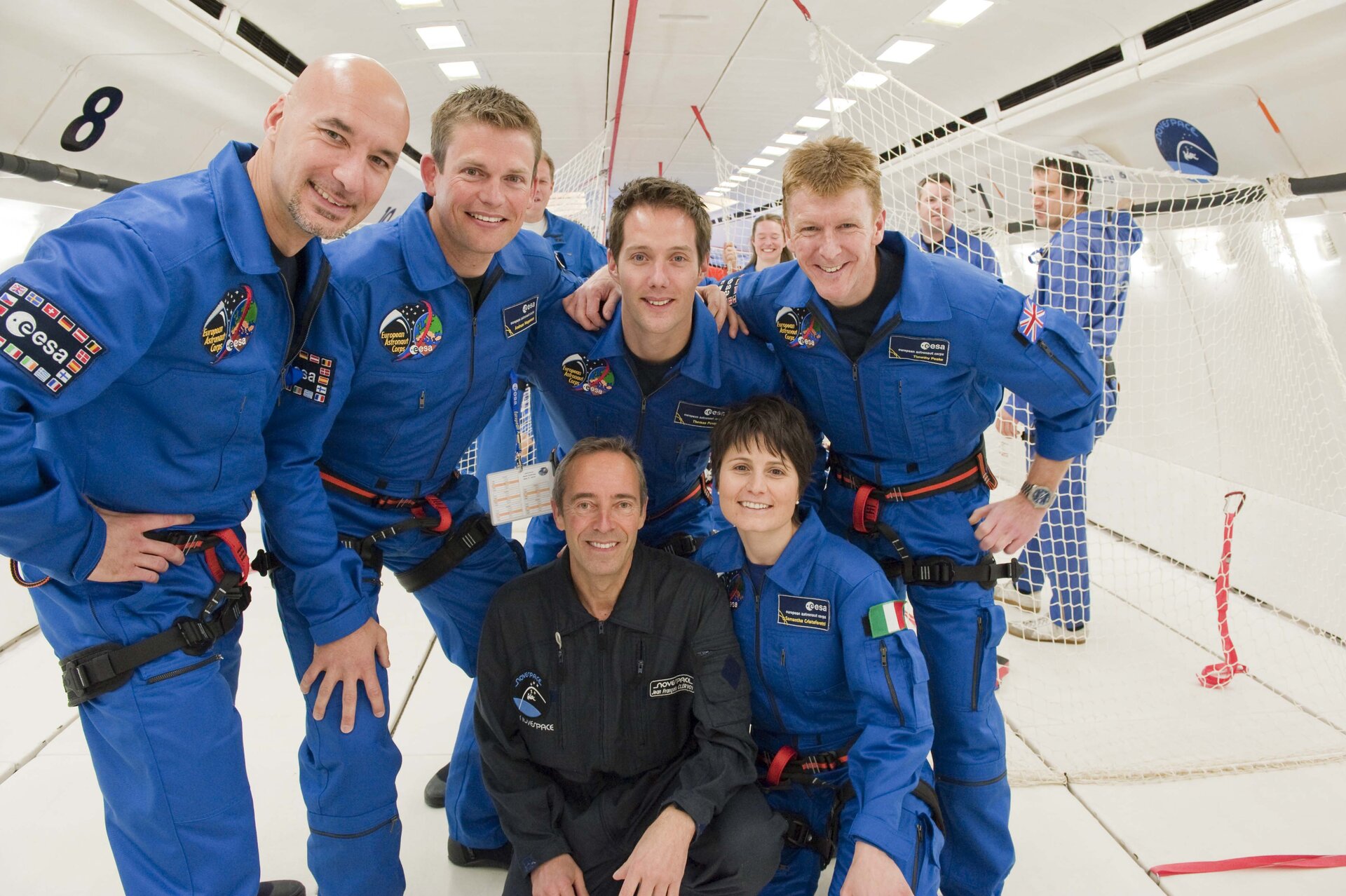
From 2006 to 2011, Jean-François became Chairman and CEO of Novespace, subsidiary of the French space agency CNES in charge of parabolic flights on the Airbus A310 Zero-G aircraft. He continues as Chairman.
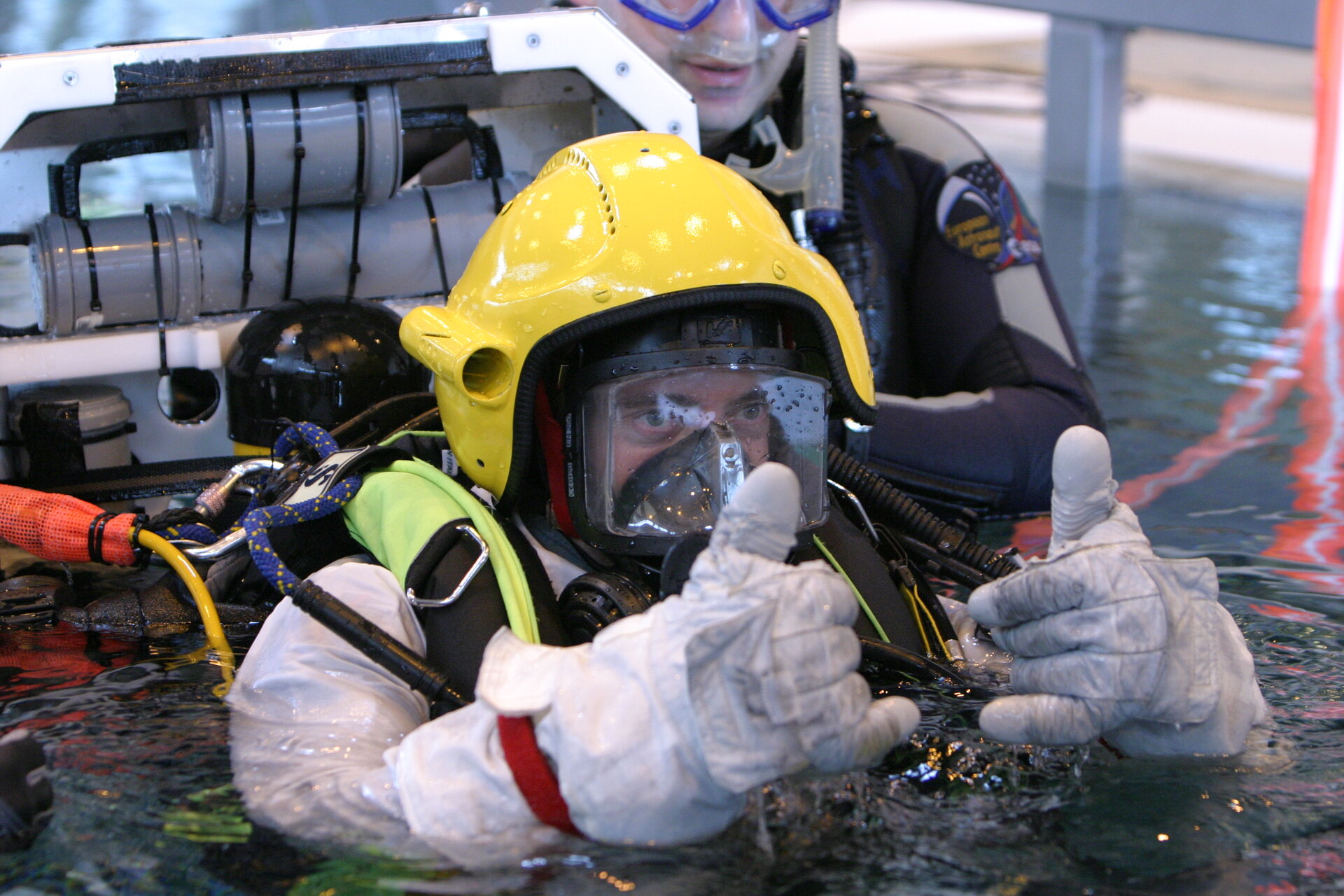
Jean-François holds military and civilian parachuting and scuba-diving licences, and a private pilot’s licence.
Publications and patents
Jean-François is author of the book Histoire(s) d’Espace about his mission to repair the Hubble space telescope.
He co-authored Voler en apesanteur, Embarquer dès demain pour l’espace, Dans les bars des bouts du monde, La Diva, la Président et autres face-à-face, Vox confidential and Histoire de la conquête spatiale.
Jean-François filed an international patent for the time functions of the Speedmaster Skywalker X-33 wristwatch produced by Omega, tested and certified by ESA. He is an Omega ambassador.
Spaceflight experience
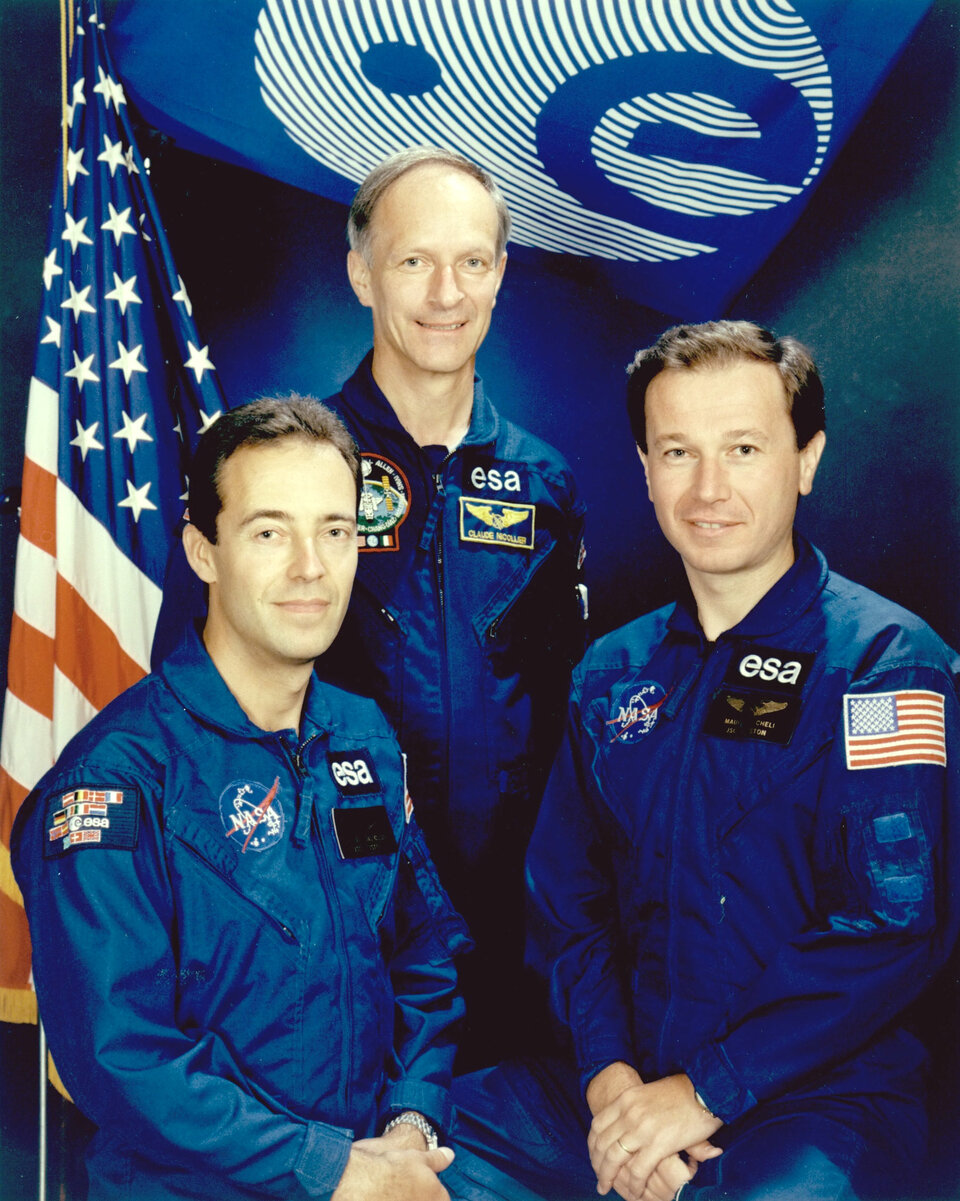
STS-66. 3–14 November 1994: the Atmospheric Laboratory for Applications and Science-3 (ATLAS-3) mission was part of a programme to determine Earth’s energy balance and atmospheric change over an 11-year solar cycle. Jean-François used the Space Shuttle’s robotic arm to deploy the atmospheric research satellite Crista-SPAS 20 hours after liftoff, and logged 262 hours and 34 minutes in space over 175 Earth orbits.
STS-84, 15–24 May 1997: NASA’s sixth Space Shuttle mission to dock with Russia’s Mir space station. As payload commander, Jean-François’ primary tasks were to run more than 20 experiments, operate the docking system and the Spacehab module as well as transfer 4 tonnes of equipment between Space Shuttle Atlantis and Mir. He trained as backup spacewalker on this mission. Jean-François logged 221 hours and 20 minutes in space over 144 Earth orbits.
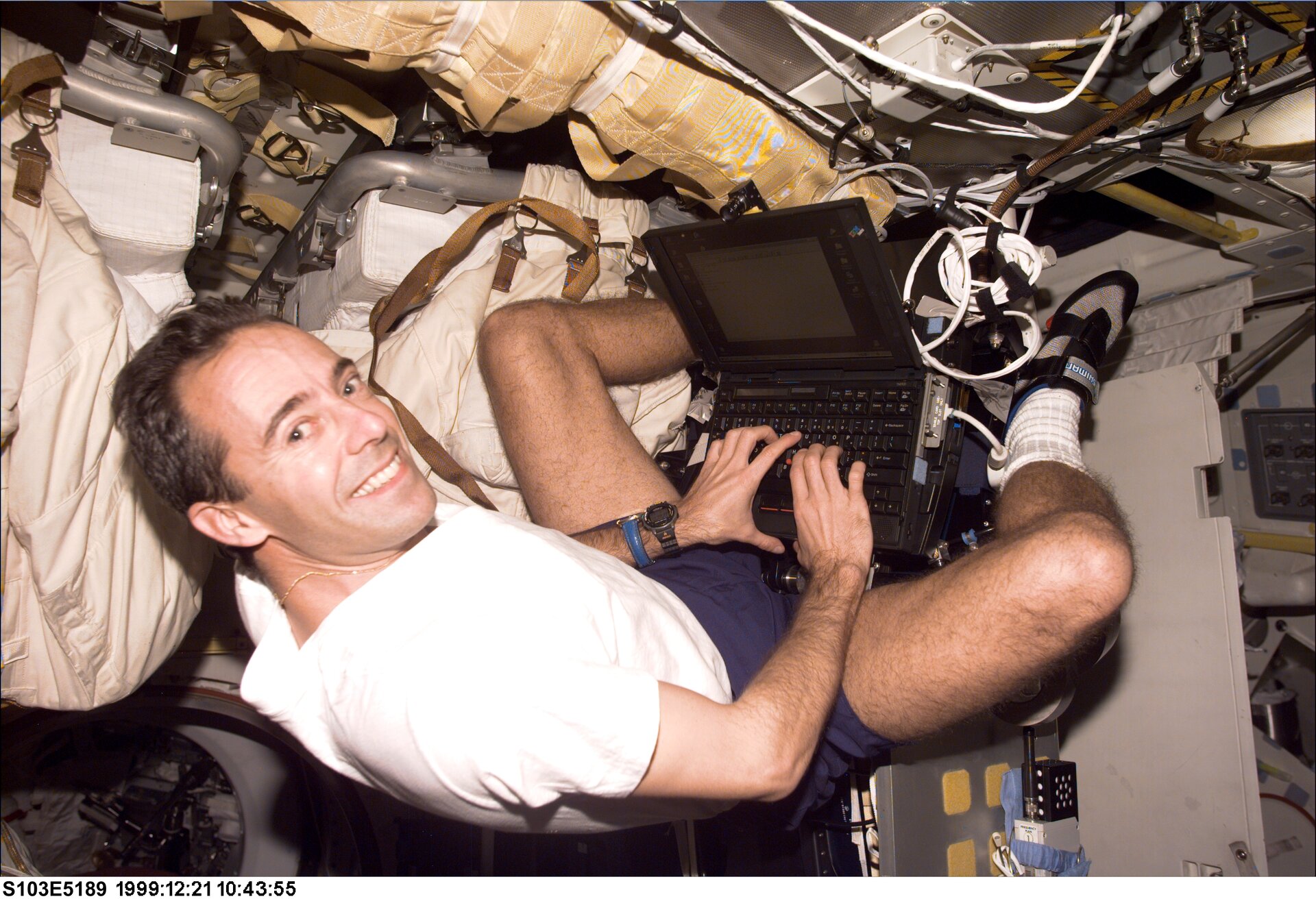
STS-103. 19–27 December 1999: the primary objective was to repair the Hubble space telescope. It was put into hibernation after a series of failures of its gyroscopes, required to meet very precise pointing requirements. Jean-François was flight engineer for ascent, rendezvous and entry. He used the robotic arm to capture and redeploy the telescope, and to manoeuvre his crewmates during their three spacewalks. All the spacewalks lasted more than eight hours. Jean-François logged 191 hours and 11 minutes in space over 120 Earth orbits.
Current assignment
Jean-François retired from the European Astronaut Corps in December 2018, after more than 33 years of active astronaut duty.
Since 2013 he has chaired the jury of the Space for Sustainability award. He is also honorary president of Novespace, a subsidiary of France's space agency CNES in charge of the parabolic flight programme with an Airbus A310 Zero-G flying from Bordeaux-Mérignac, France. Jean-François is founder and ambassador of Air Zero-G that organises weightless flights for customers: www.airzerog.com.


