• → European Space Agency

      • Space for Europe
      • Space News
      • Space in Images
      • Space in Videos
    • About Us

      • Welcome to ESA
      • DG's News and Views
      • For Member State Delegations
      • Business with ESA
      • ESA Exhibitions
      • ESA Publications
      • Careers at ESA
    • Our Activities

      • Space News
      • Observing the Earth
      • Human Spaceflight
      • Launchers
      • Navigation
      • Space Science
      • Space Engineering
      • Operations
      • Technology
      • Telecommunications & Integrated Applications
    • For Public

    • For Media

      • Media
      • ESA TV
      • Videos for professionals
      • Photos
    • For Educators

    • For Kids

    • ESA

    • Celsius Mission

    • Human Spaceflight

    • Astronauts

    • International Space Station

    • Celsius Mission
    • About the mission
    • Why Celsius?
    • Daily activities
    • Mission facts
    • Factsheets (pdf)
    • Official Flight Kit
    • Meet the crew
    • Christer Fuglesang
    • Mark Polansky
    • William Oefelein
    • Robert Curbeam
    • Joan Higginbotham
    • Nicholas Patrick
    • Thomas Reiter
    • Sunita Williams
    • Celsius Mission live
    • ESA Television
    • NASA TV live
    • Multimedia
    • Multimedia gallery
    • Video Talk
    • Magic book
    • Exhibition panels
    • Services

    ESA > Our Activities > Human Spaceflight > Celsius Mission - English version

    Flight day 7

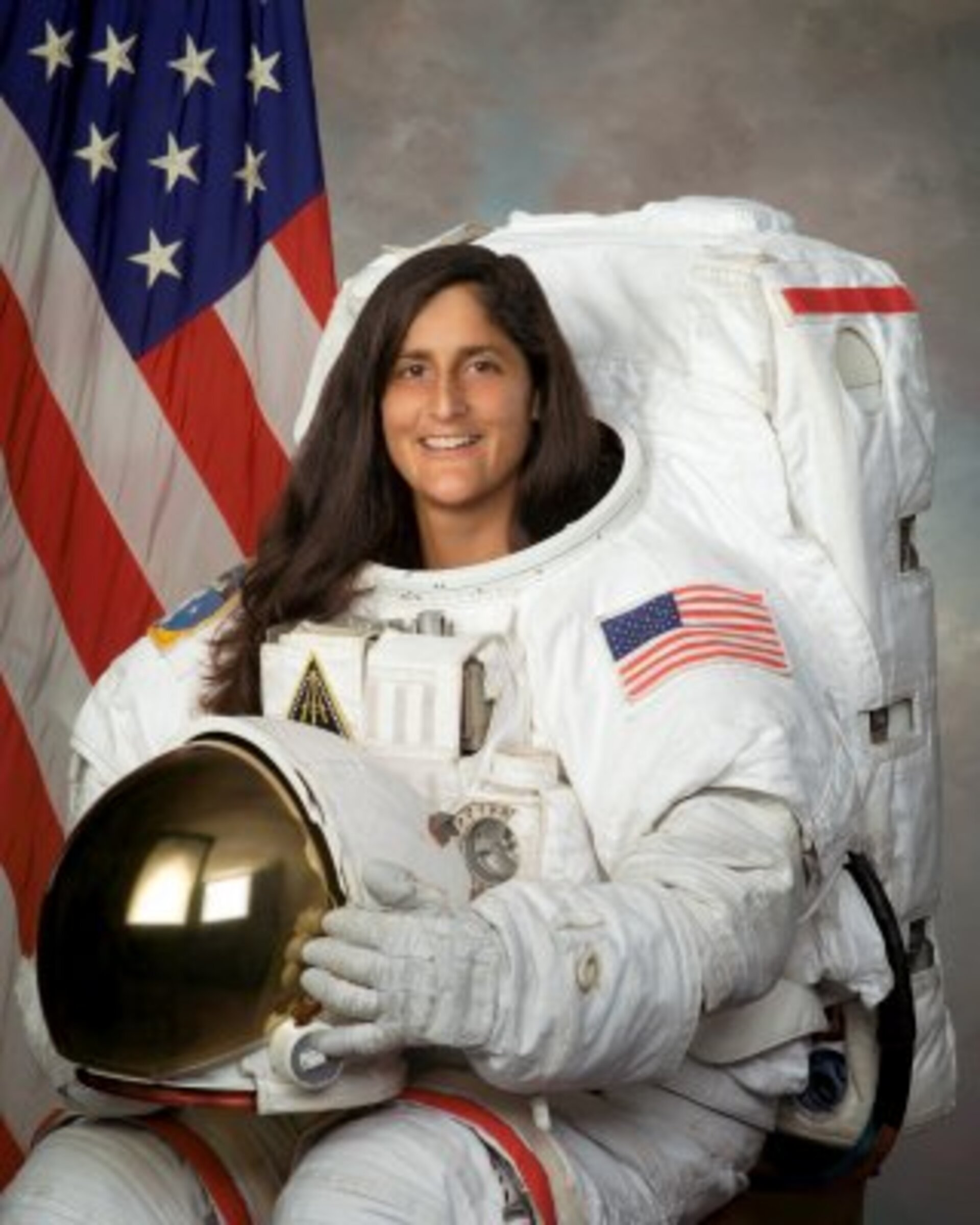
    Sunita Williams
    NASA astronaut Sunita Williams

    Press conference

    The next day is again spent mostly transferring things between the spacecrafts. There is one twenty minute press conference with selected journalists who ask questions about every possible subject. We also take photos of the whole crew and everyone on board, for what will later be our official 'flight-crew portrait'.

    I have the additional task of adjusting my spacesuit so that it fits Sunni, who is going to carry out the third spacewalk together with Beamer. In the summer it was decided that Sunni would take the third spacewalk instead of me. The reason was that if we should be affected by more delays in the future then Sunni – who has never flown before, even less carried out a spacewalk – risked carrying out her first spacewalk as the 'lead' together with an equally inexperienced Russian.

    By having her take part in our third spacewalk she would now gain the necessary experience, although, ironically enough it seems that we will not be delayed any more and Sunni has time to carry out a couple of spacewalks with Mike L-A before he is relieved by a Russian in March.

    Flight day 8
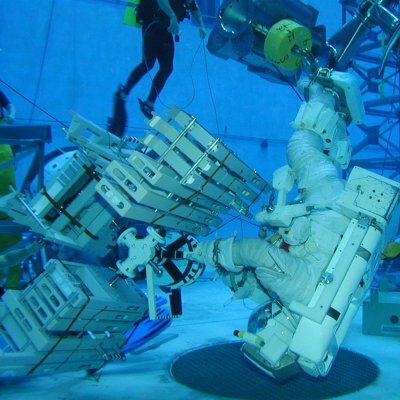
    Reheasing spacewalks in NBL
    The spacewalks have been fully rehearsed in NASA's Neutral Buoyancy Lab in Houston

    Third spacewalk

    During the third spacewalk Beamer and Sunni re-connect the two remaining power channels and transfer the shield panels on the ICC from Discovery to the ISS.

    This time it is Sunni who finds herself on Discovery’s robotic arm and it is Nick who manoeuvres it. There are three packs of panels that are first mounted on a framework and then all of it is transferred over to a mounting on the outside of the ISS. The framework/pack assembly has the working title "Christmas tree".


    Flight day 9

    Last day on ISS

    Flight day 9 is the last full day on the Space Station. The last of the things are transferred over to the ISS and everything that is to go down to Earth is crammed into the SpaceHab. There is a further press conference and then we officially have a little free time as well.

    If everything goes well I will carry out a session for the experiment ALTEA. ALTEA is officially an Italian experiment, but with some ESA involvement, and it is a continuation and expansion of research that I initiated in the 1990’s on the Russian Space Station Mir, which we then called SilEye.

    ALTEA helmet
    Christer Fuglesang wears the ALTEA helmet

    ALTEA has a sort of helmet for collecting EEG data at the same time that it measures particles that travel towards the head. For one hour you sit with the helmet on and receive diverse light impulses from a mask in front of the eyes. These generate brain impulses that are registered by the EEG.

    For long periods, however, it is only darkness and hopefully you then experience sporadic flashes of light. These flashes of light are experienced by 80 percent of all astronauts and have been known since the Apollo journeys to the moon.

    The flashes of light originate from a particle that reacts in the eye in some way. The particle can be a proton or a heavier charged ion. Exactly what happens in the eye we don’t know, but through this experiment we hope to understand more. In a larger perspective ALTEA studies how the whole of the central nervous system is affected in space.

    Last update: 27 October 2006

    Rate this

    Views

    Share

    • Currently 0 out of 5 Stars.
    • 1
    • 2
    • 3
    • 4
    • 5
    Rating: 0/5 (0 votes cast)

    Thank you for rating!

    You have already rated this page, you can only rate it once!

    Your rating has been changed, thanks for rating!

    19
    Tweet
    • My mission in space
    • Day 1: Launch
    • Day 2 & 3: Inspection & rendezvous
    • Day 4: Spacewalk 1
    • Day 5: Solar panel
    • Day 6: Spacewalk 2
    • Day 7-9: Crew photos, Spacewalk 3, ALTEA
    • Day 10-11: Undocking
    • Day 12: Landing
    • Countdown updates
    • 30 November 2006
    • 23 November 2006
    • 16 November 2006
    • 9 November 2006
    • 31 October 2006
    • Christers space diary
    • 22 December
    • 21 December
    • 20 December
    • 17 December
    • 15 December
    • 14 December
    • 12 December
    • 11 December

    Connect with us

    • RSS
    • Youtube
    • Twitter
    • Flickr
    • G+
    • Facebook
    • Livestream
    • Subscribe
    • App Store
    • LATEST ARTICLES
    • · Rare merger reveals secrets of gal…
    • · Watching for hazards: ESA opens as…
    • · ESA astronaut Timothy Peake set fo…
    • · Space drives e-mobility
    • · Proba-V opens its eyes
    • FAQ

    • Jobs at ESA

    • Site Map

    • Contacts

    • Terms and conditions