• → European Space Agency

      • Space for Europe
      • Space News
      • Space in Images
      • Space in Videos
    • About Us

      • Welcome to ESA
      • DG's News and Views
      • For Member State Delegations
      • Business with ESA
      • ESA Exhibitions
      • ESA Publications
      • Careers at ESA
    • Our Activities

      • Space News
      • Observing the Earth
      • Human Spaceflight
      • Launchers
      • Navigation
      • Space Science
      • Space Engineering
      • Operations
      • Technology
      • Telecommunications & Integrated Applications
    • For Public

    • For Media

      • Media
      • ESA TV
      • Videos for professionals
      • Photos
    • For Educators

    • For Kids

    • ESA

    • Human Spaceflight and Exploration

    • Columbus

    • About Columbus
    • Columbus laboratory
    • Columbus facts & figures
    • Columbus facilities
    • Biolab
    • European Drawer Rack
    • European Physiology Modules
    • European Transport Carrier
    • Fluid Science Laboratory
    • Microgravity Science Glovebox
    • External payloads
    • SOLAR
    • Vessel-ID
    • Columbus mission
    • About the mission
    • Mission objectives
    • Daily activities STS-122
    • Mission facts STS-122
    • Crew biographies
    • Columbus operations
    • Columbus Control Centre
    • User Support and Operations Centres
    • Downloads
    • Columbus Information Kit (pdf)
    • Exploring with Columbus (pdf)
    • Multimedia
    • Image gallery
    • Columbus videos
    • Exhibition material

    ESA > Our Activities > Human Spaceflight > Columbus

    European Drawer Rack

    European Drawer Rack

    Multi-discipline flexible experiment carrier in Columbus

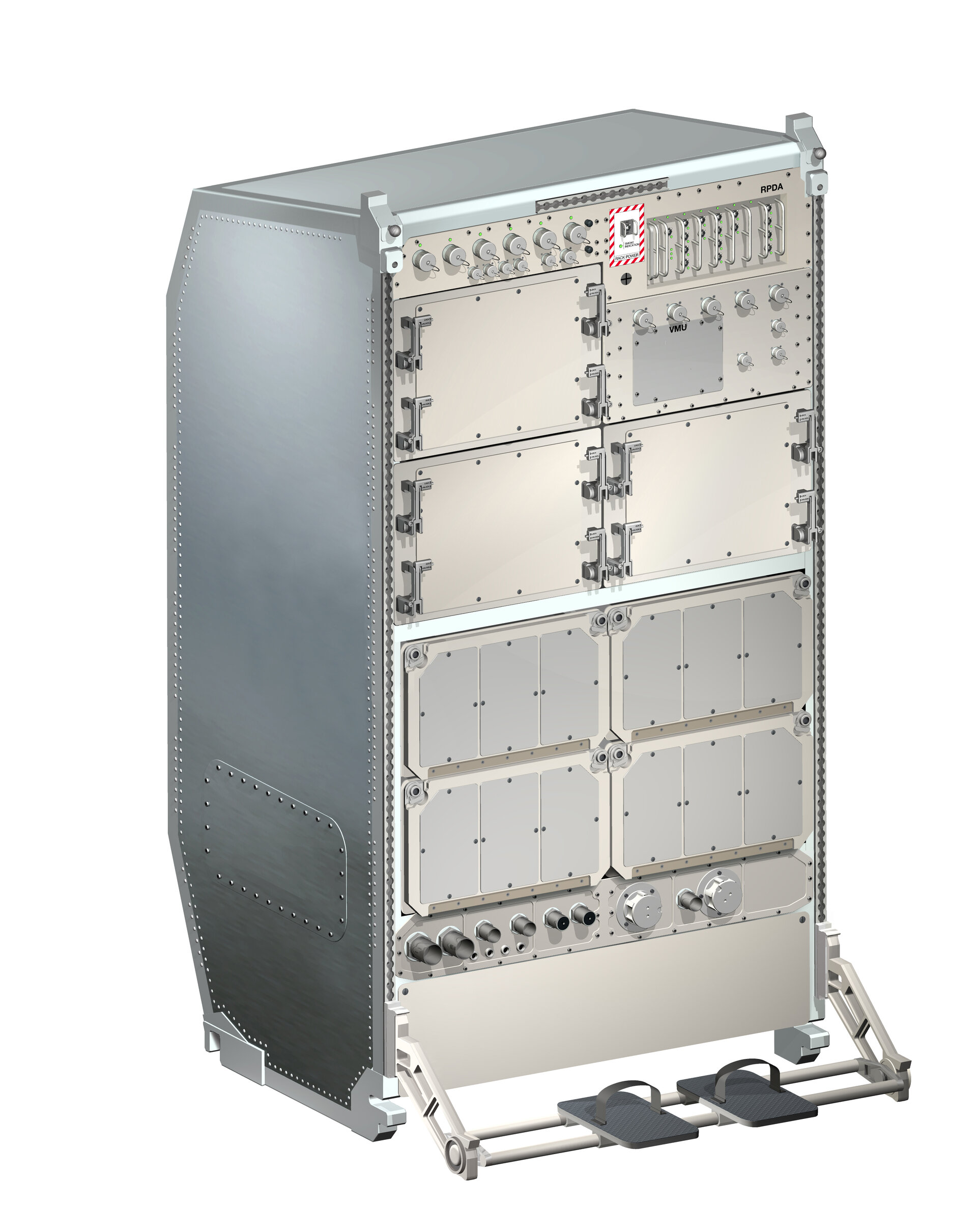
    There is a need in the scientific community for medium-sized, dedicated experiment equipment for space research to reduce research costs and development times. ESA's solution is the European Drawer Rack, which is a flexible experiment carrier for a large variety of scientific disciplines.

    The rack provides the accommodation and resources to experiment modules in two types of standard International Space Station housings called International Subrack Interface Standard drawers and International Space Station Lockers. The European Drawer Rack can accommodate up to three of these drawers, each with a volume of 72 litres as well as four lockers, with a volume of 57 litres.

    This approach allows a quick turn-around capability, and provides increased flight opportunities for the user community that wish to perform experiments but do not require a complete rack.

    The overall design of the facility is optimised for accommodating three to four payloads in parallel.
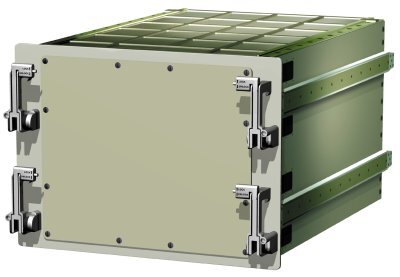
    ISIS drawer
    International Subrack Interface Standard drawer

    Resource management

    The resource management covers the monitoring of resource allocations to individual payloads, but the operating concept of the European Drawer Rack assumes that payloads are largely autonomous.

    The facility computer distributes Space Station data to payloads and routes payload data to ground and the European Drawer Rack laptop. The European Drawer Rack data management system supports all modes of payload operation, ranging from fully automatic to step-by-step control by an astronaut.

    In addition to distributing Columbus resources to the experiment modules, the European Drawer Rack provides services such as air cooling and conversion of 120 volt Columbus power to 28 volts.

    ISS locker
    Space Station locker

    Initial configuration

    The initial configuration of the European Drawer Rack included one experiment module - the Protein Crystallisation Diagnostics Facility - a multi-user material science instrument.

    The Crystallisation Diagnostics Facility tackles the problem of protein crystallisation in space. This facility helps establish the conditions under which good zeolite crystals can be grown. This can only be determined in weightlessness as gravity on Earth influences results. The results generated will have benefits in various industrial applications.

    A second module will be launched with a later flight. This is the Facility for Adsorption and Surface Tension, which establishes a link between emulsion stability and characteristics of droplet interfaces. This research has applications in industrial domains and is linked to investigations such as foam stability and drainage.

    Last update: 7 February 2013

    Rate this

    Views

    Share

    • Currently 0 out of 5 Stars.
    • 1
    • 2
    • 3
    • 4
    • 5
    Rating: 0/5 (0 votes cast)

    Thank you for rating!

    You have already rated this page, you can only rate it once!

    Your rating has been changed, thanks for rating!

    510
    Tweet
    • Related links
      • Protein Crystallisation Diagnostic Facility

    Connect with us

    • RSS
    • Youtube
    • Twitter
    • Flickr
    • G+
    • Facebook
    • Livestream
    • Subscribe
    • App Store
    • LATEST ARTICLES
    • · Earth Explorers take centre stage …
    • · The fast winds of Venus are gettin…
    • · ExoMars 2016 set to complete const…
    • · Herschel ends operations as orbiti…
    • · Europe’s largest spaceship reache…
    • FAQ

    • Jobs at ESA

    • Site Map

    • Contacts

    • Terms and conditions