AMS-2 at ESTEC
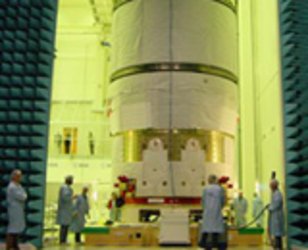
The Large Space Simulator (LSS) in the at ESA’s research and technology centre, ESTEC, in Noordwijk, the Netherlands, is used to test satellites and spacecraft before they are sent to space. It has seen all kinds of space hardware, but the AMS detector was a very special one.
Not only is it the biggest scientific instrument to be installed on the International Space Station, but also it is the first magnetic spectrometer to be flown in space, and it has the most powerful magnet ever used in space.
Assembled in Switzerland…
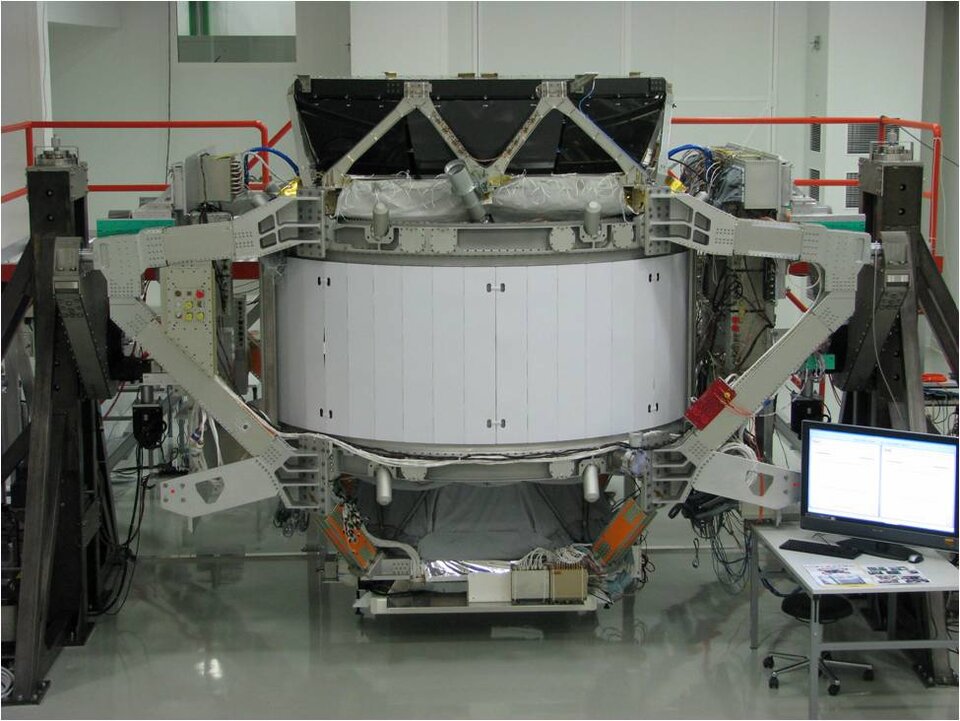
The AMS detector was built by a large international collaboration and it was assembled at the European Organisation for Nuclear Research (CERN) in Geneva, Switzerland. The first part of the tests was also conducted at CERN, when the detector was put through its paces using a proton beam from CERN’s Super Proton Synchrotron accelerator to check its momentum resolution and its ability to measure particle curvature and momentum.
AMS’s ability to distinguish electrons from protons was also tested. This is very important for the measurement of cosmic rays, 90% of which are protons and constitute a natural background for other signals that interest scientists. AMS is looking for an abundance of positrons and electrons from space, one of the possible markers for dark matter.
With over 300 000 data channels, the detector gathers an extremely large amount of data, which is then processed and sent back to Earth using the Space Station's power, communication and data infrastructure.
…tested and qualified at ESTEC
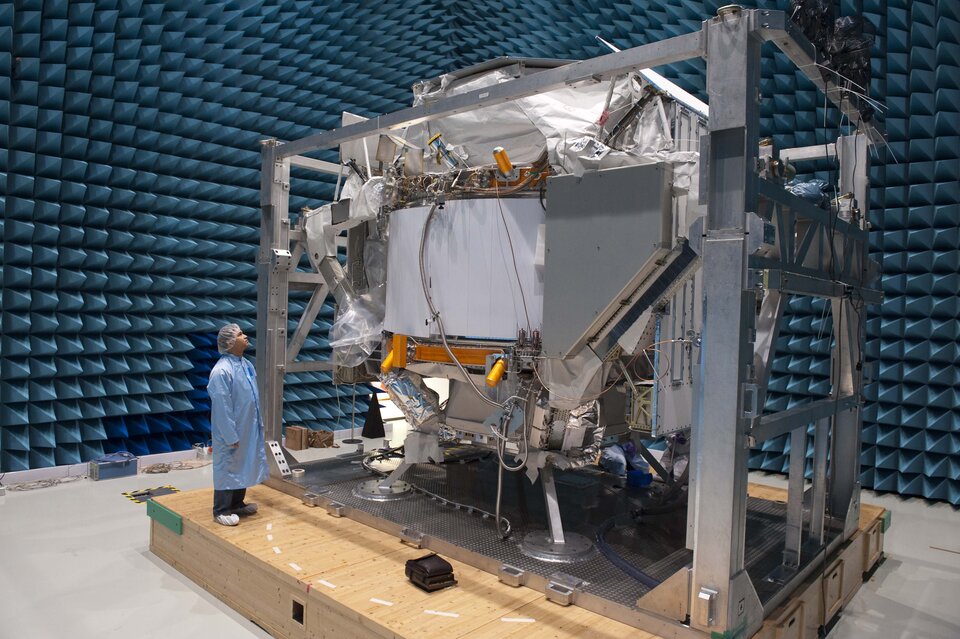
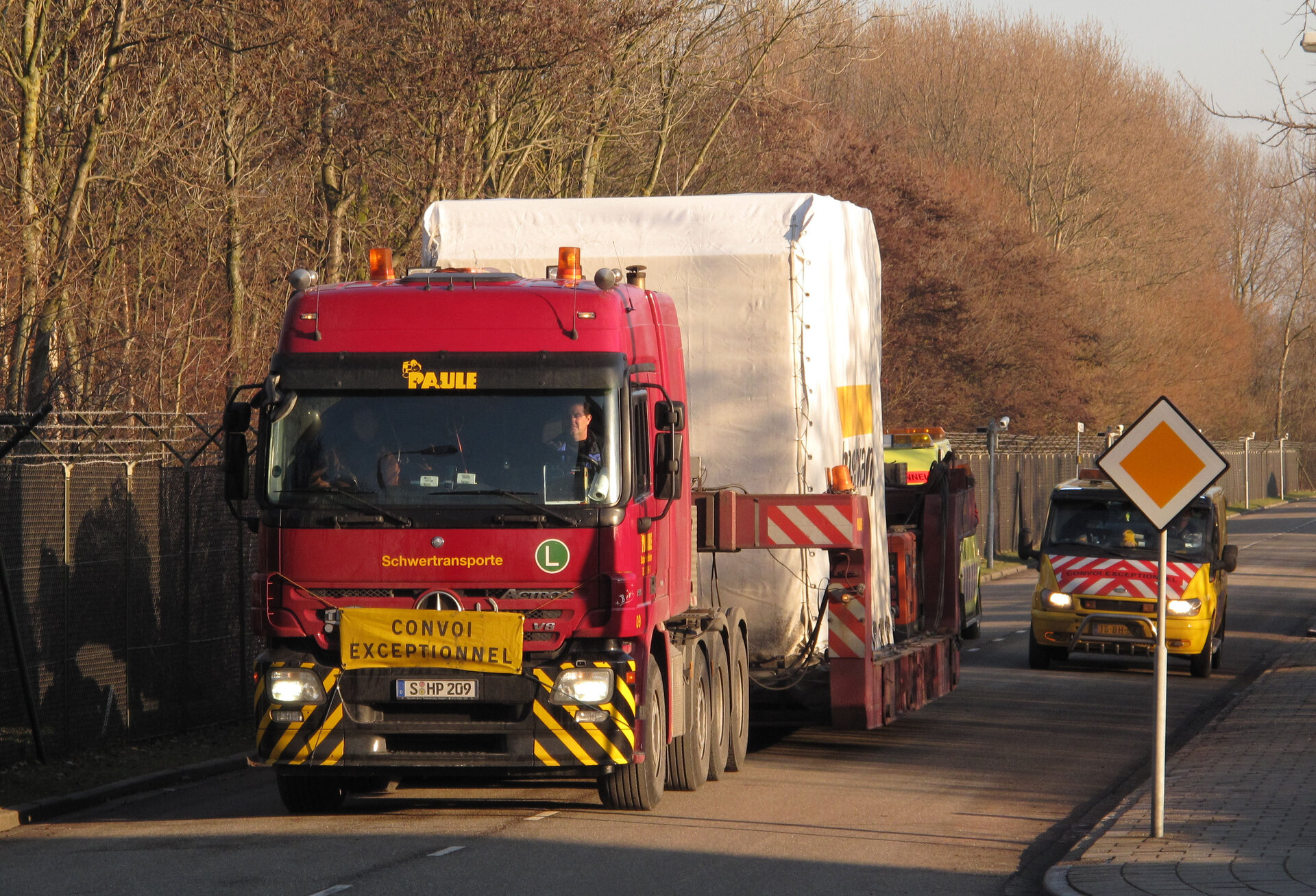
After a six-day journey from Geneva to Noordwijk, the special convoy rolled into the LSS building on 16 February 2010 accompanied by 20 members of the AMS team.
The LSS uses a huge vacuum chamber, complete with its own bright 'Sun' and walls cooled by liquid nitrogen, to reproduce the conditions of space, while various shakers, acoustic chambers and electromagnetic tests are used to mimic conditions during launch and operation in space. The test objects were treated to the hardships of a launch and space.
After the tests, payload managers decided to use a less powerful, non-superconducting magnet that enables AMS to operate through the planned life of the Space Station instead of a relatively short three years.