

DELTA Mission experiments: status 21/22 April
Dutch ESA astronaut André Kuipers has successfully completed two experiments during the first four days of the DELTA Mission. Two others are underway and are progressing according to plan.
Kuipers performed the FLOW and KAPPA experiments in the Soyuz capsule during the journey towards the International Space Station. FLOW looks at whether bone cells have a decreased sensitivity to stress under weightless conditions. KAPPA researches the influence of gravity on NFkB, a protein that plays a crucial role in inflammation and immunity in the body. The findings from KAPPA could contribute to new treatments for medical conditions such as asthma, rheumatism and allergies.
Education

Besides the scientific experiments, Kuipers also carried out some educational activities during the first days of the mission. During the first few hours of his flight he made video recordings to show the effects of weightlessness on the human body. By taking body measurements he was able to demonstrate the fluid shift that occurs in space, as more blood flows towards the torso, and the legs get thinner. Video-3 will be continued later in the mission. The results will be made available in 11 languages and distributed to schools throughout the ESA Member States.
'Seeds in Space' is the second educational activity to get underway. At the same time as 70 000 schoolchildren throughout The Netherlands, Kuipers planted some rucola seeds. Together with Kuipers, the children are investigating the effects of gravity and light on the growth of plants. On 26 April the ESA astronaut will show how his plants have developed during a special live television broadcast. The children will then draw their own scientific conclusions.
MSG

The interface between the HEAT experiment and a cooling plate in the Microgravity Science Glovebox is not optimal. Due to high temperatures the experiment has not progressed as expected. About twenty percent of the experiment has been successfully completed.
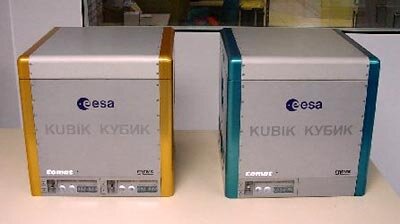
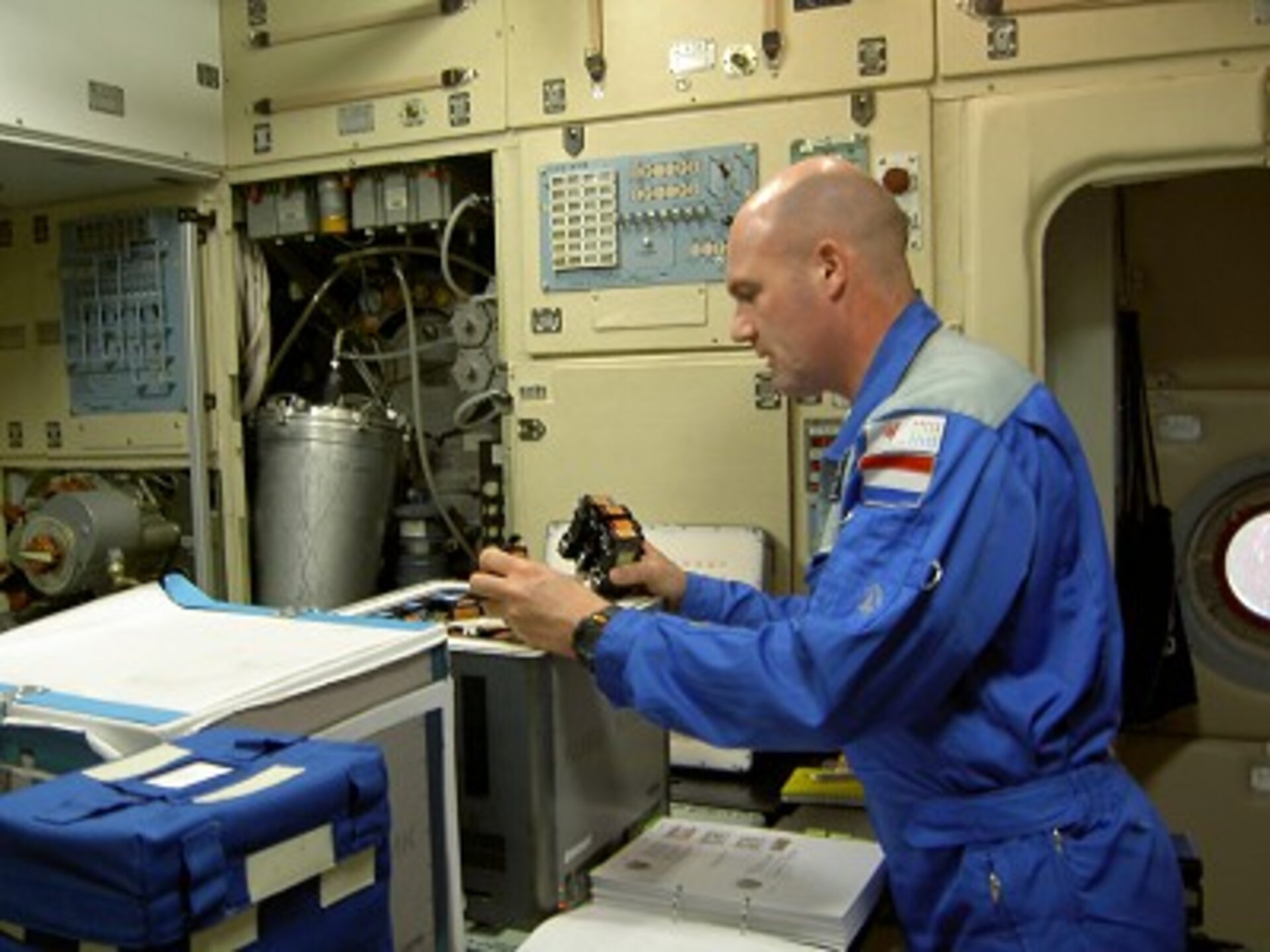
Another piece of experiment hardware that has not been functioning fully is the small centrifuge in the Amber Kubik incubator. The centrifuge is intended for control experiments at a gravity level of 1g (as on Earth). This could have consequences for the experiments looking at plant cells and worms (TUBUL and ICE-first). Kuipers is attempting to repair the centrifuge. If Amber Kubik cannot be repaired, only the control samples will be lost, the remaining 95 percent of both experiments has gone smoothly and the data is ready to be brought back to Earth.
Real mission

According to mission science specialist William Carey, the DELTA Mission science programme is progressing well. "These small hitches with the hardware are not causing huge problems. What's more, a mission isn't a true mission if everything is plane sailing". The prospects are good for ARGES, an experiment from Eindhoven Technical University and Philips that Kuipers will work on over the weekend. Tests on board the Station will help in the development of more efficient lamps for use on Earth.