

DELTA Mission science programme nears completion
After two very busy days on board the International Space Station, ESA astronaut André Kuipers is now starting to round off the last of the DELTA Mission scientific experiments.
Biology
On Monday Kuipers primarily conducted biological experiments. Part of two of these experiments, ICE-first and TUBUL, did not go as was originally planned. The centrifuge, that was to be used to recreate Earth-like gravity levels for use in control experiments, was no longer working. Kuipers used the control experiment samples to acquire additional scientific data in weightlessness. Performing the experiment again on Earth will compensate the subsequent loss of a control group at 1g.
Vibrotactile suit

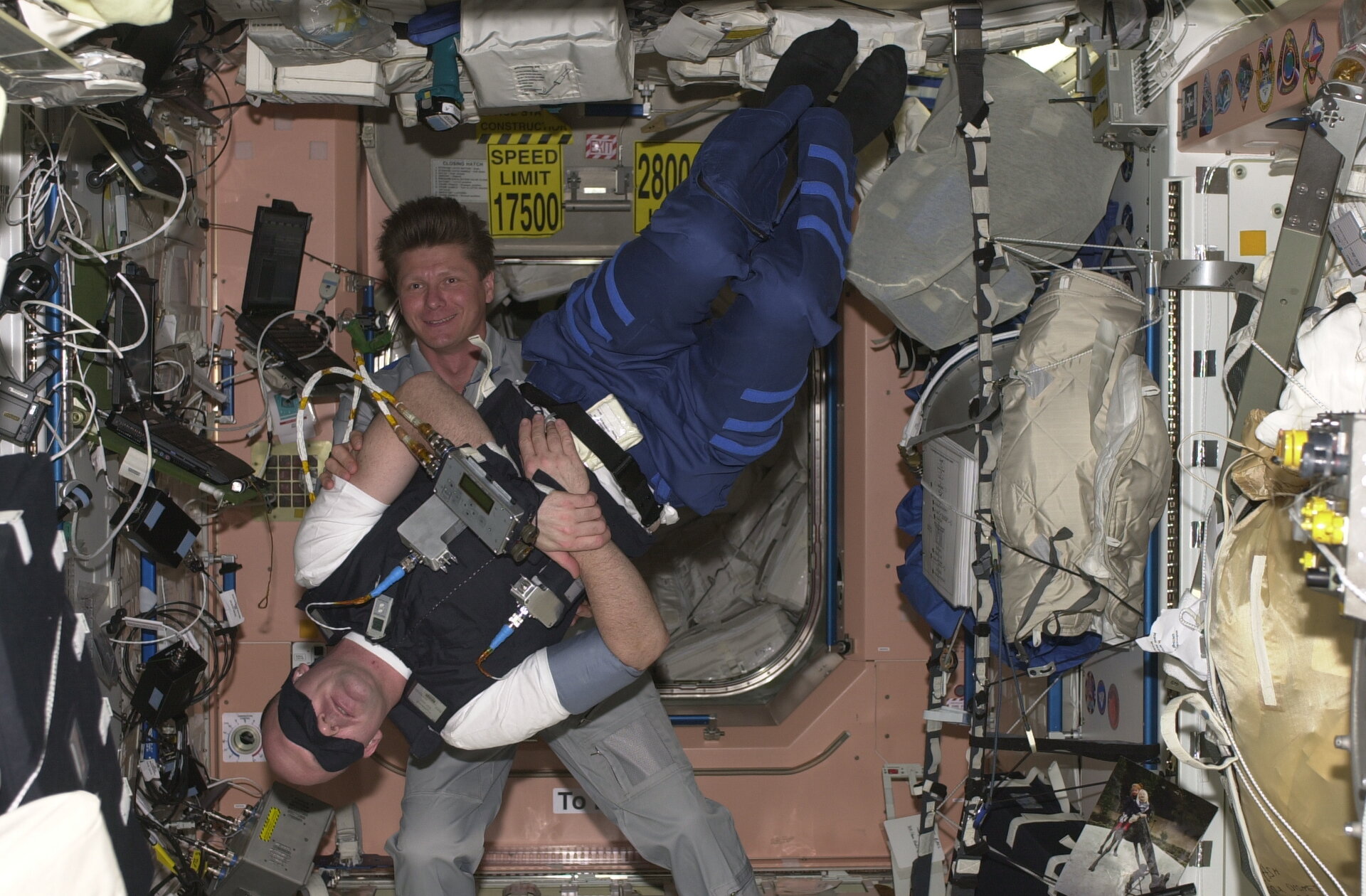
Data from the SUIT experiment, using the vibrotactile suit developed by TNO to help with orientation in space, are packed and ready for departure. Kuipers and his commander Gennadi Padalka conducted the SUIT tests over the last couple of days. They cooperated flawlessly and the experiment was conducted according to the pre-defined procedures.
Blood pressure
The CIRCA experiment, which looks at the pattern of blood pressure and heart rate in a weightless environment during a 24-hr period, was also completed. On Earth natural rhythms in heart rate and blood pressure levels can be observed. At night for example they are both typically 20 percent lower than during the daytime. Kuipers is helping to investigate if that is also the case in space.
As part of this experiment, prior to the flight Kuipers was wired up to a hart monitor and 'baseline data' was collected. After the flight this will be repeated. Scientists from the universities of Amsterdam, Leuven, Lyon and Angers will compare these two sets of data with that collected in space. The apparatus used to measure blood pressure will remain on the Space Station for future experiments.
Packing
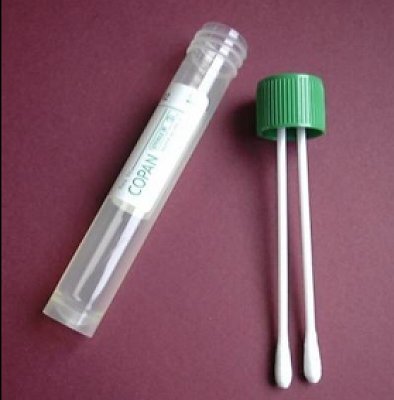
Today and tomorrow Kuipers will collect bacterial samples throughout the International Space Station for the SAMPLE experiment. In a weightless environment some bacteria, including those that cause infections, grow faster than on Earth, and they are more resistant to antibiotics. SAMPLE will provide invaluable information about the adaptation of microorganisms to weightlessness, and the role that bacteria play in (long-duration) space missions.
Tomorrow the remaining time that Kuipers is on board the Space Station will primarily be used to clear up and pack the experiments. This would appear to be a straightforward task, but it is in fact one of the most important of the entire mission. Kuipers will have to work methodically in order avoid accidentally leaving anything behind.
If there is any time left once packing is finished, Kuipers will get a chance to use the 3D camera. Although a keen photographer, his busy schedule has barely given him a chance to do this.
Later in the evening, Kuipers will prepare himself for the return journey to Earth. The landing on the Kazakh Steppe is currently scheduled for 02:11 CEST (00:11 UT).