• → European Space Agency

      • Space for Europe
      • Space News
      • Space in Images
      • Space in Videos
    • About Us

      • Welcome to ESA
      • DG's News and Views
      • For Member State Delegations
      • Business with ESA
      • ESA Exhibitions
      • ESA Publications
      • Careers at ESA
    • Our Activities

      • Space News
      • Observing the Earth
      • Human Spaceflight
      • Launchers
      • Navigation
      • Space Science
      • Space Engineering
      • Operations
      • Technology
      • Telecommunications & Integrated Applications
    • For Public

    • For Media

    • For Educators

    • For Kids

    • ESA

    • Delta Mission

    • Human Spaceflight and Exploration

    • Astronauts

    • International Space Station

    • DELTA Mission
    • About the mission
    • Why DELTA?
    • Mission facts
    • Behind the scenes
    • Soyuz spacecraft
    • Soyuz launcher
    • Factsheets (pdf)
    • Science programme
    • Experiment overview
    • Physiology
    • Biology
    • Microbiology
    • Physical science
    • Earth observation
    • Technology
    • Education
    • Meet the crew
    • André Kuipers
    • Gennadi Padalka
    • Mike Fincke
    • Expedition Eight
    • DELTA Mission live
    • Live webstreaming
    • ESA Television
    • Mission briefings
    • Multimedia
    • Image gallery
    • DELTA: Video gallery
    • Soyuz training with Frank De Winne
    • Soyuz mission: to ISS and back
    • Services
    • Mailing list

    ESA > Our Activities > Human Spaceflight > Delta Mission

    Microbiology


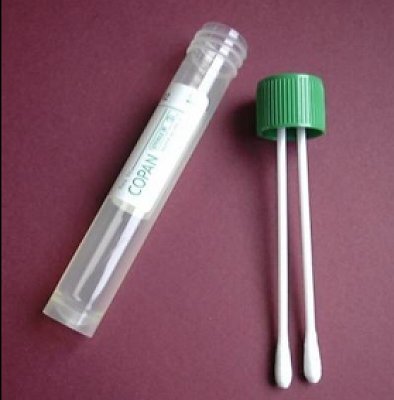
    Swab-sticks
    Samples will be taken by rubbing swab-sticks over surfaces

    SAMPLE
    Study of the composition, physiology and possible adaptation of microbial communities exposed to weightlessness

    The main scientific objectives of the experiment are:

    1. To evaluate which microbial species could unwantedly develop under the growth conditions in life support systems used for human spaceflight. The focus is on potentially infective and destructive microbes, and on the origin and distribution of species on different sample sites of the ISS.

      Samples will be taken by rubbing swab-sticks over a defined surface (e.g. buttons, keyboards, personal care appliances). Furthermore, wall panels and other places where condensation creates moist surfaces will be sampled. In addition, electrical wires that produce some heat that might favour microbial growth and places with visible microbial growth will also be sampled.

      Samples will also be taken from the astronauts from areas such as the nose and skin before, during and after the flight.

    2. To investigate how microbial species adapt to weightlessness. Is there adaptation to weightlessness by microbes and if so what kind of adaptation: long-term physiological adaptation or genetic selection? Does weightlessness affect the adhesive properties of microbes?

      To investigate this adaptation an E. coli bacteria will be grown in space inside a tube. The bacteria will be analysed back on Earth.

    More about SAMPLE »»

    Last update: 16 February 2004

    Rate this

    Views

    Share

    • Currently 0 out of 5 Stars.
    • 1
    • 2
    • 3
    • 4
    • 5
    Rating: 0/5 (0 votes cast)

    Thank you for rating!

    You have already rated this page, you can only rate it once!

    Your rating has been changed, thanks for rating!

    9
    facebook
    twitter
    reddit
    google plus
    digg
    tumbler
    digg
    blogger
    myspace

    Connect with us

    • RSS
    • Youtube
    • Twitter
    • Flickr
    • Google Buzz
    • Subscribe
    • App Store
    • LATEST ARTICLES
    • · CryoSat hits land
    • · Ariane 5 completes seven launches …
    • · Measuring skull pressure without t…
    • · Malargüe station inauguration
    • · The solar wind is swirly
    • FAQ

    • Jobs at ESA

    • Site Map

    • Contacts

    • Terms and conditions