

Technology demonstrations

HEAT
Heat transfer performance of a grooved heat pipe
In the weightlessness of space heat pipes are used to transfer heat from hot surfaces (e.g. electronic devices) to cold surfaces (e.g radiative panels). The main aims of this technology demonstration are:
The characterisation of the heat transfer performance of a grooved heat pipe in weightlessness, by measuring the maximum rate of heat flow sustainable in three different modes:
- Anti-parallel heating/cooling (i.e. heating from one side of the pipe then cooling from opposite side).
- Mixed heating/cooling conditions (i.e. heating from two sides of the pipe then cooling from one of these sides)- The validation of the existing mathematical model that is used to evaluate the performances of new heat pipes.
To prove that the grooved heat pipe design is an appropriate design, which can cope with the formation and trapping of vapour bubbles in the pipe. A build up of vapour on the inner surface of a pipe creates an insulating layer, which reduces the pipes effectiveness to transfer heat.
MOT - mouse telemeter
Calibration of “STAR accelerometers”
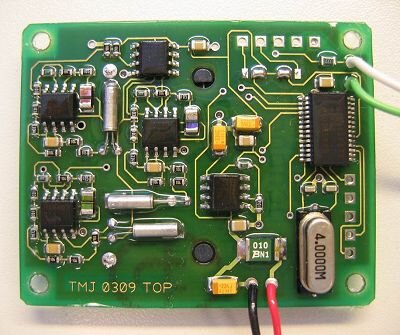
A mouse telemetry system is being developed for the European Space Agency, which can be implanted into the abdomen of a mouse. This radio sensor-transmitter will enable investigators to measure the body temperature, heart rate, and body acceleration in three directions of 5 to 10 free moving mice in a cage.
The system will be tested in a ground-based laboratory. This test will provide information about the physical consequences of the implantation of the transmitter in the abdomen of the mouse and the quality and durability of the measurements of body temperature and heart rate.
The ground test is not suitable to investigate the body acceleration parameters, as the measuring devices, accelerometers, are not yet used with known movements in a weightless environment.
The aim of this technology demonstration is to calibrate the accelerometers by having the astronaut move them in different directions. This will test the sensors under weightless conditions by taking recorded movements of the subject.
SUIT
Tactile display aided orientation awareness
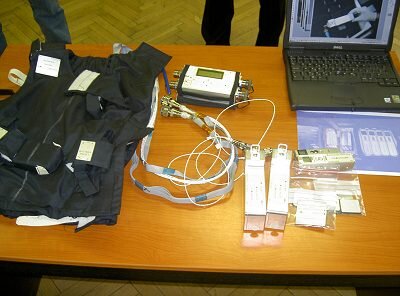
The aim of the SUIT project is to support the astronaut with a vibrotactile suit to help with orientation in space. This suit consists of numerous small vibrating elements covering the torso. These elements inform the astronaut of a given predefined direction within the ISS by vibrating in that direction. As the vibration of one of these elements is directly mapped to the astronaut’s body position, this makes it a fast and intuitive way to present spatial information. The SUIT project uses this principle to present the astronaut with orientation information.
The major goal of the SUIT project is to develop a support system for astronauts that improves safety, performance and comfort