• → European Space Agency

      • Space for Europe
      • Space News
      • Space in Images
      • Space in Videos
    • About Us

      • Welcome to ESA
      • DG's News and Views
      • For Member State Delegations
      • Business with ESA
      • ESA Exhibitions
      • ESA Publications
      • Careers at ESA
    • Our Activities

      • Space News
      • Observing the Earth
      • Human Spaceflight
      • Launchers
      • Navigation
      • Space Science
      • Space Engineering
      • Operations
      • Technology
      • Telecommunications & Integrated Applications
    • For Public

    • For Media

      • Media
      • ESA TV
      • Videos for professionals
      • Photos
    • For Educators

    • For Kids

    • ESA

    • Human Spaceflight

    • Astronauts

    • International Space Station

    • Research

    • Education

    • About Education
    • What we do & why we do it
    • @ESAHSOeducation
    • Browse lessons by

      • Age range

        • Primary level

          • Columbus: Past, present and future…
          • The Eclipse that saved Columbus
          • The Automated Transfer Vehicle
          • ATV: a very special delivery
          • Life in Space
          • A drop of water
          • Primary level ISS Education Kit - downloads
          • PromISSe educational experiments
          • Greenhouse in space
        • Secondary level

          • Ingredients for Life: On Earth and in Space
          • Spaceship Earth
          • ATV: a very special delivery - Lesson notes
          • Bubbles in space
          • Lesson plan for use with the ISS Education Kit on the web
          • A space compass
          • Bugs in Space
          • Space (fluid) oddities
          • Science fiction - science fact
          • Searching for the Missing Universe
          • Feeding our future – nutrition on Earth and in space
          • Newton in space
          • Body space
          • Space matters
          • Space robotics
          • ISS 3-D Teaching Tool: Spaceflight Challenge I
          • Take your classroom into space
          • ISS Education Kit - downloads
          • Do objects have weight in space?
          • Exploring capillarity
          • Greenhouse in space
        • University level

          • SpaceMaster
          • Life in Space
          • EuMAS
      • Mission

        • Astrolab

          • A space compass
          • Space robotics
        • OasISS

          • Life in Space
          • A drop of water
          • Bubbles in space
          • Take your classroom into space
          • Do objects have weight in space?
          • Exploring capillarity
        • PromISSe

          • Radiation
          • Balance in space
          • Immunology
          • Ingredients for Life: On Earth and in Space
          • PromISSe educational experiments
        • Eneide

          • ISS DVD Lesson series
        • Delta

          • Body space
        • Columbus

          • Columbus: Past, present and future…
          • The Eclipse that saved Columbus
          • Bugs in Space
          • Space (fluid) oddities
        • Cervantes

          • Newton in space
        • MagISStra

          • Greenhouse in space
      • Subject

        • Physics

          • Radiation
          • Bubbles in space
          • Lesson plan for use with the ISS Education Kit on the web
          • A space compass
          • Science fiction - science fact
          • Searching for the Missing Universe
          • Newton in space
          • Space matters
          • Space robotics
          • Take your classroom into space
          • Do objects have weight in space?
          • Exploring capillarity
          • PromISSe educational experiments
        • History

          • Columbus: Past, present and future…
          • The Eclipse that saved Columbus
        • Earth sciences

          • What is radiation?
        • Chemistry

          • Foam
        • Biology

          • Balance in space
          • Body space
          • Bugs in Space
          • Greenhouse in space
          • Immunology
          • Ingredients for Life: On Earth and in Space
          • Feeding our future – nutrition on Earth and in space
          • ISS 3-D Teaching Tool: Spaceflight Challenge I
          • ISS education kit
    • ISS Education Fund

      • What is the ISSEF?
      • Funding participants
      • Honorary participants
      • What does the ISSEF do?
      • ISSEF funding
      • Who can participate?
      • Benefits of participation
      • Application form
    • Services
    • Subscribe
    • RSS feeds

    ESA > Our Activities > Human Spaceflight > Education

    ESA supported live astrobiology lectures start third season

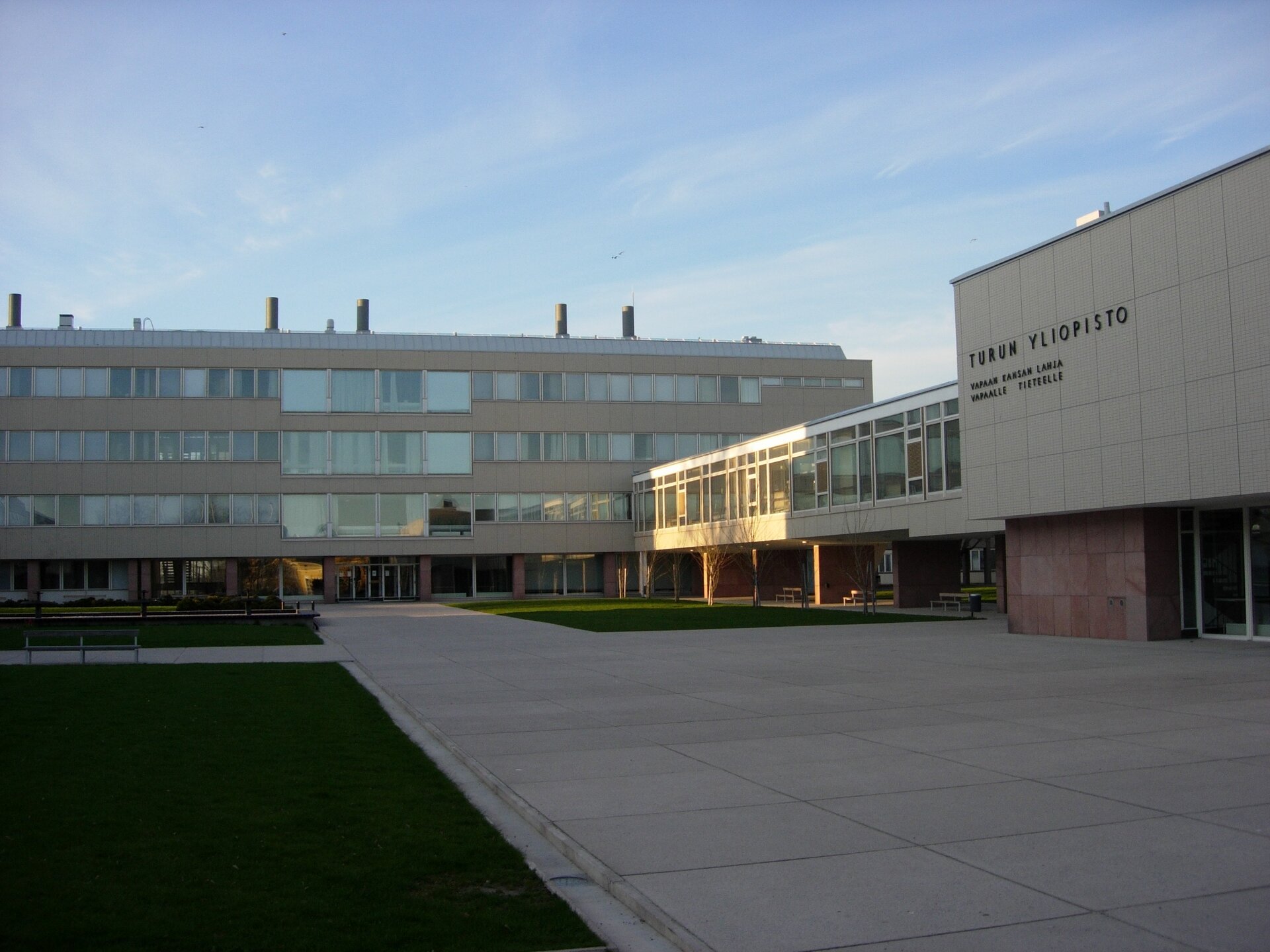
    The third season of ABC-Net lectures kicked-off at Turku University
    26 October 2009

    The Astrobiology Lecture Course Network, or ABC-Net, kicked off its third season of live lectures on Tuesday 20 October with three astrobiology lectures broadcast live from the University of Turku in Finland to the other universities participating in ABC-Net programme.

    The lectures are supported by ESA’s Directorate of Human Spaceflight and form part of the normal university curriculum of the seven participating universities of ABC-Net. The series of lectures will continue over nine sessions until February 2010 with the following set of three lectures coming from the University of Szcecin in Poland on 3 November.

    Not only are these lectures streamed live by the Erasmus Centre of ESA’s Human Spaceflight Coordination Office, they will be also be recorded and made available online through ESA for later review, making them an ideal tool for distance learning and exam revision. With the wealth of information already gathered as part of this lecture series in the past four years, ESA already has 29 lectures available.

    In creating the infrastructure used within ABC-Net ESA has created a virtual campus, where such courses can take place and build on the intellectual cornerstones of many different institutions. As astrobiology comprises many different sciences such as astronomy, planetary research, organic chemistry, palaeontology and the various sub-disciplines of biology including microbial ecology and molecular biology, this series of lectures fills the gap in this intrinsically inter-disciplinary scientific domain, bringing together different sources of knowledge, which are not always available at one university. Furthermore space technology plays an important part by offering the opportunity for exploring our solar system, for collecting extraterrestrial samples, and for utilising the peculiar environment of space as a tool.


    Virtual Reality Theatre
    Lectures are transmitted live via the Erasmus Centre in Noordwijk, the Netherlands

    ESA started this series of lectures in 2005, and this year brings together the universities of Turku in Finland, Paris 12 in France, Dresden in Germany, Naples and Viterbo in Italy, Szcecin in Poland and St. Petersburg in Russia. In addition to lectures from these participating institutions, additional lecturers from the Universities of Salzburg and Nantes, TU Berlin, and the German Aerospace Center (DLR) will give lectures as part of this year’s curriculum as well as lectures from ESA experts from its ESTEC facility in Noordwijk, the Netherlands.

    Throughout the whole academic year, every second Tuesday afternoon at 15.00 local time in Paris, Dresden, Viterbo, Naples and Szcecin, 16.00 in Turku, and 17:00 in St. Petersburg, at one of the participating sites three lectures are held. These are transmitted live to the other sites making use of the distance learning and streaming internet video infrastructure of the Erasmus Centre of ESA’s Human Spaceflight Coordination Office in Noordwijk, the Netherlands. Each lecture is followed by an interactive question and answer session between students and lecturers in the different locations.

    The first three lectures of the 2009/2010 season from the University of Turku were presented by PhD student Samuli Kotiranta and lecturers Harry Lehto and Kirsi Lehto. Students interested in astrobiology who are not studying at one of the participating universities may also follow the lectures of the Astrobiology Lecture Course Network by registering for the iLinc distance learning tool or as video-on-demand offline. The scientific coordination of the lecture series is undertaken by DLR microbiologist and President of the European Astrobiology Network Association Mrs Gerda Horneck, whilst ESA facilitates its implementation.

    The cycle of lectures is completed with exams and the successful participation in the study programme provides the students with credit points for the new European Credit Transfer System (ECTS).

    All previous lectures are, or will be, made available through ESA’s Human Spaceflight Web Streaming Network on http://wsn.spaceflight.esa.int/?pg=home. All lectures are also available as distance learning resources at the Erasmus Virtual campus, at https://isslinc.spaceflight.esa.int/virtual. However the latter does require registration.


    ABC-Net map

    Rate this

    Views

    Share

    • Currently 0 out of 5 Stars.
    • 1
    • 2
    • 3
    • 4
    • 5
    Rating: 0/5 (0 votes cast)

    Thank you for rating!

    You have already rated this page, you can only rate it once!

    Your rating has been changed, thanks for rating!

    150
    Tweet
    • Related links
    • Video
    • Erasmus Virtual Campus

    Connect with us

    • RSS
    • Youtube
    • Twitter
    • Flickr
    • G+
    • Facebook
    • Livestream
    • Subscribe
    • App Store
    • LATEST ARTICLES
    • · Earth Explorers take centre stage …
    • · The fast winds of Venus are gettin…
    • · ExoMars 2016 set to complete const…
    • · Herschel ends operations as orbiti…
    • · Europe’s largest spaceship reache…
    • FAQ

    • Jobs at ESA

    • Site Map

    • Contacts

    • Terms and conditions