• → European Space Agency

      • Space for Europe
      • Space News
      • Space in Images
      • Space in Videos
    • About Us

      • Welcome to ESA
      • DG's News and Views
      • For Member State Delegations
      • Business with ESA
      • ESA Exhibitions
      • ESA Publications
      • Careers at ESA
    • Our Activities

      • Space News
      • Observing the Earth
      • Human Spaceflight
      • Launchers
      • Navigation
      • Space Science
      • Space Engineering
      • Operations
      • Technology
      • Telecommunications & Integrated Applications
    • For Public

    • For Media

    • For Educators

    • For Kids

    • ESA

    • Human Spaceflight

    • Astronauts

    • International Space Station

    • Research

    • Education

    • About Education
    • What we do & why we do it
    • @ESAHSOeducation
    • Browse lessons by

      • Age range

        • Primary level

          • Columbus: Past, present and future…
          • The Eclipse that saved Columbus
          • The Automated Transfer Vehicle
          • ATV: a very special delivery
          • Life in Space
          • A drop of water
          • Primary level ISS Education Kit - downloads
          • PromISSe educational experiments
          • Greenhouse in space
        • Secondary level

          • Ingredients for Life: On Earth and in Space
          • Spaceship Earth
          • ATV: a very special delivery - Lesson notes
          • Bubbles in space
          • Lesson plan for use with the ISS Education Kit on the web
          • A space compass
          • Bugs in Space
          • Space (fluid) oddities
          • Science fiction - science fact
          • Searching for the Missing Universe
          • Feeding our future – nutrition on Earth and in space
          • Newton in space
          • Body space
          • Space matters
          • Space robotics
          • ISS 3-D Teaching Tool: Spaceflight Challenge I
          • Take your classroom into space
          • ISS Education Kit - downloads
          • Do objects have weight in space?
          • Exploring capillarity
          • Greenhouse in space
        • University level

          • SpaceMaster
          • Life in Space
          • EuMAS
      • Mission

        • Astrolab

          • A space compass
          • Space robotics
        • OasISS

          • Life in Space
          • A drop of water
          • Bubbles in space
          • Take your classroom into space
          • Do objects have weight in space?
          • Exploring capillarity
        • PromISSe

          • Radiation
          • Balance in space
          • Immunology
          • Ingredients for Life: On Earth and in Space
          • PromISSe educational experiments
        • Eneide

          • ISS DVD Lesson series
        • Delta

          • Body space
        • Columbus

          • Columbus: Past, present and future…
          • The Eclipse that saved Columbus
          • Bugs in Space
          • Space (fluid) oddities
        • Cervantes

          • Newton in space
        • MagISStra

          • Greenhouse in space
      • Subject

        • Physics

          • Radiation
          • Bubbles in space
          • Lesson plan for use with the ISS Education Kit on the web
          • A space compass
          • Science fiction - science fact
          • Searching for the Missing Universe
          • Newton in space
          • Space matters
          • Space robotics
          • Take your classroom into space
          • Do objects have weight in space?
          • Exploring capillarity
          • PromISSe educational experiments
        • History

          • Columbus: Past, present and future…
          • The Eclipse that saved Columbus
        • Earth sciences

          • What is radiation?
        • Chemistry

          • Foam
        • Biology

          • Balance in space
          • Body space
          • Bugs in Space
          • Greenhouse in space
          • Immunology
          • Ingredients for Life: On Earth and in Space
          • Feeding our future – nutrition on Earth and in space
          • ISS 3-D Teaching Tool: Spaceflight Challenge I
          • ISS education kit
    • ISS Education Fund

      • What is the ISSEF?
      • Funding participants
      • Honorary participants
      • What does the ISSEF do?
      • ISSEF funding
      • Who can participate?
      • Benefits of participation
      • Application form
    • Services
    • Subscribe
    • RSS feeds

    ESA > Our Activities > Human Spaceflight > Education

    Life in Space 2007: European summer course for life science students

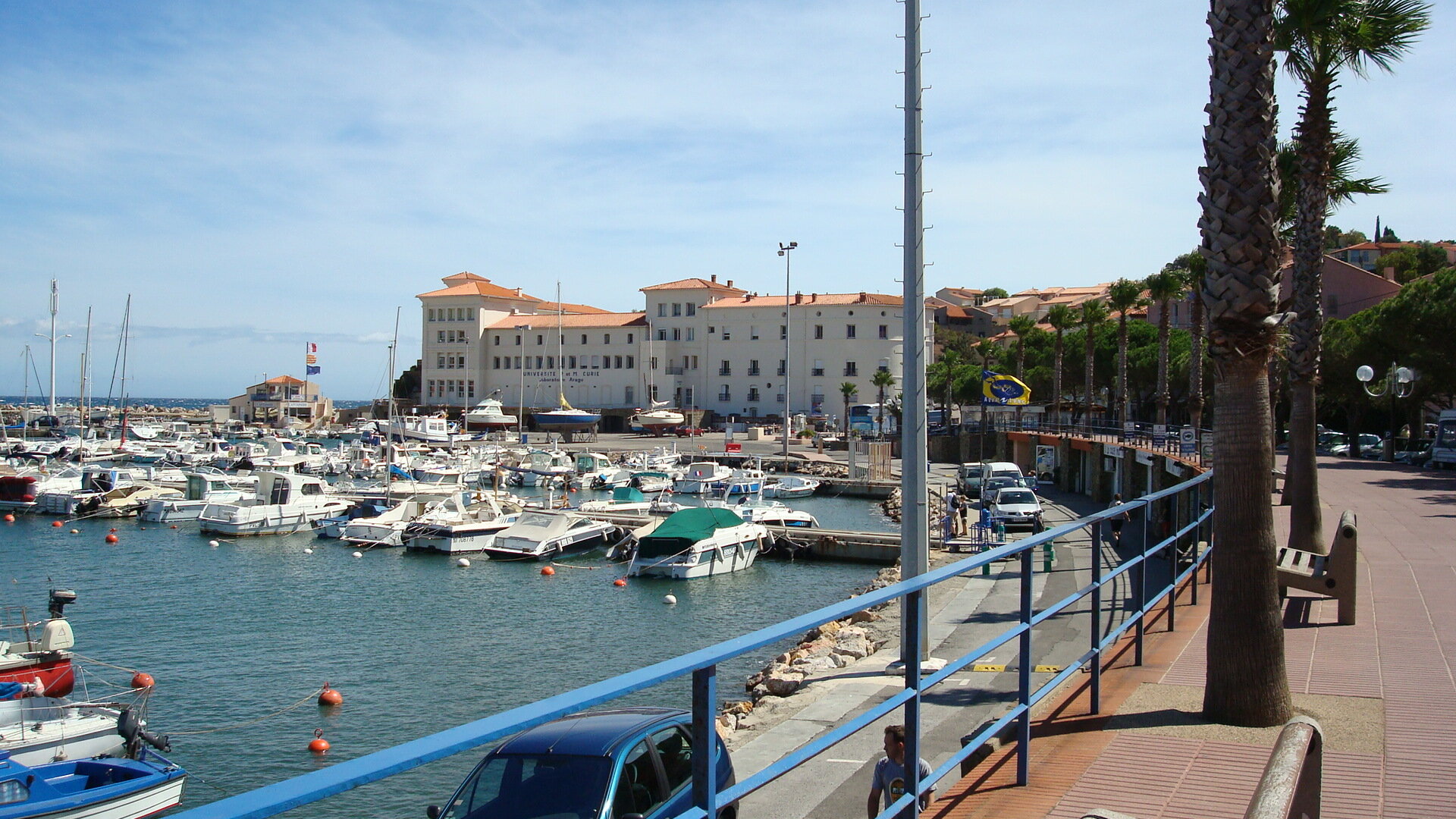
    The Laboratoire Arago
    19 September 2007

    The annual summer course 'The Origins of Life and Life in Space' was held from 28 August to 7 September 2007 at the Laboratoire Arago, in Banyuls-sur-mer, France. The main goal was to introduce the students to the range of space-related biological disciplines in which research is being carried out in Europe.

    Thirty-six life science students from top European universities applied for the course and were selected to participate. During their stay in Banyuls the students attended lectures as well as data analysis workshops. They worked in teams on their own projects to design a life science experiment.

    Topics of the daily lectures included the origins of life, the space environment, and the role of gravity in molecular, cellular, animal and plant behaviour.

    ESA contribution
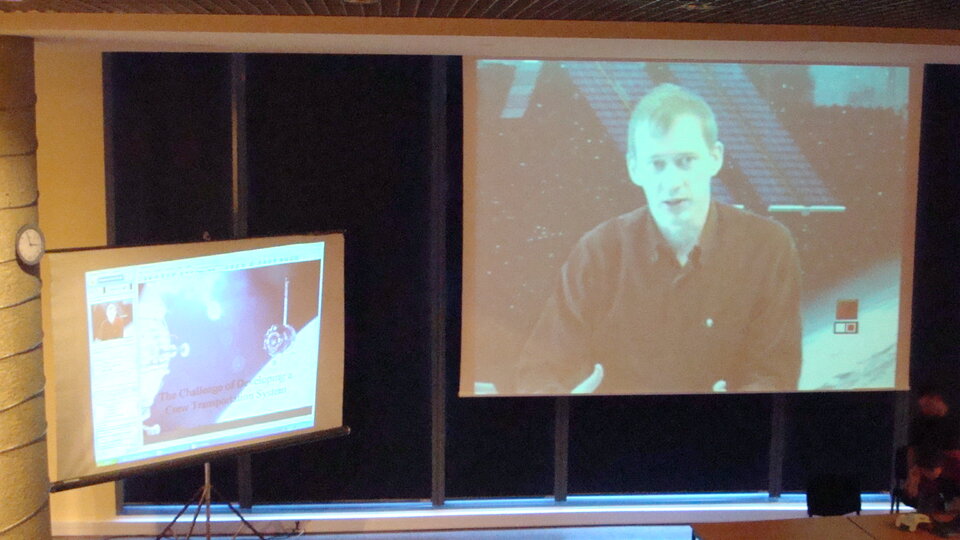
    The e-learning session
    The e-learning session

    Life in Space is organised by the Université Pierre-et-Marie-Curie, Paris VI, together with a consortium of European universities. ESA supports the Life in Space summer course by organising lectures and an e-learning session with an ESA astronaut, grants for teachers, and the provision of computers during the course.

    ESA expert, Dr Oliver Angerer discussed the physiological and psychological challenges during long-duration exploration missions. Mr Patrice Amadieu informed the students about ESA, the International Space Station, Columbus and the Automated Transfer Vehicle.

    Ms Merlijne Berntsen explained the ESA SUCCESS Student Contest, which can enable a student to develop an experiment to be flown to the ISS. The 4th SUCCESS Student Contest was launched in September 2007.


    E-learning session
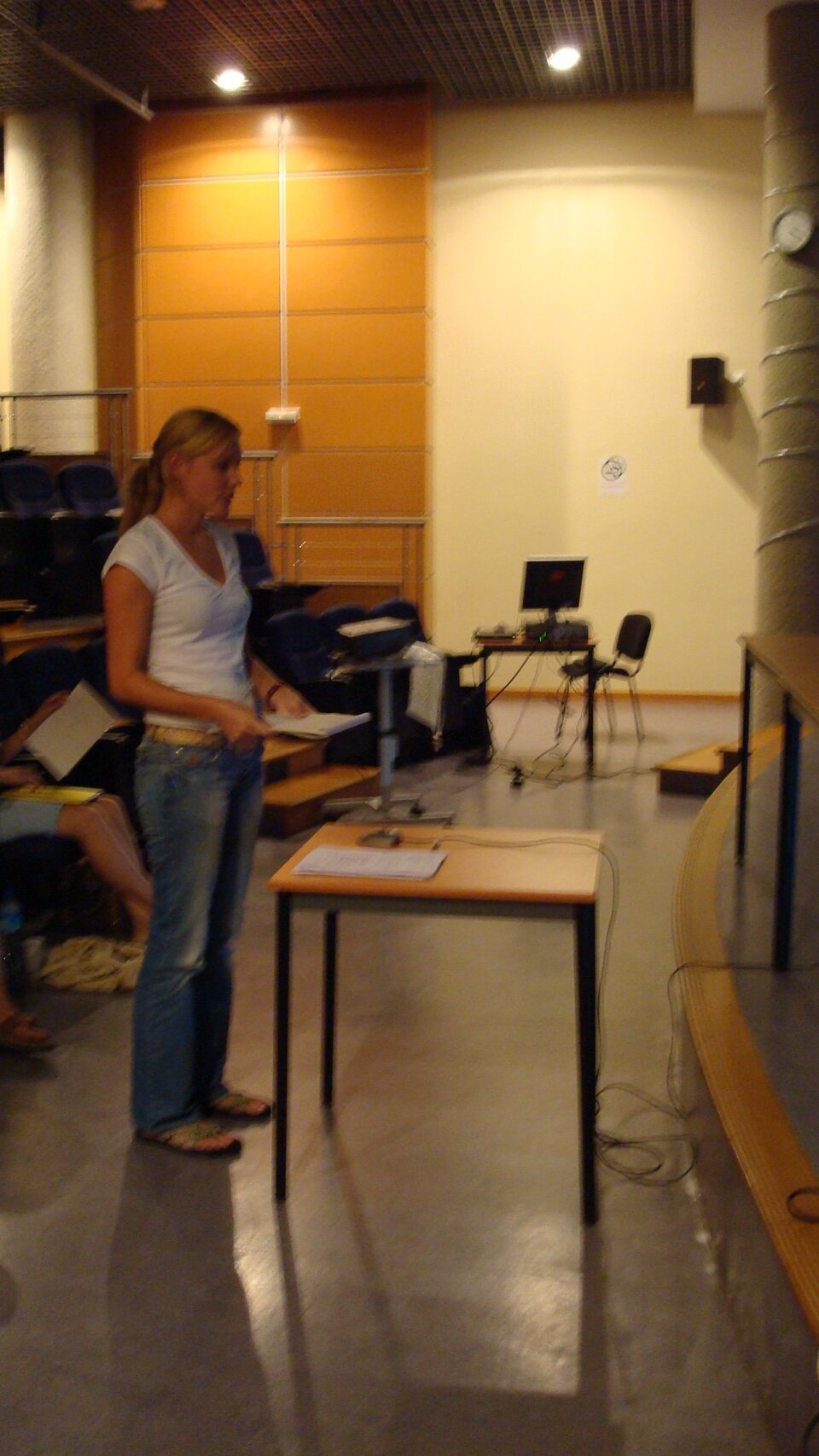
    One of the students asking a question to Frank De Winne
    One of the students asking a question to Frank De Winne

    ESA astronaut Frank De Winne was invited to participate in the e-learning session. A real time connection was established between ESA's European Astronaut Centre in Cologne, Germany, and the auditorium in Banyuls. During the presentation De Winne discussed the challenges of designing a Crew Transportation System from an engineering point of view.

    The students were given the opportunity to ask questions among which were: the risk of orbiting debris, how to become an astronaut, and what he thought about the idea to send world leaders into space making them aware of the vulnerability of Earth and its atmosphere.

    Final presentations

    The final presentations of the student life science experiments
    The final presentations of the student life science experiments

    On the final day the students presented their experiment design, which they had been working on throughout the two weeks.

    Among the selection of experiments were: growing food in space, bone degeneration in space, the effects of microgravity on cells, and how to create an Earth environment on Mars.

    The course concluded with the distribution of certificates to the students who participated.
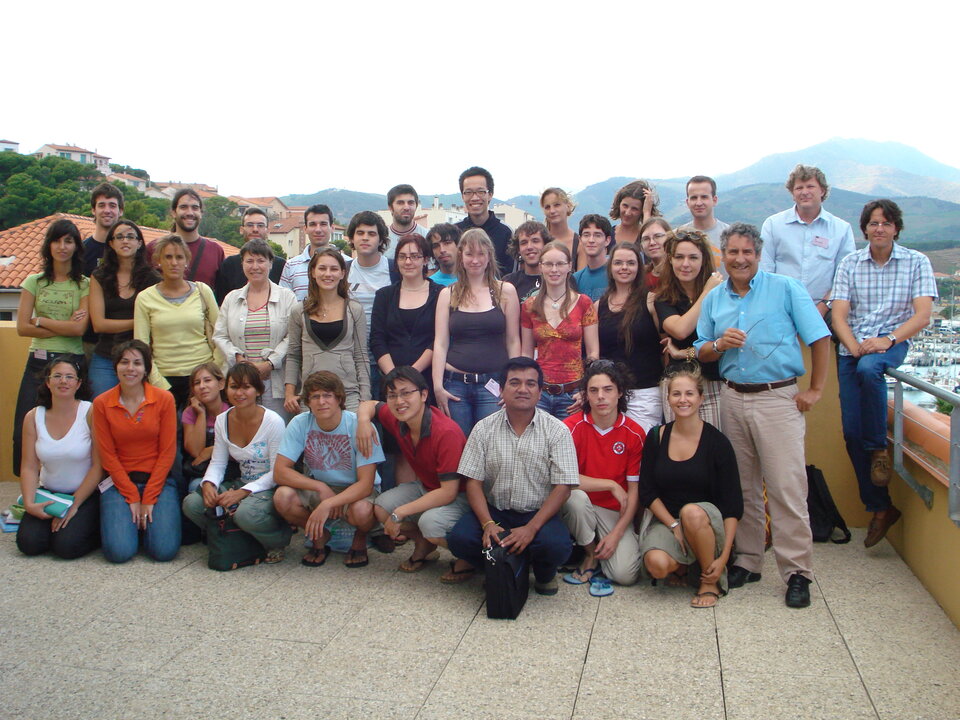
    Life in Space 2007 - teachers and students
    Life in Space 2007 - teachers and students

    The students were enthusiastic about the summer course. According to Latt Shahril Mansor, a biotechnical student from the University of Nottingham, the course broadened his knowledge: "Technical and operational aspects as discussed in the lectures are vital for scientists to know because it makes you aware of the possibilities and limits before proposing any space research experiment".

    The experiment design projects were also appreciated. Tristan Wagner (University Paris VI) and Melanie Lüllsdorf (University of Bonn) shared the opinion that it is a "very good learning experience to work on a project in a multinational team of students with different study backgrounds".

    The next Life in Space summer course is scheduled to take place at the end of August 2008. For more information on how to register for next year's course, and for more general information, please visit websites linked on the right menu. If you have any questions you can contact Merlijne Berntsen (ESA): Merlijne Berntsen: merlijne.berntsen@esa.int , or Prof. Marie-Christine Maurel (Université Pierre-et-Marie-Curie): maurel@ijm.jussieu.fr.

    Rate this

    Views

    Share

    • Currently 0 out of 5 Stars.
    • 1
    • 2
    • 3
    • 4
    • 5
    Rating: 0/5 (0 votes cast)

    Thank you for rating!

    You have already rated this page, you can only rate it once!

    Your rating has been changed, thanks for rating!

    16
    Tweet
    • Related links
    • ESA human spaceflight education activities
    • Observatoire Océanologique de Banyuls-sur-mer
    • SUCCESS website
    • Erasmus User Centre

    Connect with us

    • RSS
    • Youtube
    • Twitter
    • Flickr
    • G+
    • Facebook
    • Livestream
    • Subscribe
    • App Store
    • LATEST ARTICLES
    • · Proba-V opens its eyes
    • · First new Galileo satellite arrive…
    • · Next destination: space
    • · Leak repaired on International Spa…
    • · After Chelyabinsk: European expert…
    • FAQ

    • Jobs at ESA

    • Site Map

    • Contacts

    • Terms and conditions