• → European Space Agency

      • Space for Europe
      • Space News
      • Space in Images
      • Space in Videos
    • About Us

      • Welcome to ESA
      • DG's News and Views
      • For Member State Delegations
      • Business with ESA
      • ESA Exhibitions
      • ESA Publications
      • Careers at ESA
    • Our Activities

      • Space News
      • Observing the Earth
      • Human Spaceflight
      • Launchers
      • Navigation
      • Space Science
      • Space Engineering
      • Operations
      • Technology
      • Telecommunications & Integrated Applications
    • For Public

    • For Media

    • For Educators

    • For Kids

    • ESA

    • Lunar Lander

    • Human Spaceflight and Exploration

    • About Lunar Lander
    • Europe’s first Lunar Lander
    • Next-generation landing technology
    • Science on the Moon
    • Lunar Lander flight phases
    • Exploring the lunar South Pole
    • Lander configuration
    • Lunar Lander on the surface
    • Multimedia
    • Lunar Lander gallery

    ESA > Our Activities > Human Spaceflight > Lunar Lander

    Lunar Lander on the surface

    Lunar Lander

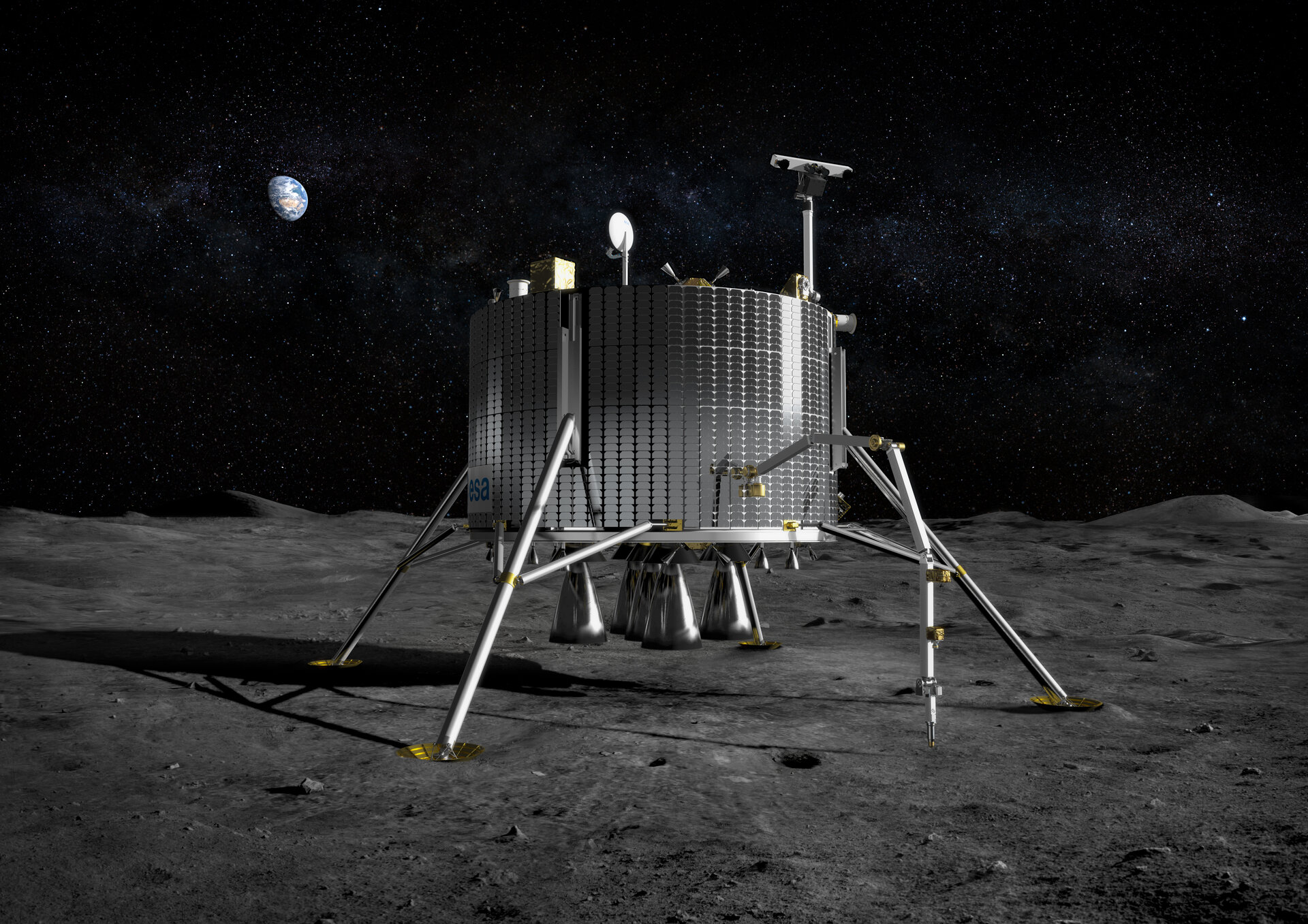
    Once Lunar Lander is on the Moon, it immediately deploys its high-gain antenna so that it can communicate with its terrestrial controllers.

    Communications are established directly with its home planet without relying on a relay orbiter, which means there are periods of no contact when Earth sets below the horizon.

    Throughout the descent, the lander will have stored a vast amount of data, which will be transmitted to Earth once communications are established, confirming achievement of its primary technology demonstration objective.

    A second priority is deploying the camera mast to reconnoitre the local terrain, specifically the horizon. Surface cameras will identify features that could threaten its power supply by obscuring the Sun.
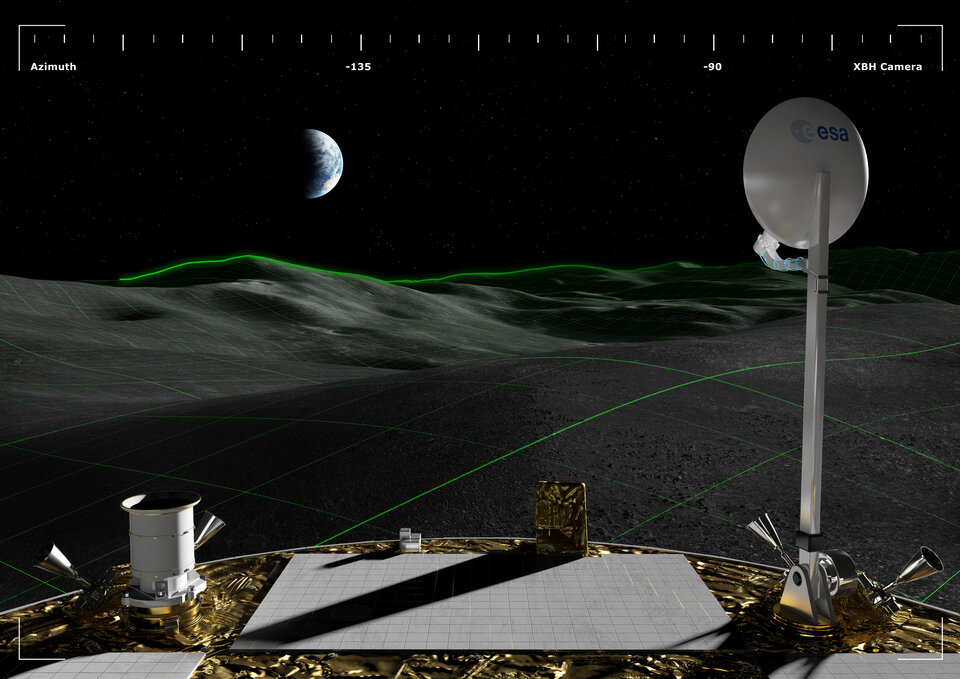
    Mapping the Moon

    The mission continues by activating the instruments, relying on Lunar Lander’s robotic arm to deploy some elements. The Mobile Payload Experiment, provided by the DLR German Aerospace Center, begins operations. Other instruments analyse soil samples retrieved with the robotic arm.

    The arm and the soil analysis are controlled from Earth when the Lander is in direct view. When Earth is below the horizon, Lunar Lander will store the data from the operating instruments for later transmission.

    Depending on the landing site and topography, the craft will experience short periods of darkness. Brief eclipses caused by boulders or distant peaks require that it conserves resources, keeping energy requirements to a minimum and preserving the batteries.

    By surviving short periods in shadow, Lunar Lander will be able to continue operating for longer. The goal is for the mission on the surface to last at least three months.

    Rate this

    Views

    Share

    • Currently 0 out of 5 Stars.
    • 1
    • 2
    • 3
    • 4
    • 5
    Rating: 0/5 (0 votes cast)

    Thank you for rating!

    You have already rated this page, you can only rate it once!

    Your rating has been changed, thanks for rating!

    24
    facebook
    twitter
    reddit
    google plus
    digg
    tumbler
    digg
    blogger
    myspace
    • Related Links
    • Deutsches Zentrum für Luft- und Raumfahrt
      Deutsches Zentrum für Luft- und Raumfahrt
      German Aerospace Center DLR

    Connect with us

    • RSS
    • Youtube
    • Twitter
    • Flickr
    • Google Buzz
    • Subscribe
    • App Store
    • LATEST ARTICLES
    • · CryoSat hits land
    • · Ariane 5 completes seven launches …
    • · Measuring skull pressure without t…
    • · Malargüe station inauguration
    • · The solar wind is swirly
    • FAQ

    • Jobs at ESA

    • Site Map

    • Contacts

    • Terms and conditions