

Science on the Moon
This page has been archived. See our Argonaut page for more information on Europe's lunar lander programme.
Once the Lunar Lander has arrived on the Moon, it will investigate important questions for future robotic and human exploration.
The surface of the Moon is a complex environment where charged particles and radiation meet fine lunar dust. The results can be surprising, unpredictable and hazardous.
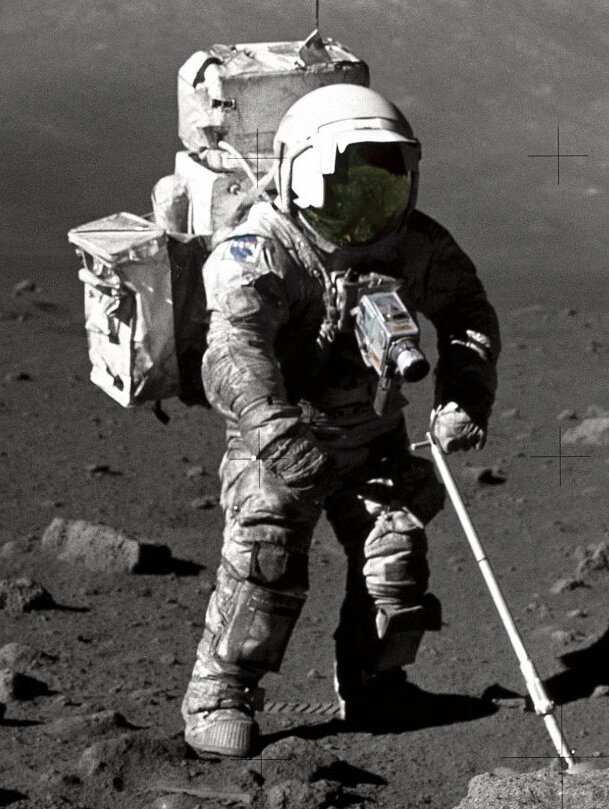
Moon dust sticks to equipment, causing mechanical problems, and could cover solar panels and other surfaces, reducing their efficiency. In addition, lunar dust may be toxic to human explorers. NASA Moonwalker Eugene Cernan reported on the dust: “You have to live with it but you're continually fighting the dust problem both outside and inside the spacecraft.“
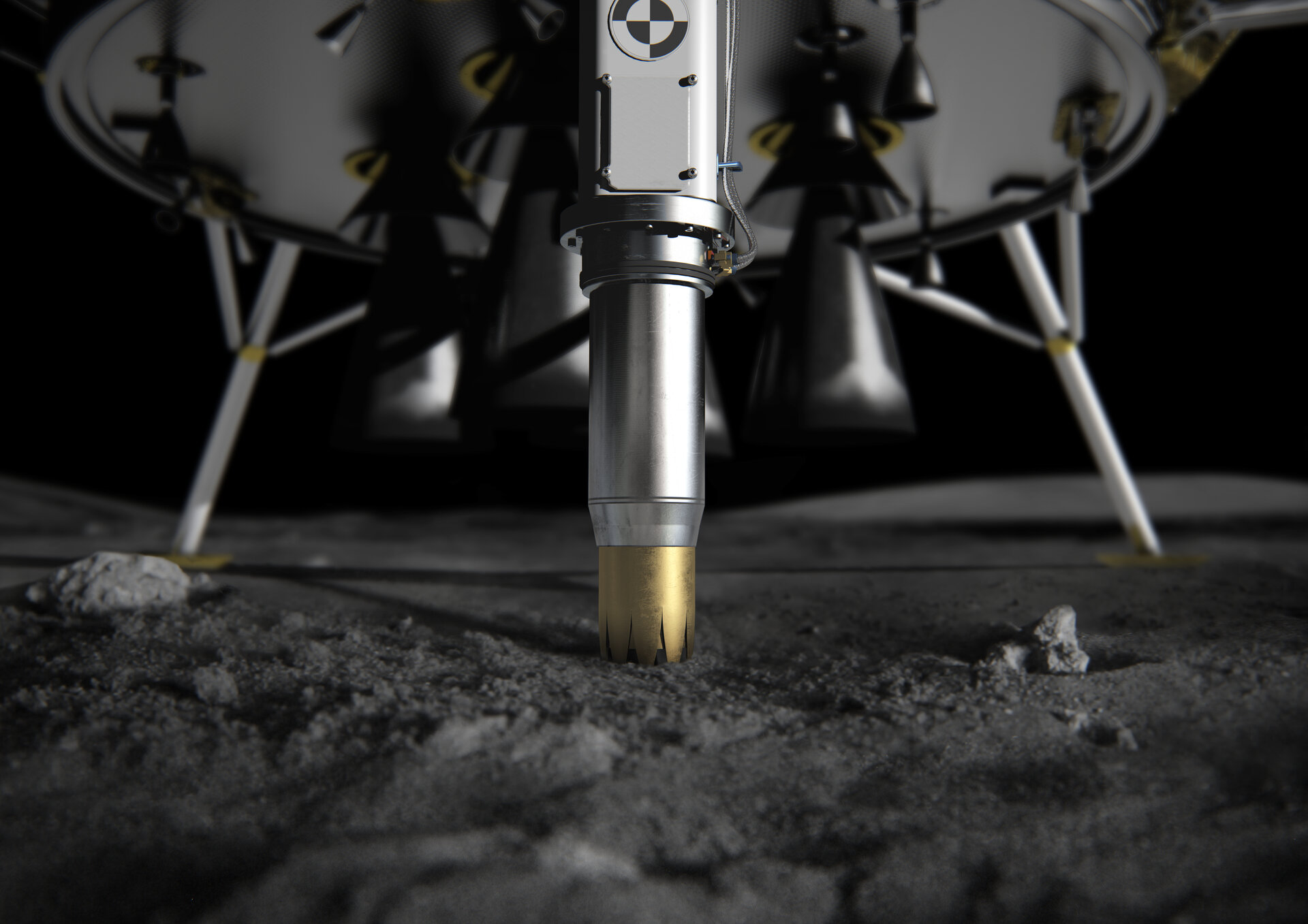
Little is still known about lunar dust and its behaviour on the Moon’s surface. One task for Lunar Lander’s scientific instruments will be to investigate the pervasive dust. A robotic arm will retrieve samples for closer inspection under an onboard microscope. Images and data will be sent back to Earth for further analysis.
Looking closely at individual dust particles reveals only part of the picture. Of equal importance is how the dust behaves when it comes in contact with radiation and charged particles from the Sun and space. Electrostatic forces propel dust around the Moon’s surface, causing additional risk. The electrostatic charging caused by these particles may be a hazard for future landers, rovers and humans. Lunar Lander will observe the environment and investigate the underlying forces at play.
Resources
Recent observations have revealed that the Moon may contain elements and chemicals that could be of use for future human exploration such as water, ice, nitrogen and metals.

Some of these potential resources originated on the Moon while others are formed by the solar wind or arrived by comet.
These chemicals could provide life-support consumables, energy, fuel and materials. Analysis could increase our knowledge of their history and, provide insight into the history of our Solar System. Lunar Lander’s instruments will search for and investigate these chemicals, identifying their potential for use in future missions.

