

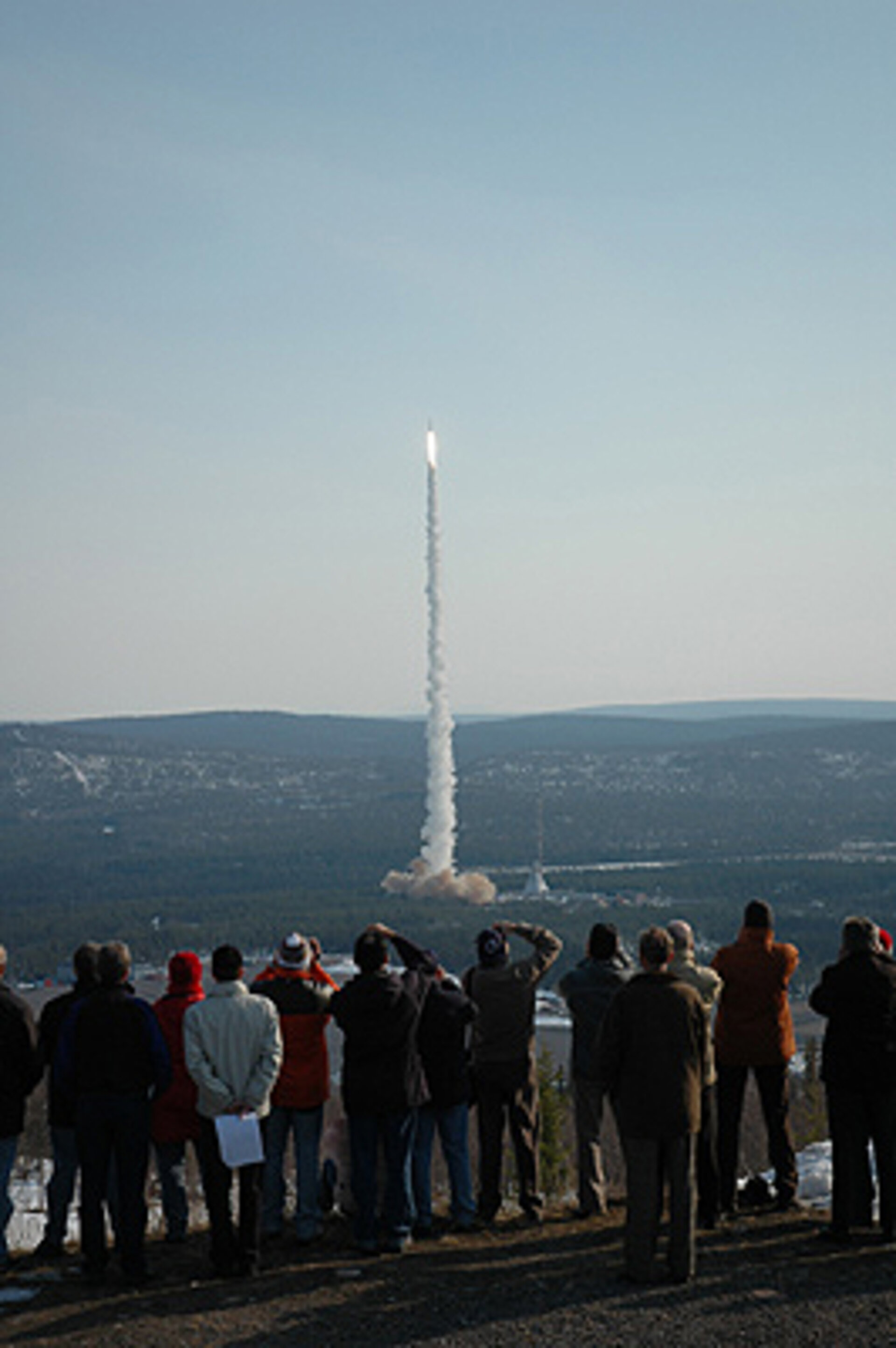
Successful launch of ESA experiments on Maxus 7 sounding rocket
The Maxus 7 sounding rocket was successfully launched on 2 May 2006 from the Esrange launch site near Kiruna, Northern Sweden, carrying a complement of five ESA-funded experiment modules.
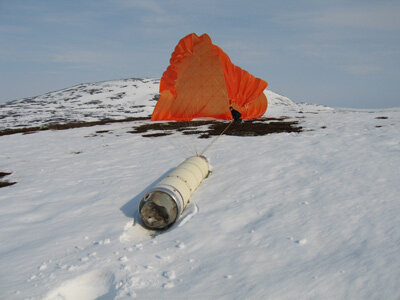
Following the launch on Tuesday at 8:16 Central European Summer Time, the sounding rocket provided the experiment modules with 12 minutes of weightlessness, reaching an apogee of 702 km during its flight before falling back to Earth. During this time the experiment modules and all service and sounding rocket systems performed flawlessly. The payload was safely recovered and brought back to the launch range by helicopter within 1 hour 40 minutes and without any damage.
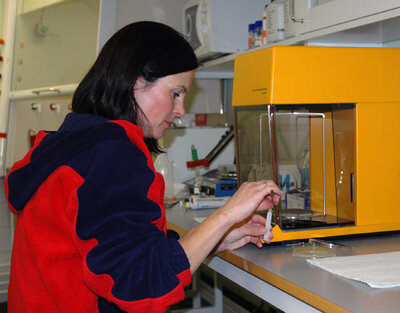
The five ESA payloads on board covered a range of disciplines within weightless research. Two experiments are in the field of biology, one covering genetic research on plant cell cultures (Aridopsis thaliana), the other covering research into unicellular organisms (Euglena gracilis). The other three ESA experiment modules deal with physical science. Two of these (MACE, MICAST) concern the solidification process of metallic alloys with high application potential, the third experiment is dealing with the effect of vibrations on critical fluids and granular matter.
The 12 minutes of weightlessness provided by the single stage Maxus sounding rockets are often sufficient for independent investigations to obtain relevant scientific data. Furthermore, sounding rockets can also be used as a cost-effective way to test-fly experiments that are deemed for longer duration weightless experimentation such as on the International Space Station.
Maxus is a joint venture between EADS Space Transportation in Bremen, Germany and the Swedish Space Corporation and is the largest sounding rocket in the European microgravity sounding rocket programme. The institutions and organisations responsible for the research on the Maxus 7 include the Universities of Tübingen and Erlangen in Germany, the German Aerospace Center (DLR), ACCESS, which is associated with the Technical University of Aachen in Germany and supported by industry, and Ecole Centrale Paris and the Bordeaux Institute of Condensed Matter Chemistry (ICMCB) in France. All five ESA payloads, were developed by EADS Space Transportation which also acts as Prime Contractor for the MAXUS sounding rocket project. In the vibration experiment module, the Italian company DTM (Modena) also had a major involvement related to the development of the oscillation mechanism.


