• → European Space Agency

      • Space for Europe
      • Space News
      • Space in Images
      • Space in Videos
    • About Us

      • Welcome to ESA
      • DG's News and Views
      • For Member State Delegations
      • Business with ESA
      • ESA Exhibitions
      • ESA Publications
      • Careers at ESA
    • Our Activities

      • Space News
      • Observing the Earth
      • Human Spaceflight
      • Launchers
      • Navigation
      • Space Science
      • Space Engineering
      • Operations
      • Technology
      • Telecommunications & Integrated Applications
    • For Public

    • For Media

      • Media
      • ESA TV
      • Videos for professionals
      • Photos
    • For Educators

    • For Kids

    • ESA

    • Navigation

    • EGNOS

    • Galileo

    • Evolution

    • About satellite navigation
    • Europe's satellite navigation services
    • Resources
    • Development Facilities
    • Navipedia
    • Multimedia
    • Galileo's In-Orbit Validation phase - 2012 video
    • Galileo - Europe leads the way 3D video
    • Image gallery
    • Video gallery
    • Documents
    • Galileo factsheet (PDF)
    • Galileo IOV factsheet (PDF)
    • Galileo FOC factsheet (PDF)
    • GNSS Evolution factsheet (PDF)
    • Galileo IOV brochure (PDF)
    • Galileo IOV brochures in French and German (PDF)
    • Archives
    • News archive
    • Navigation projects
    • Services
    • Subscribe

    ESA > Our Activities > Navigation

    First payload ready for next batch of Galileo satellites

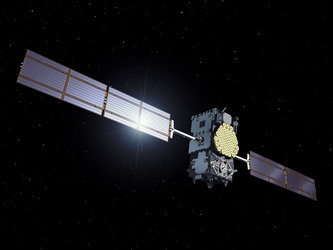
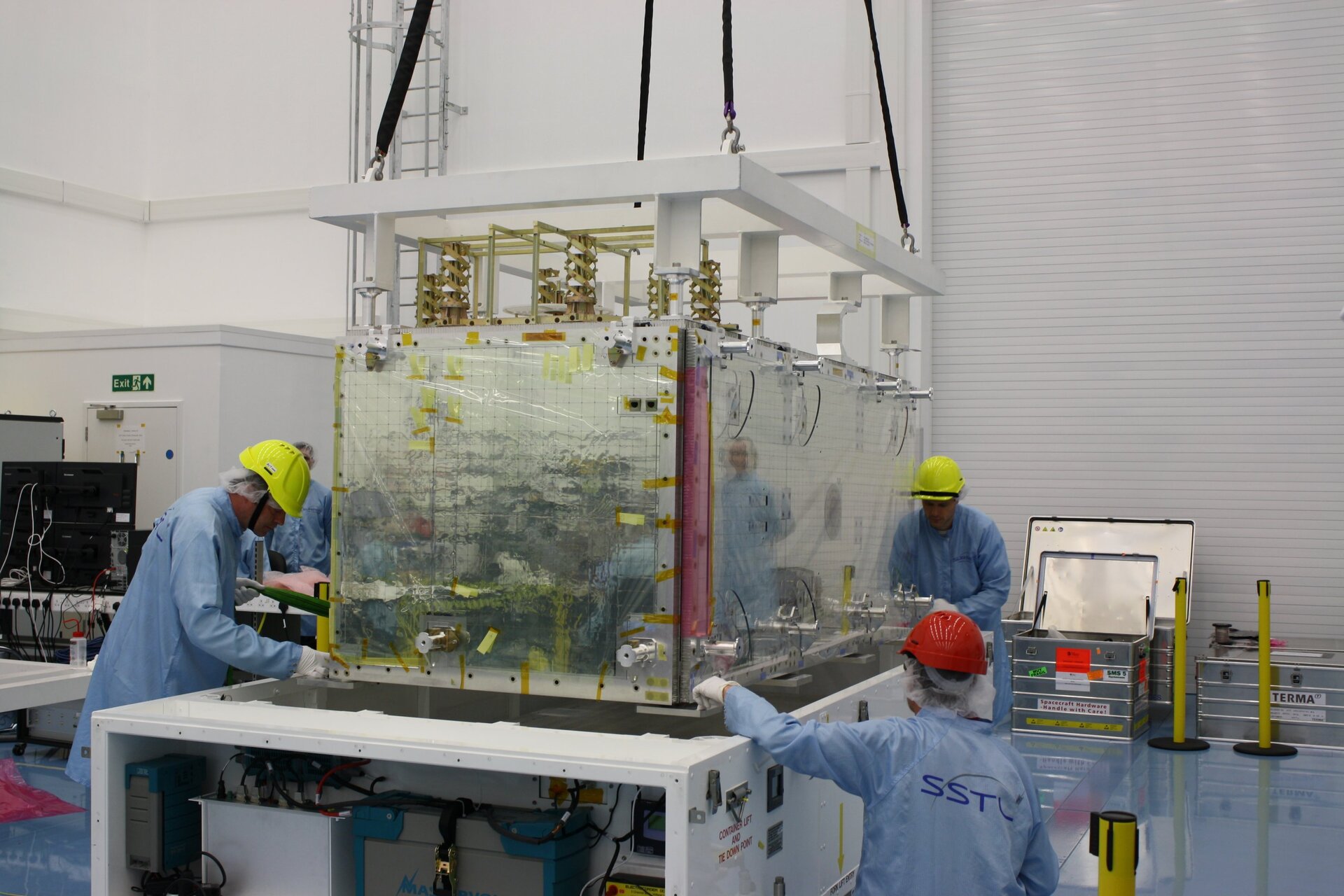
    Galileo satnav payload
    19 April 2012

    The next Galileo navigation payload has been completed and is on its way to meet the satellite platform that will host it in orbit.

    The first of 14 Galileo ‘Full Operational Capability’ (FOC) navigation payloads has been shipped from Surrey Satellite Technology Ltd in the UK to prime contractor OHB System AG in Bremen Germany.

    The payload – the part of the satellite that provides Galileo’s precision positioning measurements and services to users worldwide – will then be added to its waiting satellite platform.

    “The payload for the fifth satellite in the Galileo constellation is ready,” said Didier Faivre, ESA’s Director of the Galileo Programme and Navigation-related Activities.
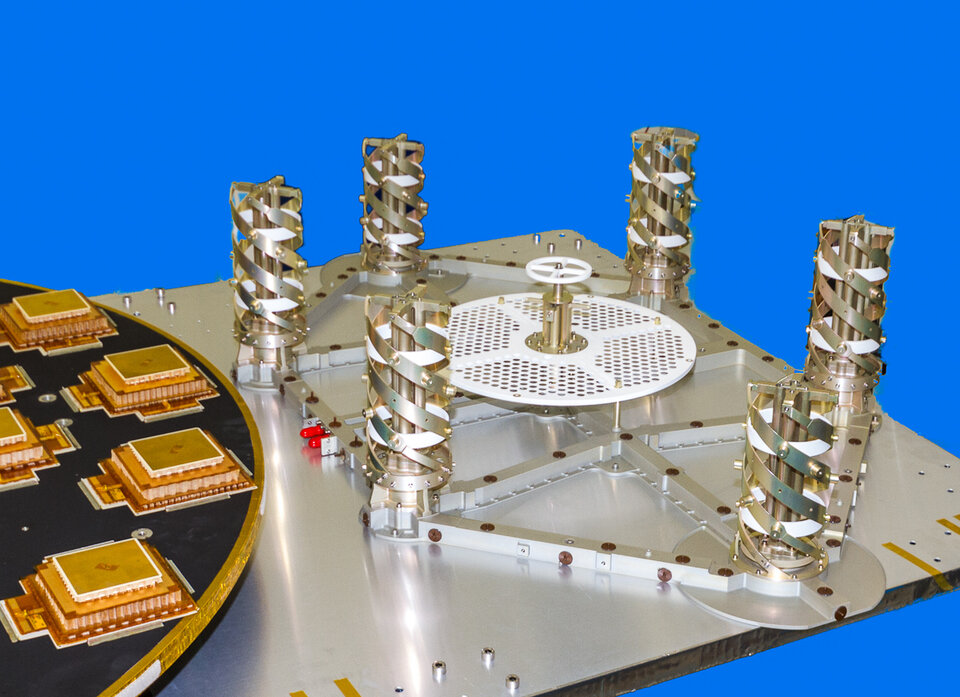
    Search and rescue antenna

    “While the next two satellites to be launched are currently undergoing testing, the next ones are being built. Another important step forward for the programme was made today.”

    The SSTL payload is engineered to provide all Galileo navigation services, and is based on European atomic clocks, navigation signal generators, high-power amplifiers and antennas.


    “The delivery of our first Galileo payload is an important milestone towards achieving full satellite qualification at the end of the year, bringing together expertise, knowledge and innovation from almost a decade of SSTL involvement in Galileo,” commented Matt Perkins, SSTL CEO.

    “We are proud to lead the payload development for this landmark programme that will redefine what we expect from global navigation services.”
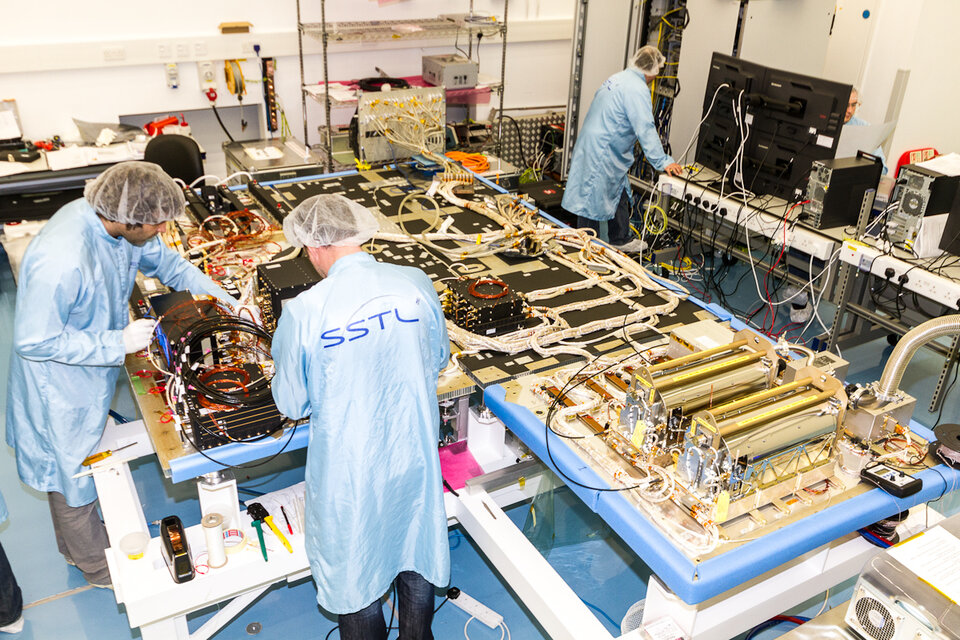
    Galileo satnav payload

    The first two Galileo satellites entered orbit on 21 October 2011, with two more due at the end of this summer. These initial satellites carry payloads built by Astrium UK in Portsmouth, with Thales Alenia Space in Italy integrating them with their satellite platforms. Astrium Germany in Ottobrunn serves as prime contractor.

    The new satellites are the follow-up batch of Galileo satellites, planned to begin launches in 2014.

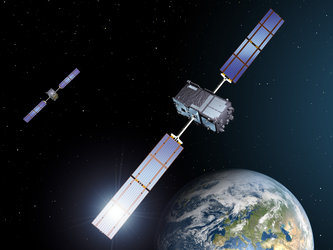
    Once all 14 are in orbit, the 18-strong Galileo constellation will achieve ‘Initial Operational Capability’ and will be able to provide initial navigation services – the full range of services will be available once all 30 satellites are in place in 2018.

    In addition to these first 14 FOC satellites, the OHB–SSTL consortium was awarded a contract to build a further eight satellites for the Galileo system in February this year.

    About Galileo

    Galileo is an initiative of the European Commission and ESA to provide Europe with an independent global satnav system.

    It combines the best atomic clock ever flown for navigation – accurate to one second in three million years – with a powerful transmitter to broadcast precise navigation data worldwide.
    Rate this

    Views

    Share

    • Currently 0 out of 5 Stars.
    • 1
    • 2
    • 3
    • 4
    • 5
    Rating: 0/5 (0 votes cast)

    Thank you for rating!

    You have already rated this page, you can only rate it once!

    Your rating has been changed, thanks for rating!

    109
    Tweet
    • Navigation
    • Galileo
      Galileo
      Galileo
    • Related links
    • Surrey SSTL
    • OHB-System
    • Related articles
      • First Galileo satellite producing full spectrum of signals
        • Galileo in tune: first navigation signal transmitted to Earth
          • Redu trains big dish on Galileo satellites
            • Galileo satellites handed over to control centre in Germany

    Connect with us

    • RSS
    • Youtube
    • Twitter
    • Flickr
    • G+
    • Facebook
    • Livestream
    • Subscribe
    • App Store
    • LATEST ARTICLES
    • · Rare merger reveals secrets of gal…
    • · Watching for hazards: ESA opens as…
    • · ESA astronaut Timothy Peake set fo…
    • · Space drives e-mobility
    • · Proba-V opens its eyes
    • FAQ

    • Jobs at ESA

    • Site Map

    • Contacts

    • Terms and conditions